The Mechanics of Institutional Restoration
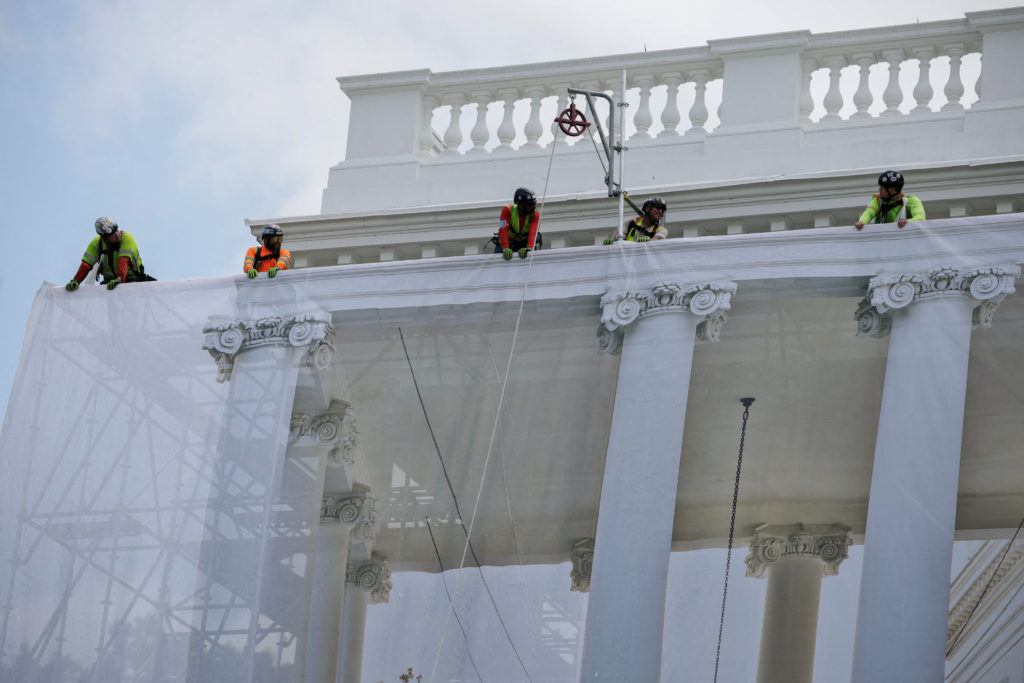
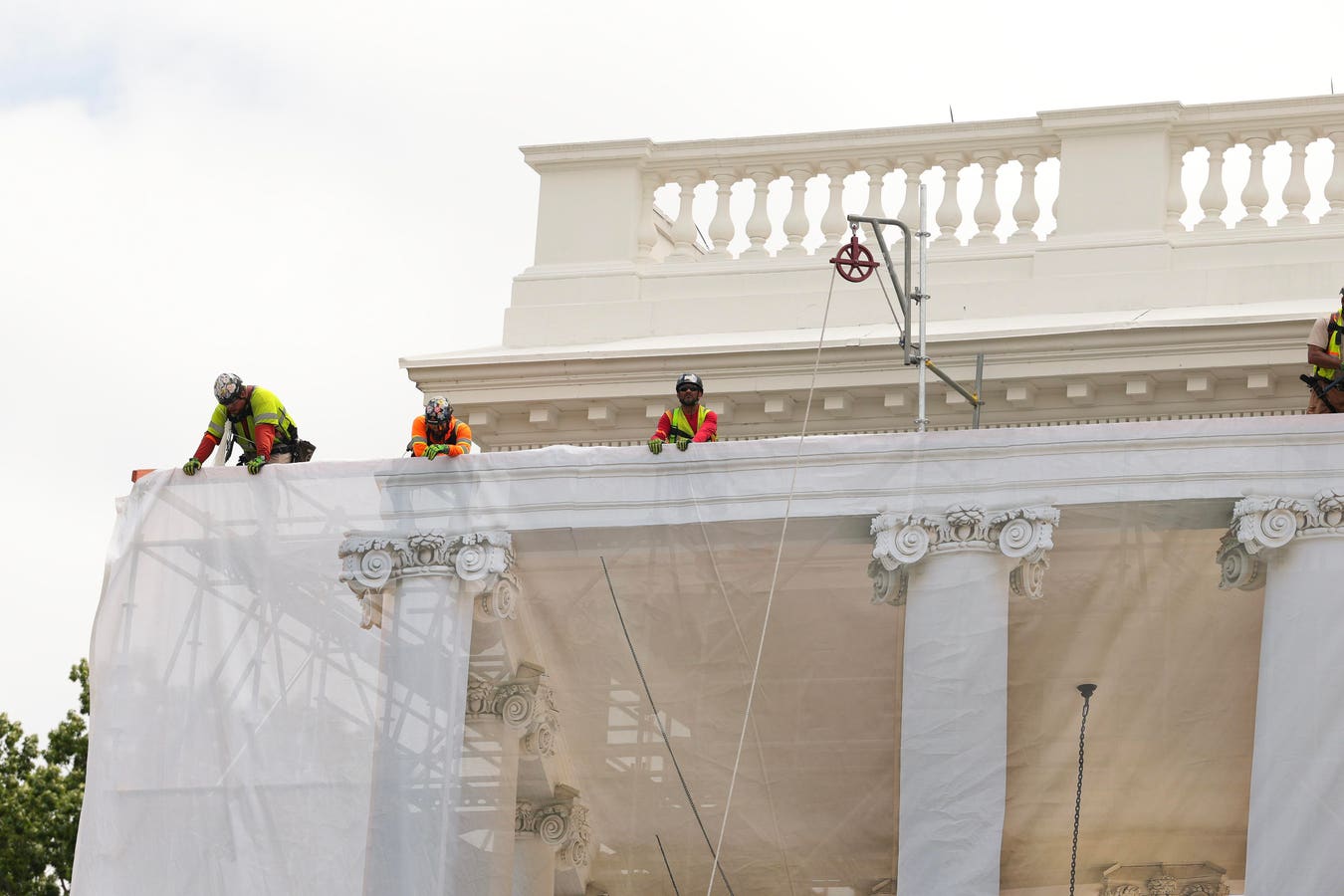
The restoration of the White House North Portico involves removing approximately 150 years of accumulated paint from the structure’s Ionic columns. This technical endeavor, overseen by the current administration, includes complex masonry repairs and the temporary removal of fixtures like the central lantern. By deploying printed scaffolding tarps, the administration maintains the building’s visual veneer while executing industrial-grade maintenance, balancing the demands of a high-security environment with the necessity of significant physical intervention.
Strategic Alignment and Operational Oversight
Framed by the Department of the Interior under Secretary Doug Burgum as a critical response to structural degradation, the project mirrors the administration’s broader emphasis on infrastructure revitalization. President Trump’s real estate background has influenced this shift toward active physical rehabilitation. Unlike traditional conservation, which often favors minimal intervention, this model prioritizes aggressive, high-impact asset modernization to ensure the long-term functionality of the executive residence.
Institutional and Reputational Management
The use of visual masking—specifically high-resolution tarps—is a deliberate tactic to preserve the architectural narrative during active construction. This minimizes aesthetic disruption for visiting dignitaries while signaling efficiency and control. It highlights an institutional tension: the requirement to keep the White House as a functioning, high-traffic office versus the burden of preserving an aging, historic landmark.
Economic and Resource Allocation
The North Portico project is part of a series of capital-intensive upgrades, including the new South Lawn ballroom and helipad. These investments suggest a departure from reactive, maintenance-cycle workflows toward a strategy of proactive capital improvements. Successful coordination between the White House and the Department of the Interior ensures these modifications are executed with a unified vision, regardless of the logistical challenges inherent in federal property preservation.
Technical Implications of Restoration
The stripping of over a century of paint layers is a high-risk process. It fundamentally alters the stone’s surface, requiring extreme precision to avoid irreversible damage to the underlying Ionic columns. The success of this initiative will be evaluated by the structural integrity of the stone and the aesthetic consistency of the final finish, serving as a case study for future stewardship of federal architectural assets.
Synthesis of Administrative Priorities
This restoration reflects a wider philosophy that views federal infrastructure as a reflection of governing efficacy. By prioritizing visible, high-impact projects, the administration effectively bridges the gap between state functionality and the symbolic weight of the executive office, ensuring the White House remains both an operational hub and a projection of administrative identity.