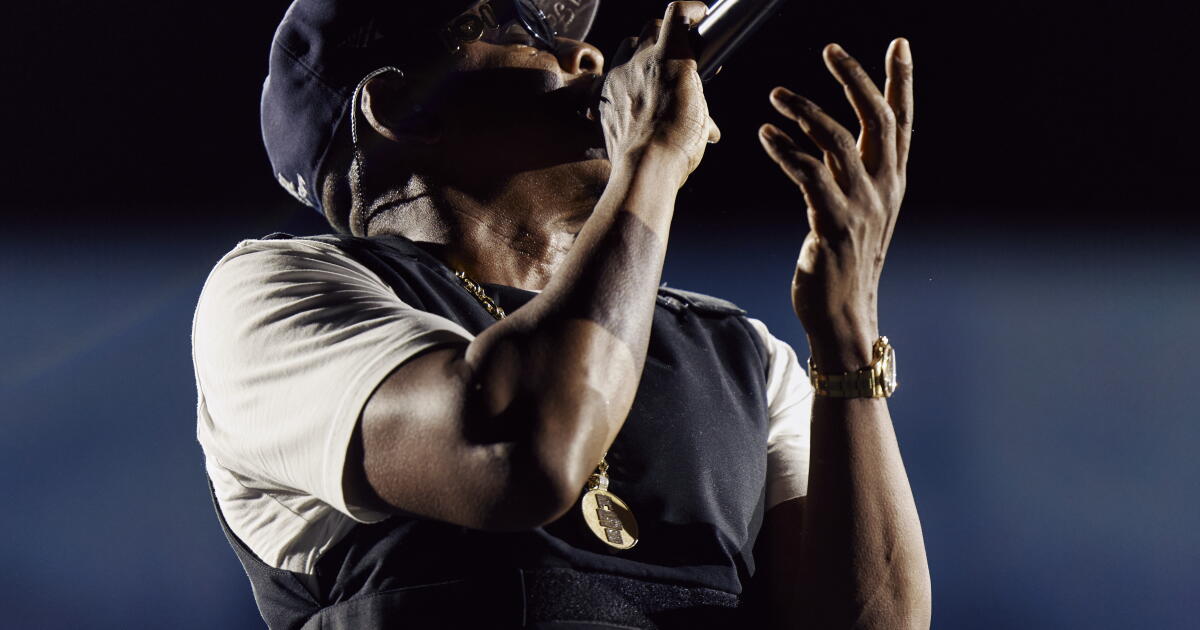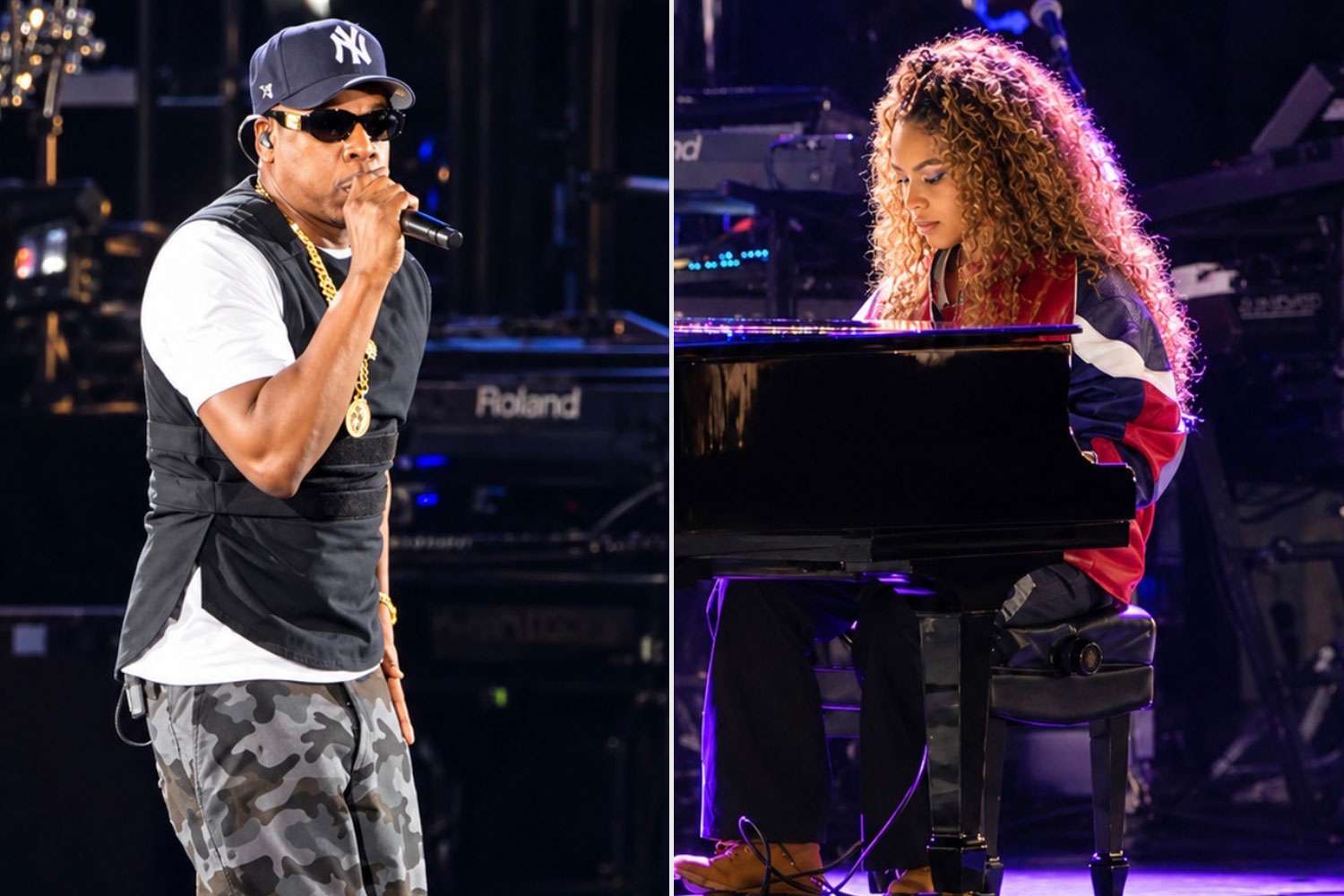
Jay-Z commenced the Los Angeles engagement of his JAŸ-Z30 tour at Inglewood’s SoFi Stadium, deploying a high-density, two-hour retrospective that served as both a commercial milestone and an exercise in enterprise continuity. The 56-year-old mogul executed a compressed 36-track program engineered to assert structural dominance within live stadium entertainment. By pairing Tier-1 venue mechanics with live acoustic accompaniment from his 14-year-old daughter, Blue Ivy Carter, the production consolidated three decades of publishing assets while modeling intergenerational brand preservation.
The JAŸ-Z30 Retrospective: Compression and Macro-Touring Mechanics
The Inglewood performance marks the first of two consecutive nights at SoFi Stadium, operating as a primary North American node following antecedent stadium runs across London, Paris, and New York. This hyper-selective routing strategy deliberately targets high-liquidity Tier-1 metropolitan markets, minimizing operational transit wear while optimizing corporate hospitality yields and primary ticketing revenue under the JAŸ-Z30 banner—a commercial apparatus marking continuous market presence since 1996.
Rather than providing uninterrupted, album-length arrangements, the production compressed 36 tracks into an unrelenting 120-minute operational block. This tactical pacing exposed the breadth of a catalog accounting for 152 distinct Billboard Hot R&B/Hip-Hop Songs entries. The program balanced early, foundational records like Dead Presidents and Girls, Girls, Girls against mid-career corporate anthems including On to the Next One.
This song-compression strategy serves an institutional function within contemporary stadium-scale production. Rapid rotation maintains sensory and cultural density across large-footprint NFL arenas, circumventing the audience attrition typical of legacy acts without requiring exhaustive individual track durations. The methodology proves that mature hip-hop repertoires can sustain arena-scale engagement via calculated sampling rather than traditional long-form performance.
Intergenerational Brand Continuity: The Blue Ivy Carter Inflection
The concert’s pivotal technical juncture arrived when Jay-Z introduced Blue Ivy Carter to provide live keyboard accompaniment on the socially reflective 2017 track The Story of OJ and the 1996 milestone Dead Presidents. Replacing standard arena click-tracks and pre-recorded stems with organic piano execution introduced authentic acoustic texture into an industrial stadium setting.
Integrating a 14-year-old family member into complex master arrangements converts private domestic lineage into public institutional equity. Framing Blue Ivy as an active participant across works composed both decades before and years after her birth visually demonstrates generational succession within the Carter business portfolio, bridging demographic eras across multi-tiered audience cohorts.
Crucially, her participation re-anchored Dead Presidents, the critical asset that underpinned Jay-Z’s independent emergence via Roc-A-Fella Records. The visual and musical contrast—an established enterprise founder backed by his teenage heir—repositions raw commercial origins into an enduring narrative of family capital accumulation and sustained institutional relevance.
Institutional Confluence: Luxury Hospitality as Corporate Summits
Beyond the proscenium, private hospitality suites reinforced the event’s cultural and executive prestige. Beyoncé observed the performance alongside former Destiny’s Child members Kelly Rowland and Michelle Williams. This informal congregation acted as an organic secondary focal point, visually converging two defining, parallel recording legacies spanning late-1990s R&B and hip-hop.
The visible assembly of Destiny’s Child within SoFi’s VIP infrastructure carries quantifiable commercial weight. Operating concurrently with Jay-Z’s ascendance over the past 30 years, the trio represents one of the highest-grossing vocal brands in modern pop history. Their unified public presence in support of JAŸ-Z30 illustrated the dense, interconnected network of executive and cultural leverage that characterizes contemporary Black corporate entertainment.
This convergence effectively elevated the stadium engagement from a solo musical retrospective to a multi-brand executive summit. Private corporate hospitality suites functioned as intentional narrative extensions of the main stage, optimizing non-verbal cross-promotional equity without compromising the focus on Jay-Z’s primary catalog assets.
Catalog Asset Valuation and Live IP Management
From an intellectual property and master rights perspective, JAŸ-Z30 illustrates the operational durability of veteran publishing assets. Executing three dozen song fragments within a tightly managed operational window underlines the compounding value of catalogs maintained since the late 1990s. The artist’s onstage quip referencing an inventory of ‘millions of hits’ reflects a sharp consciousness of underlying portfolio scale.
In the prevailing live-entertainment paradigm, large-scale performances serve as real-time promotional vectors driving instantaneous digital streaming consumption. Deploying a wide-ranging historical setlist generates programmatic spikes across streaming platforms, lifting back-catalog sync valuations and secondary licensing demand. For creators controlling primary master and publishing stakes, stadium production operates directly as asset defense.
Furthermore, the strategic balance between introspective pieces like The Story of OJ and commercial chart-toppers proves that legacy hip-hop catalogs hold distinct tiers of utility. High-prestige cultural compositions establish narrative credibility, while radio staples satisfy general market demands. This distribution allows an aging artist to navigate the transition from competitive chart participant to permanently capitalized cultural institution.
Rhetorical Directives within Corporate Sporting Infrastructure
Throughout the performance, Jay-Z supplemented his catalog with direct rhetorical directives, explicitly instructing the crowd to ‘question everything.’ This thematic pivot from commercial celebration to critical skepticism is a recognized mechanism in his late-career persona, yet it carries unique contradictions when delivered within a privately financed, ultra-modern corporate venue like SoFi Stadium.
This rhetoric negotiates the baseline tension between anti-establishment hip-hop origins and deeply embedded corporate integration. By framing commercial escalation as institutional navigation rather than ideological capitulation, the instructional stance reassures consumers that financial elevation has not degraded his initial investigative baseline. It functions as an essential authenticity stabilizer within modern entertainment marketing.
Market Concentration and the Structural Maturity of Live Hip-Hop
The structural decision to limit routing to London, Paris, New York, and the Greater Los Angeles market affirms a risk-mitigated strategy centered strictly on Tier-1 financial epicenters. Bypassing secondary and tertiary hubs concentrates margin generation, captures premium-tier corporate spend, and reduces staging friction across complex multi-day logistics.
Operating within SoFi Stadium requires sophisticated coordination with regional transit authorities, proprietary ticketing ecosystems, and corporate sponsor alignments. Staging multi-date runs at this scale confirms that legacy hip-hop commands absolute physical and financial parity with traditional stadium-rock infrastructure. The Inglewood engagement confirms that as veteran creators enter their fifth and sixth decades, catalog preservation and intergenerational execution provide the blueprint for enduring stadium viability.