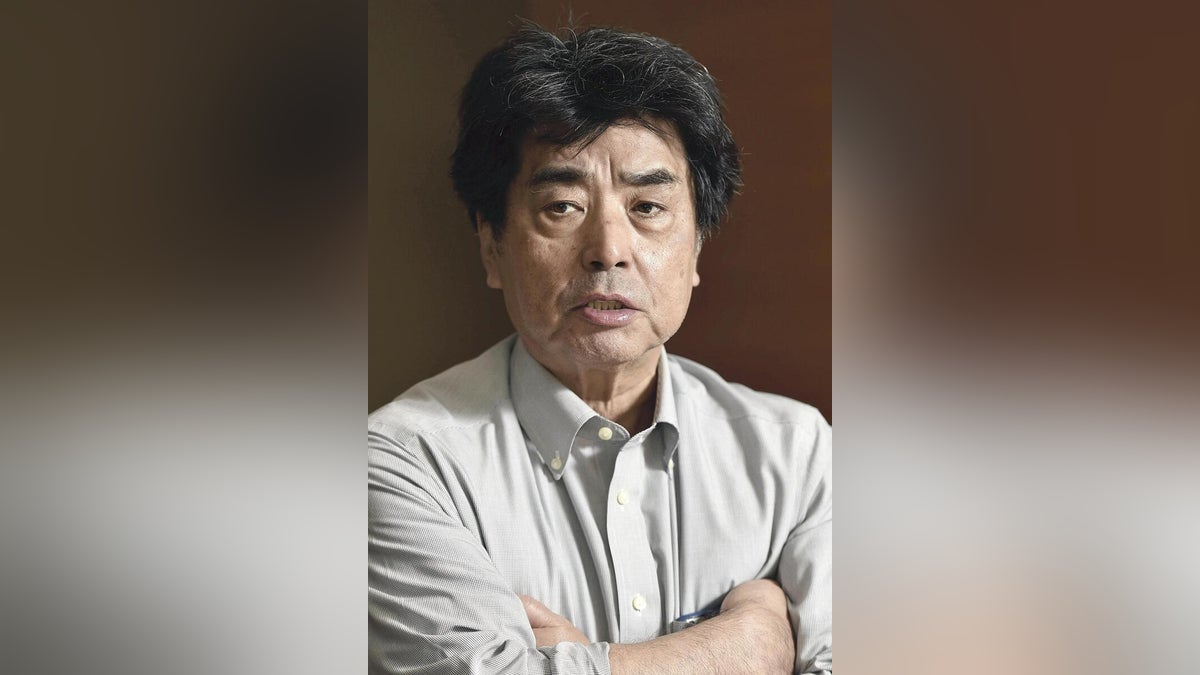
Japanese novelist, screenwriter, and television host Ryu Murakami died at his residence on October 17 at the age of 74. His death was officially confirmed on October 23 by publisher Gentosha BOOKS. Born Ryunosuke Murakami, the author shaped contemporary Japanese letters and broadcast media across five decades through kinetic prose, institutional dissection, and incisive economic commentary.
Gentosha stated that private funeral services have concluded among immediate family in accordance with the author’s wishes. The publisher explicitly requested that the public and media refrain from offering condolence visits, floral tributes, ceremonial money, telegrams, and interview inquiries during the bereavement period.
Breakthrough: Subverting the Postwar Canon
Born in 1952 in Sasebo, Nagasaki Prefecture—a port city defined by its strategic naval infrastructure—Murakami grew up in close contact with postwar geopolitical friction. After graduating from Nagasaki Prefectural Sasebo Kita High School, he relocated to Fussa in western Tokyo, adjacent to the United States Yokota Air Base. These settings provided the structural framework for his literary debut while enrolled at Musashino Art University.
In 1976, Murakami submitted Almost Transparent Blue, a visceral chronicle of disaffected youths navigating drug dependency, psychological disorientation, and American military base culture. The novel caused an immediate critical sensation, earning both the Gunzo Prize for New Writers and the 75th Akutagawa Prize. By discarding the reflective interiority typical of traditional Japanese literary establishments in favor of sensory velocity and raw subcultural realism, Murakami established himself as an uncompromising voice. He subsequently withdrew from Musashino Art University to pursue cultural production, screenwriting, and literature full time.
Thematic Trajectory: Pathology, Geopolitics, and Modernity
Murakami expanded his conceptual scale in 1981 with Coin Locker Babies, an epic following two abandoned infants navigating metropolitan neglect, trauma, and societal destruction. Winning the Noma Literary Prize for New Writers, the book solidified his talent for channeling systemic alienation through expansive, apocalyptic narratives. Subsequent works, such as 69 sixty nine and Fascism of Love and Fantasy, interrogated youth movements, student unrest, and authoritarian impulses latent within capitalist acceleration.
His diagnostic fiction consistently anticipated major sociopolitical fissures. In 1998, In the Miso Soup received the Yomiuri Prize for Literature for its exploration of commodified nightlife, psychological predation, and consumerist dissociation in Tokyo. In 2000, Murakami received the Tanizaki Junichiro Prize for Symbiotic Parasite, a prescient examination of extreme social withdrawal (hikikomori) and early internet culture. In 2005, his speculative geopolitical thriller Exodus from the Peninsula, which dramatized the seizure of the Fukuoka Dome by North Korean commandos, won both the Noma Literary Prize and the Mainichi Publishing Culture Award, demonstrating his acute focus on national security architecture and civil paralysis.
Murakami sustained his formal experimentation into late career. In 2011, he received the Mainichi Art Award for The Singing Whale, a speculative inquiry into biotechnology, human longevity, and historical memory. His final major work, the 2020 novel MISSING, examined the structural displacements of modern society, completing a unified trajectory focused on those living at the margins of modern Japanese prosperity.
Broadcast Media, Labor Pedagogies, and Cinematic Direction
Beyond print fiction, Murakami exerted substantial influence over Japanese public discourse through television and direct cinema. From 2006 until April of this year, he anchored TV Tokyo’s flagship business program Cambria Palace alongside co-host Eiko Koike. Over nearly two decades, Murakami interviewed Japan’s leading executives, entrepreneurs, and industrial innovators, steering economic discourse toward strategic agility, philosophical clarity, and structural reform rather than superficial market summaries.
His interest in economic utility culminated in the 2003 release of 13-Year-Old Hello Work, an encyclopedic career guide designed to introduce adolescents to specialized trades, creative vocations, and technical fields. The volume became a national bestseller, challenging traditional corporate employment pipelines and emphasizing individual autonomy within a transforming post-bubble economy. Complementing these pedagogical contributions, Murakami directly adapted several of his own projects as a film director and screenwriter, maintaining unmediated creative control across mediums.
Gentosha described Murakami as a runner who continuously sprinted at the vanguard of his era. His death at 74 marks the close of a formidable career that systematically dismantled institutional complacency through narrative force and analytical rigor.