
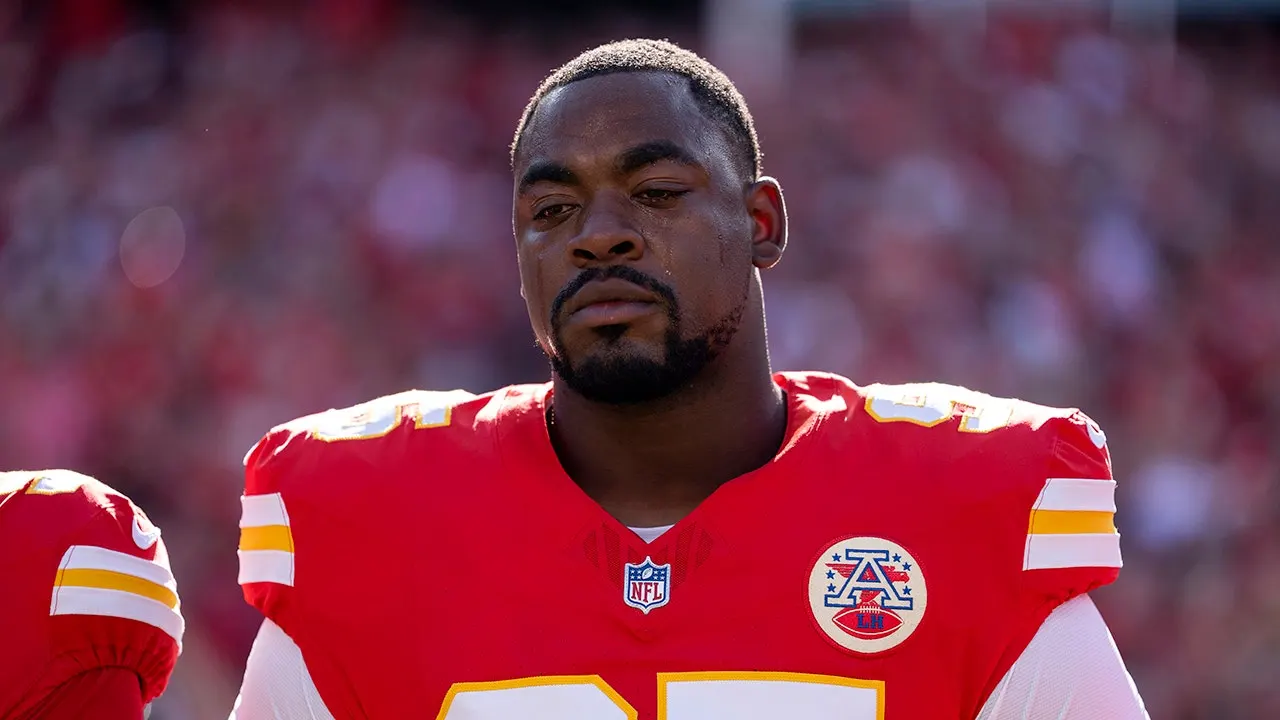
The Kansas City Chiefs’ 22-6 victory over the Los Angeles Chargers in Week 6 of the 2026 season has unveiled a critical divergence between collective outcomes and individual performance benchmarks. Despite an unblemished record, the televised friction between All-Pro defensive tackle Chris Jones and defensive line coach Joe Cullen signals a breakdown in the team’s traditionally cohesive feedback loops.
This incident, occurring during the second quarter, transcends standard athletic intensity. For a player of Jones’s pedigree—defined by First-team All-Pro selections from 2022 to 2024—the perception of being a marginal factor in the current defensive scheme creates a high-leverage environment where minor tactical inefficiencies are treated as systemic failures.
The Mechanics of Pedagogical Friction
The transition from a standard defensive rotation to a heated verbal exchange suggests a collapse in the player-coach hierarchy during a pivotal game phase. While sideline reporter Melanie Collins noted the palpable frustration, the context is vital: Kansas City held a comfortable lead against a winless opponent. This indicates that the volatility was not a reaction to the scoreboard, but rather a diagnostic audit of Jones’s specific gap discipline and pressure metrics.
For an elite asset, the psychological toll of statistical regression while the team succeeds creates unique professional friction. The confrontation serves as a public manifestation of the institutional pressure to sustain elite production regardless of the quality of competition.
Strategic Implications of Interior Pressure Deficits
Jones’s atypical production dip in the 2026 campaign is structurally significant. The Chiefs’ defensive architecture relies on interior disruption to enable aggressive secondary coverage shells. When this anchor becomes inconsistent, the operational burden shifts to the perimeter, potentially exposing the roster to high-caliber postseason offenses.
Cullen’s aggressive intervention reflects an organizational refusal to accept performance variance. This management style prioritizes long-term strategic readiness over short-term locker room equilibrium, reinforcing the uncompromising standards that define the current dynasty.
Asset Management and Public Accountability
The Chiefs operate under a mandate of perfection that often conflicts with the natural fatigue of a long season. By challenging a veteran leader publicly, the coaching staff signals that past accolades provide no immunity from real-time performance audits. This represents a calculated risk in human capital management: it must either catalyze a return to form or risk a permanent fracture in the working relationship.
The role of the CBS broadcast in documenting this exchange adds a layer of unavoidable accountability. Real-time reporting by sideline personnel forces the front office to address the narrative immediately, complicating the team’s ability to resolve tactical disputes within a private framework.
Competitive Asymmetry as a Diagnostic Tool
The Chargers, struggling with an inoperative offense, functioned as a stress-test for the Chiefs’ internal systems. In games where the victory is statistically likely, elite organizations turn their focus inward. The Jones-Cullen exchange is a byproduct of this internal auditing, where the standard of play is measured against an idealized defensive model rather than the actual opponent on the field.
From a fiscal perspective, Jones represents a massive salary cap investment. Sustained regression directly impacts the team’s ROI and future roster construction. The sideline confrontation is a leading indicator of the mounting pressure to justify the high-value capital assigned to his position in the defensive hierarchy.
Conclusion: The Architecture of Sustained Success
Maintaining a dynasty requires a psychological environment that proactively rejects complacency. The ability of both parties to realign their objectives following this high-friction interaction will determine the Chiefs’ defensive ceiling in the 2026 postseason. Whether this incident is viewed as a successful coaching intervention or a sign of internal decay depends entirely on Jones’s ability to recapture his All-Pro trajectory in the coming weeks.

Photo by WaterfrontAgent on Pixabay.