
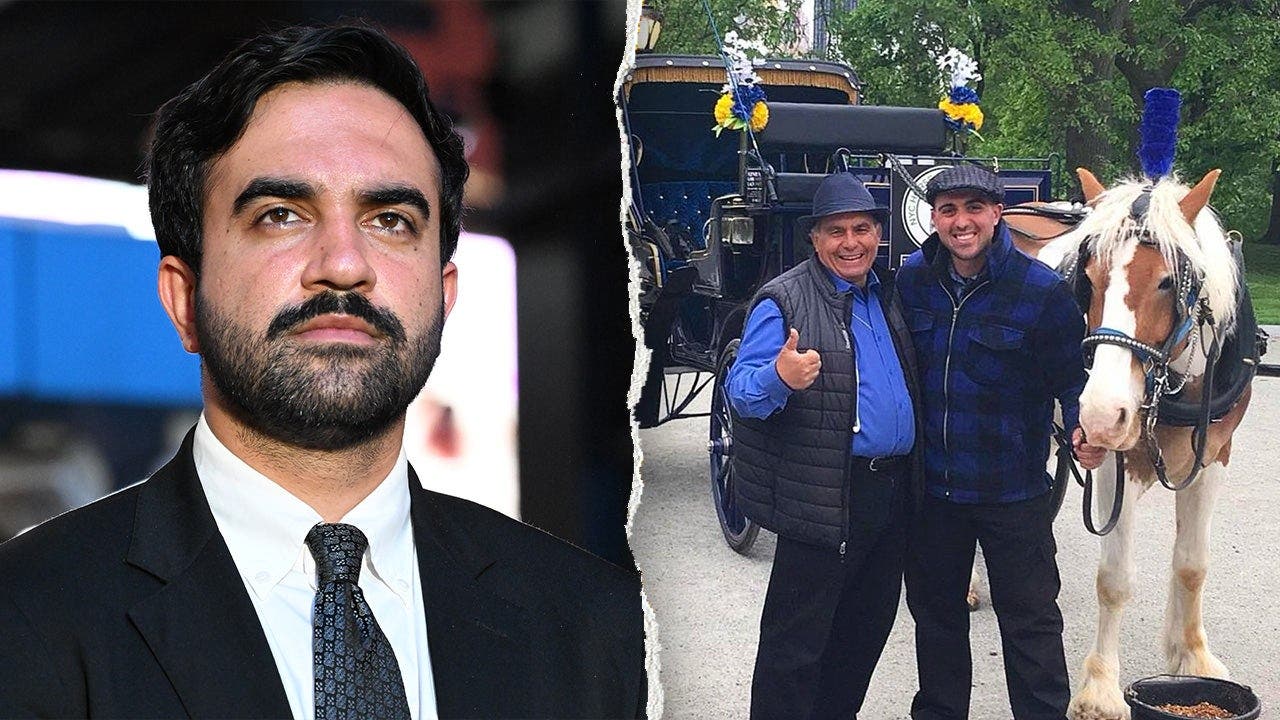
New York City executive and legislative leaders have finalized a binding agreement to phase out the municipal horse-drawn carriage trade. Mayor Zohran Mamdani and City Council Speaker Julie Menin announced the compromise measure, titled Romanch’s Law, ahead of a scheduled City Council floor vote next week. The legislation establishes an enforceable regulatory sunset, mandating the permanent cessation of all commercial horse-drawn carriage operations across the five boroughs by June 2028.
The consensus follows decades of regulatory stalemates among animal welfare coalitions, carriage license holders, and municipal oversight agencies. By structuring a multi-year transition path, the Mamdani-Menin administration seeks to systematically dissolve century-old transit operations that modern urban planning increasingly views as incompatible with dense metropolitan traffic. However, carriage drivers and commercial fleet owners warn that the policy creates immediate asset depreciation and severe labor displacement without providing clear compensation mechanisms.
Legislative Catalyst: Romanch Mahajan’s Death
The legislative acceleration of Romanch’s Law stems from a fatal operational failure in June, when 18-year-old Romanch Mahajan died after an agitated carriage horse bolted and overturned the conveyance near a high-traffic tourist hub. The fatality fundamentally altered municipal political dynamics, shifting the regulatory discourse from ethical animal treatment to non-negotiable public safety and municipal liability.
City officials subsequently framed draft-animal transit as structurally irreconcilable with contemporary traffic densities, asphalt heat exposure, and emergency service corridors. Memorializing Mahajan within the statutory framework provided the administration with decisive political leverage to overcome long-standing legislative resistance from organized labor and tourism lobbies.
Urban Frictions and Welfare Scrutiny
For decades, carriage operations concentrated along Central Park South have operated at the intersection of heritage tourism and regulatory scrutiny. Animal welfare organizations consistently documented systemic concerns, including intense thermal stress from city pavement, chronic dehydration, exhaust inhalation, and inadequate nutrition during peak operating hours. Street-level frictions between working drivers and animal rights monitors frequently escalated into public confrontations and regulatory complaints.
The sector’s vulnerability increased significantly through digital documentation. Widely circulated video footage of draft horses collapsing in traffic lanes or bolting through crowded intersections undermined administrative assertions that incremental oversight could sufficiently mitigate urban operational risks. Ban proponents leveraged these documented failures to argue that the physical environment of Manhattan cannot accommodate working draft animals safely.
Industry Exposure and Capital Devaluation
Industry representatives, communicating via outlets including Fox News Digital, assert that the blanket prohibition imposes asymmetric financial damage on working-class drivers and stable operators. Many carriage workers hold specialized, non-transferable vocational skills, having spent decades in an industry with limited pathways into other sectors of the local transport economy.
Fleet operators also face acute balance-sheet risks. Carriage medallions, custom rolling stock, and stable facilities represent capital investments that face direct functional obsolescence by June 2028. The framework’s lack of explicit buyout structures or alternative operating concessions leaves owners facing unhedged asset write-downs during the final compliance window.
Logistical and Regulatory Risks of the Four-Year Sunset
The four-year statutory ramp-down to June 2028 avoids an abrupt commercial stoppage, but it introduces distinct operational challenges. As the commercial lifespan of operations contracts, fleet operators face disincentives to commit capital toward equipment maintenance, stable improvements, and veterinary diagnostics. Municipal agencies will therefore face intensified oversight duties, requiring stringent enforcement of animal welfare codes among a demoralized workforce operating on borrowed time.
Simultaneously, the policy creates a significant post-operational transfer challenge: the long-term placement of hundreds of retired draft horses. Transitioning these animals to accredited sanctuaries or private equine facilities will require formal logistical coordination and substantial non-profit capital. The execution of this rehoming process will ultimately determine whether Romanch’s Law achieves its stated animal welfare objectives without externalizing costs onto private rescue networks.
Photo by Pexels on Pixabay.