
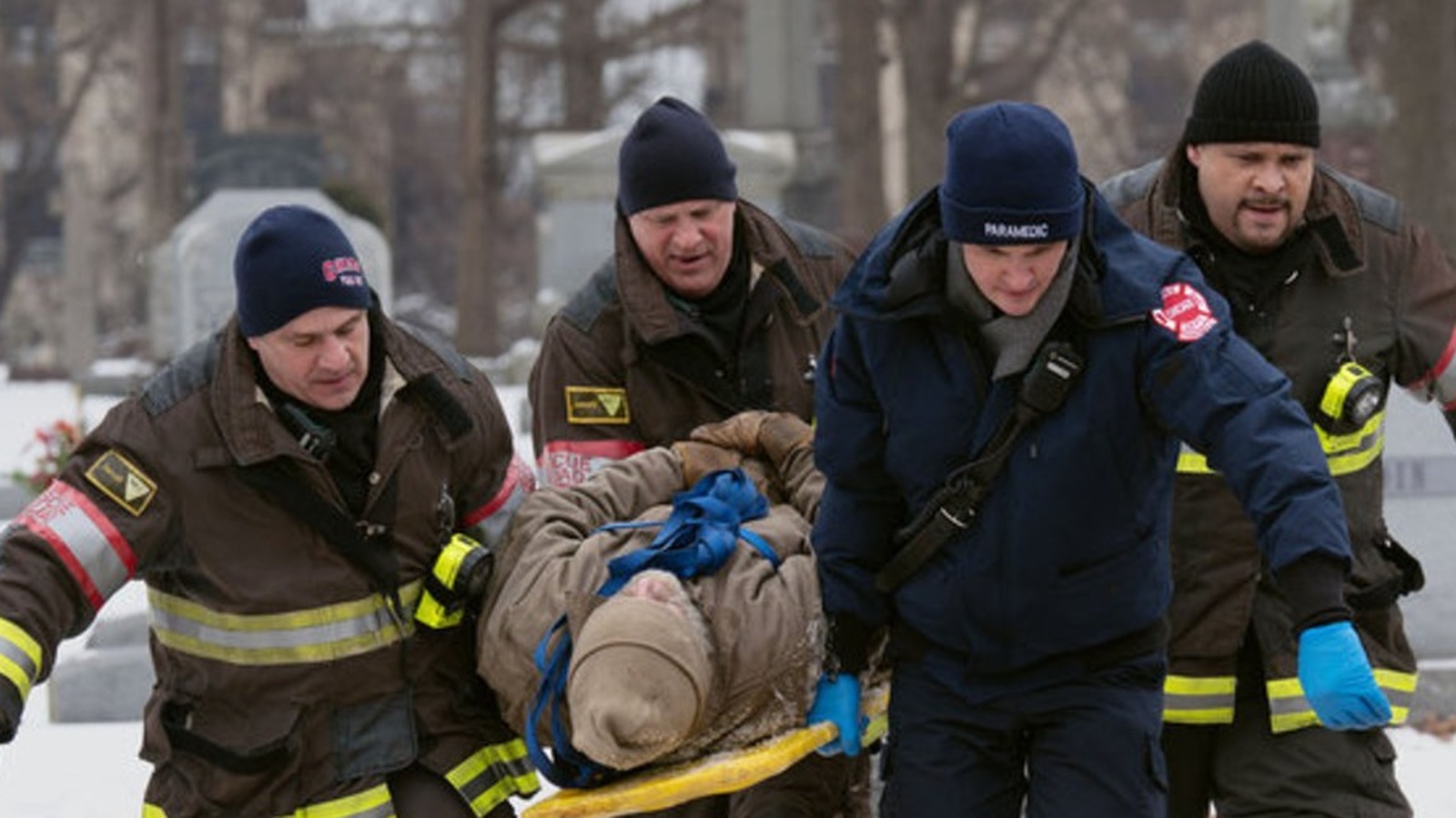
Long-running broadcast procedurals rarely sustain continuity across multi-season arcs without significant cast attrition and escalating talent overhead. Within NBC’s Chicago Fire, structural longevity relies on balancing top-billed dramatic performers with genuine institutional realism. Anthony Ferraris—a veteran of the Chicago Fire Department (CFD) who evolved from an uncredited utility driver into the recurring character Tony—exemplifies how real-world public safety expertise can optimize production logistics while anchoring commercial television drama.
Logistical Utility and Low-Friction Production
Network television schedules operate under compressed filming windows where mechanical delays compound location expenditures. Standard industry workflows rely on technical advisors to train screen actors in tool handling and municipal protocol, augmented by stunt doubles for heavy vehicular maneuvers. When showrunner Derek Haas launched Chicago Fire under Wolf Entertainment, operational constraints threatened early production efficiency: the primary cast lacked the municipal licensing and spatial awareness required to pilot frontline emergency vehicles through active urban environments.
Ferraris was initially contracted strictly for vehicular transport. As the only individual on set certified to operate complex municipal apparatus under filming conditions, he eliminated the need for specialized stunt drivers, second-unit setups, and protracted camera blocking. Recognizing the economic and logistical value of embedded authenticity, Haas quickly expanded Ferraris’s role during Season 1, assigning him scripted dialogue despite his absence of theatrical training. This operational decision collapsed the boundary between simulated drama and municipal labor, establishing immediate verisimilitude on set.
The Wolf Entertainment Verisimilitude Model
The procedural ecosystem developed by Dick Wolf and Wolf Entertainment relies on procedural velocity and authentic institutional subcultures rather than high-concept narrative deviation. Incorporating an active-duty CFD member into Rescue Squad 2 provided the ensemble with an organic cultural benchmark. Rather than executing studied mannerisms under the direction of onset consultants, Ferraris merely mirrored his standard field conduct—a directive Haas institutionalized to bypass performative artifice.
This functional presence instituted an informal auditing mechanism for the core cast. Performers executing scripted rescues adjusted gear carriage, structural entry pacing, and chain-of-command terminology to mirror Ferraris’s real-world instincts. Consequently, the production minimized common technical errors, shielding the broadcast from procedural scrutiny while elevating the visual texture above competing network dramas.
Cast Architecture and the Value of Secondary Roles
Maintaining appearance continuity across long broadcast runs presents significant financial hurdles. Primary dramatic actors frequently renegotiate terms, explore outside projects, or depart due to creative exhaustion. In contrast, non-narrative utility roles provide critical baseline continuity with minimal storyline overhead. Amassing more than 250 episodic credits positions Ferraris as the seventh most-credited performer in Chicago Fire history, trailing directly behind long-tenured leads like Taylor Kinney.
Ferraris achieved this footprint without conventional talent agency representation or career ambitions in dramatic acting. His longevity underscores the structural utility of foundational background fixtures. Audiences unconsciously track recurring workplace faces to gauge environmental stability; by keeping an authentic first responder embedded within Firehouse 51, the show preserved visual and cultural coherence across routine cast turnovers and creative resets.
Balancing Dual-Service Demands Through Municipal Retirement
Sustaining concurrent obligations to a municipal emergency agency and a major network schedule required unique coordination between city administrators and television executives. The CFD’s rotational shifts and unpredictable emergency calls presented persistent scheduling conflicts with rigid studio call sheets. The ongoing cooperation between the city and Wolf Entertainment underscored mutual institutional benefit: municipal recruitment gained valuable public visibility, while the network secured authentic operational legitimacy.
Following his eventual retirement from active municipal service, Ferraris transitioned into a full-time participant in the production ecosystem. His tenure as Tony highlights how specialized capability can outperform traditional casting trajectories within serialized procedural television. By incorporating frontline technical competence into its core cast architecture, Chicago Fire demonstrated that institutional authenticity serves as a durable hedge against production friction and audience attrition.

Photo by shiwa_de on Pixabay.