
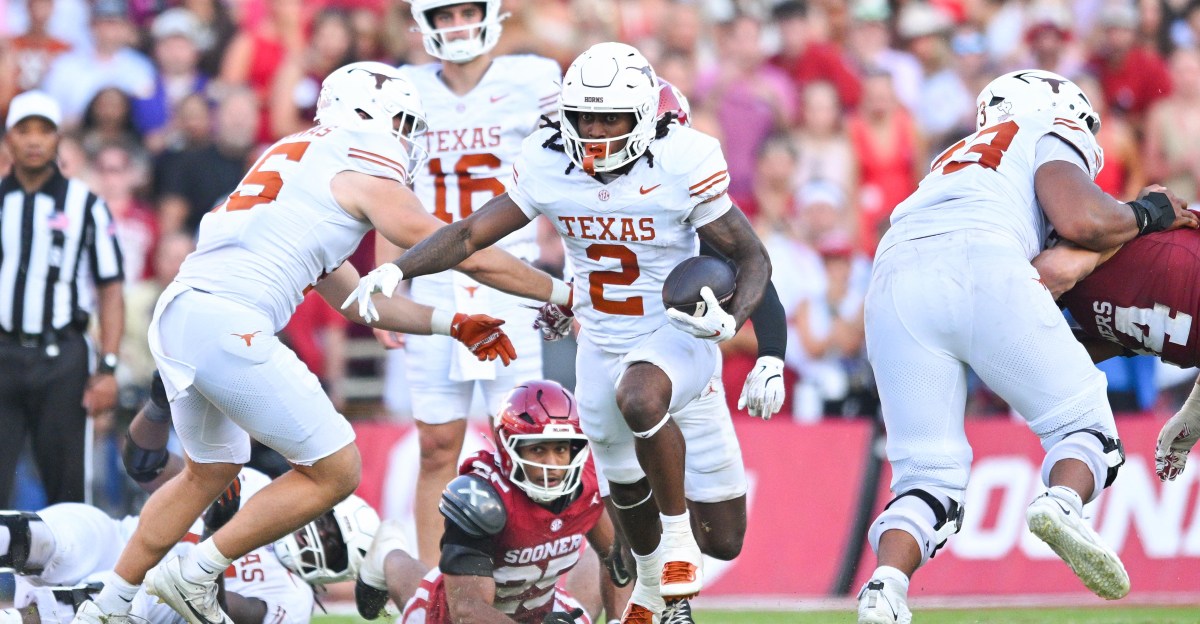
Institutional Audit Triggered by Second-Half Collapse Against Florida
Following a second-half collapse and subsequent defeat against Florida, Texas Longhorns head coach Steve Sarkisian announced an exhaustive review across the offensive depth chart and playbook. The mandate directly addresses persistent operational constraints: an inability to generate downfield run leverage, compressed intermediate passing corridors, and escalating protection burdens placed on quarterback Arch Manning. For a scheme engineered to exploit horizontal perimeter spacing and vertical stretch concepts, the systemic lack of inside run leverage has effectively collapsed the offense’s operational floor.
Roster Engineering: Capital Redistribution in the Transfer Market
The current structural deficiencies trace back to a high-turnover strategy executed during the January transfer portal cycle. Sarkisian aggressively reallocated roster and financial resources away from an established running backs room that staff evaluated as lacking top-end dynamic capacity. This deliberate personnel turnover triggered the departure of three experienced rotational backs with multi-year tactical equity inside the program:
- Quintrevion Wisner: The Longhorns’ leading rusher in both 2025 and 2026, who transferred to Florida State.
- CJ Baxter: A marquee 2023 signee who exited for Kentucky following three injury-abbreviated campaigns in Austin.
- Christian Clark: An emerging contributor who committed to South Carolina after an efficient performance in the Citrus Bowl victory over Michigan.
By divesting from incumbent operational familiarity, Texas leadership gambled that external portal acquisitions could instantaneously upgrade the unit’s home-run speed without degrading schematic execution.
The Production Deficit: Analyzing 193 Snaps of Ground Stagnation
Texas addressed these backfield vacancies by signing Arizona State transfer Raleek Brown and flipping NC State transfer Hollywood Smothers from an Alabama pledge. The operational thesis appeared validated immediately: Smothers ripped off a 45-yard explosive rush on the team’s first snap of the season. However, that inaugural rep masked severe down-to-down structural inefficiencies that materialized immediately afterward.
Across the subsequent 193 rushing attempts, the Texas backfield generated just two carries of 20 or more yards, establishing an explosive rush rate of barely 1.04%:
- Raleek Brown: A 21-yard perimeter touchdown run against Texas State.
- Arch Manning: A 20-yard scramble against UTSA forced by pass-protection breakdown.
When an off-schedule scramble accounts for 50% of an offense’s explosive ground output across a 193-snap sample, the primary rushing system has ceased to dictate terms to opposing fronts.
Tactical Repercussions on Defensive Coverages and Arch Manning
This absence of authentic rushing explosiveness has altered how defensive coordinators game-plan against Sarkisian. Modern defenses routinely defend Texas with light boxes and two-high safety shells, confident that interior fronts can contain base gap and zone concepts without extra secondary run support. With defensive backs detached from the box, coordinators bracket boundary receivers, restrict intermediate seams, and comfortably flood underneath drop-eight zones on predictable third-down situations.
This coverage reality shifts disproportionate diagnostic strain onto Arch Manning. Without reliable early-down success, Texas repeatedly confronts obvious passing downs against rotated coverages. While Manning’s athleticism creates secondary conversion value, relying on quarterback improvisation does not resolve core zone-blocking synchronization issues, backfield vision errors, or missing short-yardage push.
Macro Implications of the Portal Replacement Model
The Longhorns’ impasse underscores the structural volatility of aggressive roster churning in modern college football. Replacing programmatic cohesion and system-fluent players—such as Wisner, Baxter, and Clark—with external portal assets introduces considerable friction costs. Roster overhauls carry transition lag; timing between transfer rushers and incumbent offensive linemen often takes extensive game reps to solidify.
With critical conference matchups approaching, Sarkisian’s internal evaluation must isolate whether the primary failure mechanism resides in offensive line execution, backfield processing, or conceptual play design. Unless Texas activates the explosive profiles of Brown and Smothers between the tackles, opposing defenses will continue constricting the pocket around Manning, leaving the Longhorns’ championship aspirations structurally capped.

Photo by Linzmeier1 on Pixabay.