Verizon has established a $10 monthly access tariff for Apple’s upcoming iPhone Handoff feature in iOS 27. The move introduces significant domestic and international price divergence: Verizon’s recurring rate doubles the $5 fee announced by T-Mobile and contrasts sharply with the bundled provisioning models deployed in Europe.
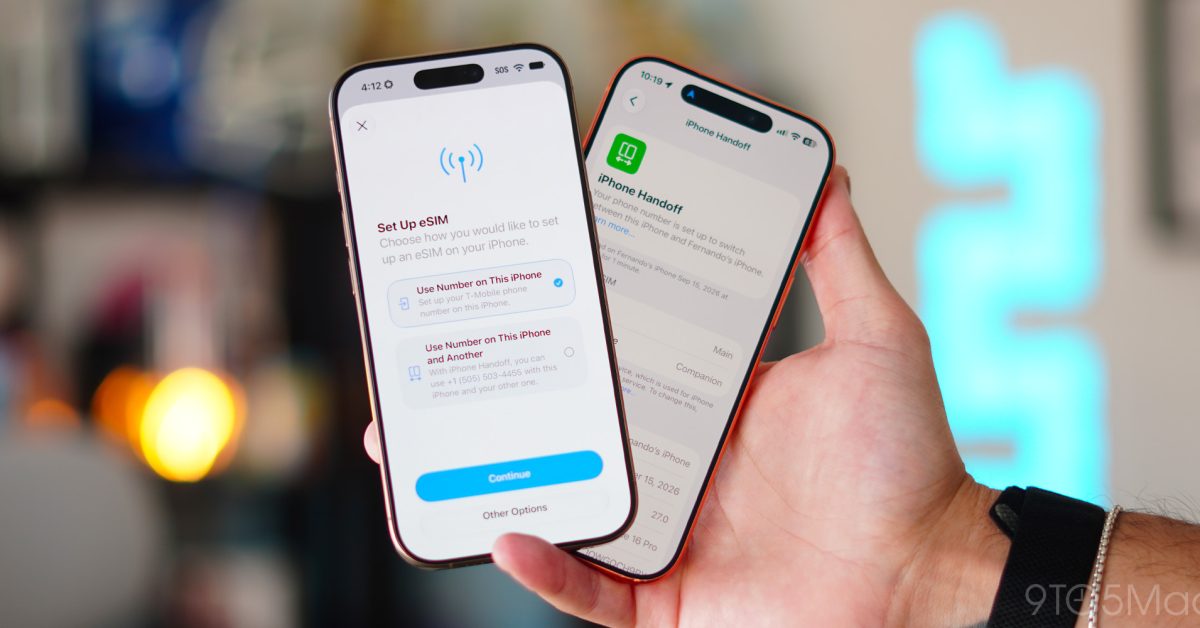
Introduced at Apple’s Worldwide Developers Conference and elaborated during its Surprise and Shine event, iPhone Handoff enables a single cellular directory number to route interchangeably between two discrete iPhone handsets. Launch partners Deutsche Telekom and T-Mobile initially spearheaded operator integration, with Verizon and the UK’s EE scheduled to deploy network-level support before year-end.
Core Signaling Overhead and Monetization Architecture
Operating a shared directory number across multiple physical handsets alters traditional cellular provisioning. According to Apple’s technical architecture, a subscriber designates a primary terminal and a secondary paired device. Network voice routing and location tracking dynamically transfer whenever either device is unlocked by the user.
Rather than relying on local peer-to-peer tethering, this implementation shifts identity and dynamic routing to the carrier’s mobile core. Managing real-time registration updates across active cell towers generates non-trivial signaling overhead. However, operators are addressing this infrastructure cost through divergent billing mechanisms:
- Deutsche Telekom: Integrates the feature directly into its established MultiSIM architecture at €6.95 per month, waiving the cost entirely on premium-tier rate plans.
- T-Mobile US: Treats the capability as a low-margin add-on at $5 monthly to minimize consumer friction and drive ecosystem retention.
- Verizon: Positions multi-device routing as a standalone, high-margin utility at $10 monthly ($120 annually), guarding against average revenue per user (ARPU) dilution.
Economic Friction in Secondary Hardware Deployment
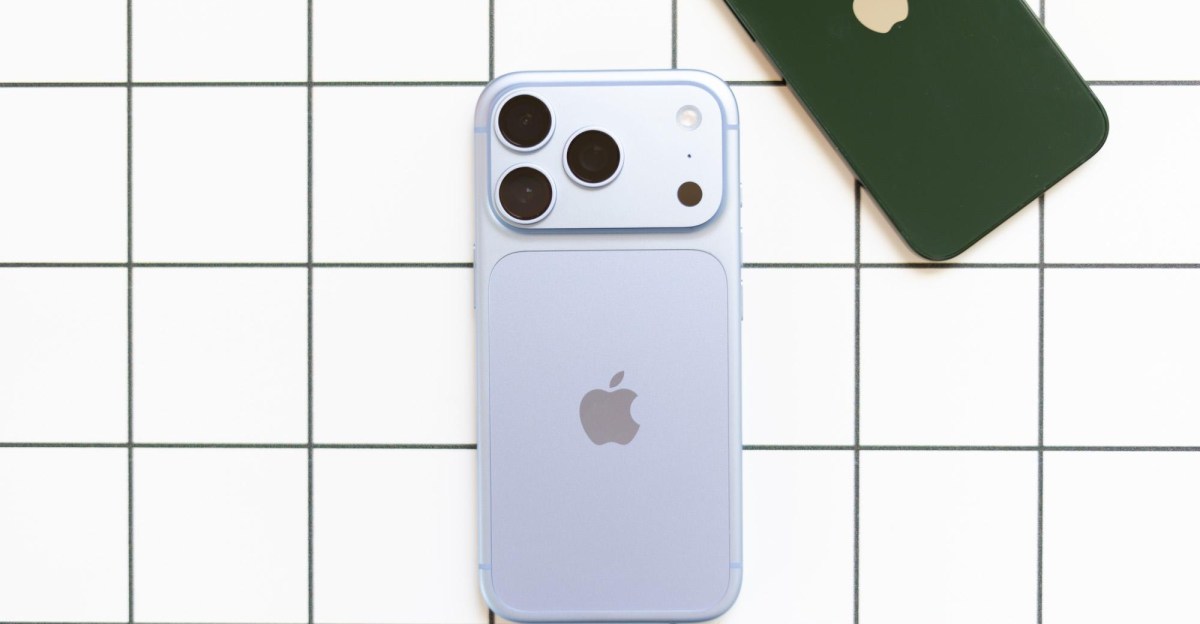
The primary consumer use case for iPhone Handoff is secondary hardware segmentation—allowing subscribers to swap dynamically between a standard flagship and a smaller unit, such as a discontinued iPhone Mini, without manual SIM swapping or multi-line plans. The terminal unlocked by the user anchors active network traffic, ensuring singular call termination without simultaneous ringing conflicts.
However, Verizon’s $10 monthly baseline alters the economic calculus of repurposing legacy devices. When carrier recurring charges rival digital subscription costs, users are disincentivized from cellular provisioning for casual, intermittent use. In price-sensitive segments, subscribers are more likely to rely on local Wi-Fi routing and tethering rather than paying for native cellular continuity.
Institutional Impact on Line Classification
Telecommunications billing frameworks historically operated on a strict 1:1 ratio between discrete SIM/eSIM profiles and billed subscriber lines. Apple’s software-driven handoff paradigm subverts this demarcation by distributing a single cellular identity across multiple terminals via operating-system authentication.
With EE’s forthcoming rollout in the United Kingdom set to clarify broader European market terms, Verizon’s posture demonstrates an incumbent strategy: monetizing OEM-driven functional efficiency as premium network utility rather than absorbing it as a standard baseline capability.