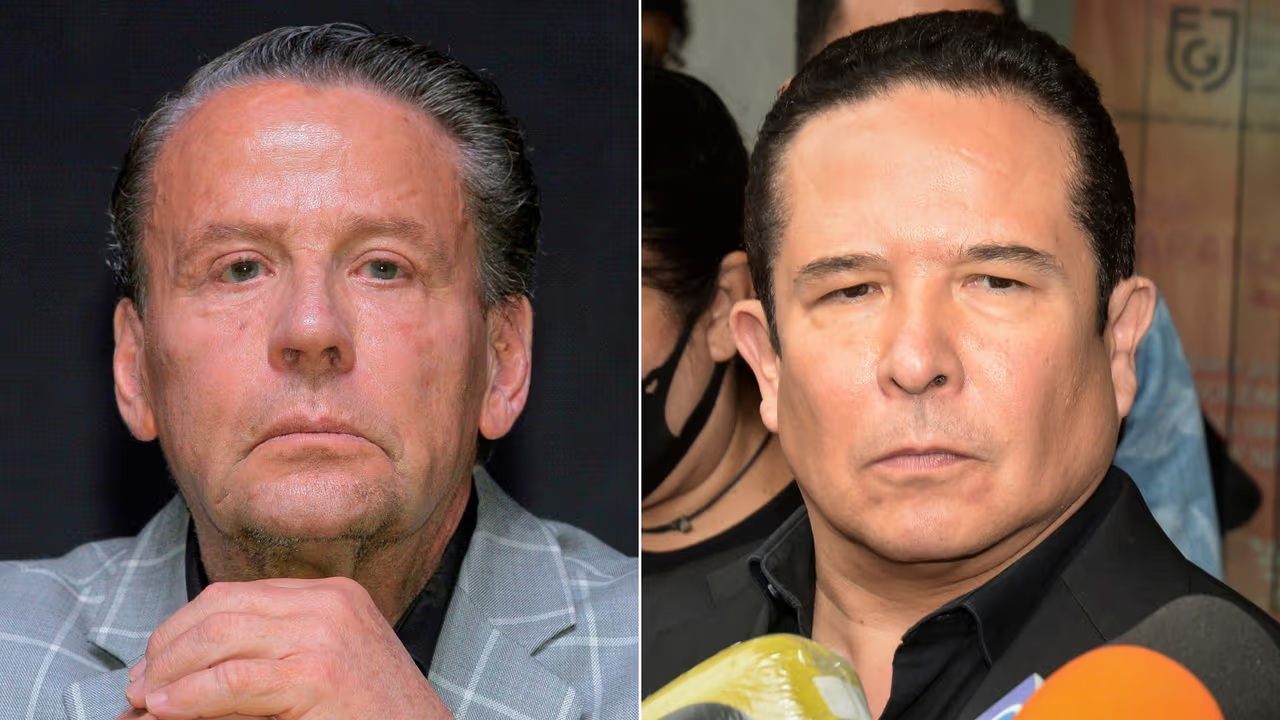
Landmark Discrimination Conviction in Mexico City
A Mexico City court has issued a guilty verdict against television personality Alfredo Adame, finding him criminally responsible for discrimination against the mother of journalist Gustavo Adolfo Infante. This ruling marks a significant judicial outcome in the ongoing public dispute between two prominent media figures, establishing a clear legal boundary for public discourse and its intersection with statutory protections against discriminatory speech.
The initial judicial resolution imposes a non-custodial sentence, ordering Adame to perform community labor alongside a monetary penalty. Legal representatives for the plaintiff confirmed the sanction comprises thirty-three days of community service and a fine of sixty-seven thousand six hundred twenty-eight pesos, with an option to commute the financial sum into an additional sixteen days of public work. While initial reports cited a thirty-three-day term of labor, a discrepancy in reported administrative units (days vs. hours) has been noted by parties involved, though the core penal outcome of a non-custodial conviction remains.
Prosecution’s Appeal: Seeking Maximum Penalties
The conclusion of the hearing has not brought finality, as legal representatives for Gustavo Adolfo Infante immediately declared their intention to challenge the sentence. The prosecution strategy focuses on filing an appeal to seek a substantially higher tier of penal liability, explicitly targeting the maximum statutory sentence of three years of imprisonment. This move reflects a fundamental disagreement with the proportionality of the imposed sanctions.
Infante, speaking on programs like De Primera Mano and to various media outlets, articulated that the current ruling does not fully reflect the evidentiary elements presented during procedural arguments. His legal counsel asserts that the evidence justified elevated penal consequences, including custodial sentences, rather than the operational community service alternative granted by the presiding judge. This appeal highlights the tactical complexity of penal enforcement in public speech disputes, aiming to shift the legal outcome from corrective non-custodial measures towards institutional confinement.
Legal Precedent and Accountability for Public Rhetoric
This conviction establishes a significant legal precedent regarding accountability for derogatory and discriminatory rhetoric, particularly when directed at individuals connected to public communicators. The legal team representing Infante underscored that the outcome validates the capability of offended private citizens to deploy statutory discrimination frameworks against high-profile figures. Under Mexican statutory systems, securing a criminal conviction for discrimination fundamentally alters the dynamic between public commentary and civil protections. By pursuing formal penal channels rather than purely civil tort claims, these proceedings affirm that public assertions carry operational exposure culminating in formal criminal sanctions.
The characterization of Adame as an adjudicated offender demonstrates the severe reputational consequence generated by the ruling. Beyond the immediate burden of community labor or financial payments, the formal inscription of a criminal judgment alters the civic standing of public personalities within the legal system, setting a new standard for accountability in the entertainment and broadcast industries.
Media Industry Impact and Regulatory Scrutiny
The formal judicial sanction of a mainstream television personality reflects shifting operational risks across the entertainment and broadcast ecosystem. Traditionally, high-profile conflicts among broadcast commentators might have remained within informal entertainment spheres, largely insulated from statutory criminal consequences. This adjudication demonstrates that media organizations and public personalities must now navigate tightened boundaries where interpersonal discourse intersects with statutory prohibitions against discrimination.
The deployment of formal court processes by industry participants against peer figures indicates a structural shift toward legal institutionalism over solely mediated dispute management. As the legal representatives prepare their appellate brief seeking the statutory three-year term, this litigation represents a pivotal baseline for Mexican speech and discrimination law. The final resolution of the appeal will determine whether future infractions by broadcast talent result in symbolic civil fines or operational penal confinement, shaping the future of public commentary in Mexico.