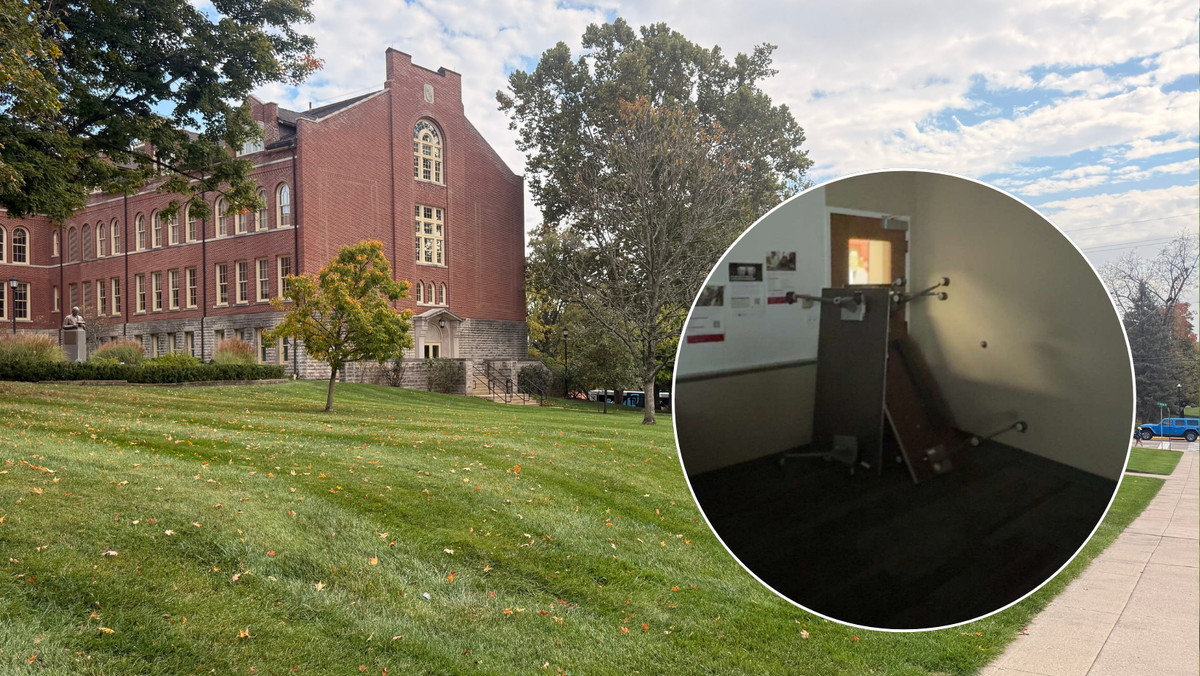
Operational Sequence of the Oxford Campus Emergency Alert
Miami University and regional law enforcement agencies initiated rapid emergency response protocols on Thursday afternoon following reports of potential gunfire near McGuffey Hall. The initial call reached the Butler County Sheriff’s Office around 2:00 p.m., while the Miami University Police Department simultaneously processed a direct alert from a student inside an academic classroom.
By 2:11 p.m., the institution activated its automated mass-notification network, disseminating a RedHawk Alert to students, faculty, and administrative staff across digital channels. The directive instructed campus constituents to observe standard emergency protective postures, citing an active threat situation in the vicinity of the reported disturbance.
First responders deployed to the scene within sixty seconds of dispatch, establishing a heavy law enforcement footprint around the perimeter of McGuffey Hall. Units from the Miami University Police Department, the Oxford Police Department, and the Butler County Sheriff’s Office executed a systematic tactical sweep to clear interior corridors and external grounds.
Inter-Agency Coordination and Rapid On-Scene Assessment
The swift physical intervention reflected established inter-agency protocols designed to minimize operational friction during high-priority campus incidents. Officers prioritized physical containment while parallel investigative units interviewed nearby witnesses to triangulate the origin and character of the reported detonations.
Testimony gathered at the scene consistently pointed away from ballistic discharges, with multiple witnesses reporting acoustic profiles characteristic of consumer fireworks rather than small-arms fire. Despite the absence of corroborating physical evidence or casualty reports, tactical teams maintained building search operations out of an abundance of caution.
By 2:40 p.m., institutional safety leadership confirmed that no ballistics, property destruction, or injured individuals had been located during the sweeps. University authorities and the Butler County Sheriff’s Office subsequently canceled the active threat status and issued a formal all-clear announcement across all university communication portals.
Institutional Mechanics of Higher Education Threat Dissemination
The operational pivot from an unconfirmed 911 dispatch to an institution-wide emergency broadcast illustrates the strict operational standards governing contemporary university risk management. Modern campus safety frameworks require safety directors to treat audible acoustic alerts with immediate maximum-threat posture rather than delaying notifications pending physical verification.
Under federal regulatory compliance standards, post-secondary institutions maintain automated alert systems that transmit omnidirectional warnings via SMS, email, and social media platforms. Because early intervention protocols prioritize rapid community lockdown, the informational threshold for initiating an active threat alert remains deliberately low.
This low threshold ensures rapid spatial evacuation and lockdown compliance, yet it routinely creates immediate informational exposure across public networks. As seen during the Oxford response, social media platforms amplified the unverified gunfire report within minutes of the initial 2:11 p.m. transmission, requiring continuous public relations oversight.
Cross-Jurisdictional Division of Labor in Public Safety
The incident highlighted the jurisdictional boundaries that govern municipal and county support for state university campuses. While the Butler County Sheriff’s Office absorbed initial dispatch traffic and assisted with physical tactical support, the agency publicly confirmed that primary investigative jurisdiction resided strictly with the Miami University Police Department.
This operational delineation is critical for administrative continuity, post-incident investigations, and formal public safety documentation. Maintaining clear jurisdictional oversight prevents duplicate reporting streams and ensures that official findings regarding non-ballistic noise sources maintain evidentiary integrity.