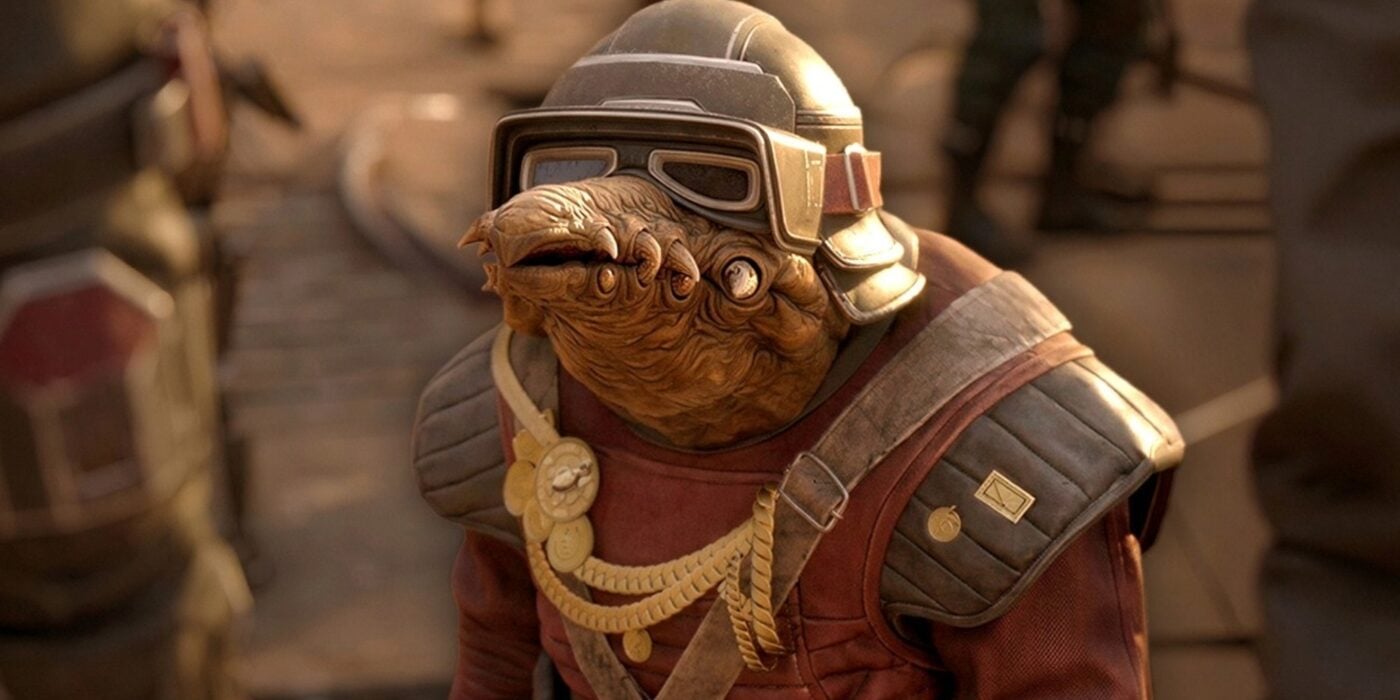
The launch of Star Wars: Galactic Racer—debuting to a composite review score of 76—provides a revealing case study in modern interactive entertainment economics. Despite mid-tier critical reception, the title captured significant organic mindshare through an ancillary asset: Biddy Blas, a diminutive Crocin pilot defined by hyper-intense voice acting and volatile behavior. Propelled across short-form video platforms by his signature line ‘scrib doon,’ the character underscores how eccentric, high-conviction narrative elements can disrupt standard audience acquisition funnels.
Creative Labor Economics vs. Algorithmic Automation
The viral trajectory of Biddy Blas coincides with contentious industry-wide deliberations surrounding generative artificial intelligence and procedural narrative generation. Critical assessments, notably from outlets like IGN, emphasize that the performance’s distinct vocal idiosyncrasies and manic cadence represent interpretive nuances that automated speech synthesis cannot replicate.
As corporate leadership explores algorithmic workflows to compress pre-production budgets, audience response to Biddy Blas demonstrates the tangible economic return on specialized human performance. In an operational climate defined by capital rationalization, mass layoffs, and studio consolidations, deliberate resource allocation toward bespoke voice talent remains a decisive vector for product differentiation and community retention.
Macroeconomic Headwinds and Distribution Shifts
This character-driven resonance unfolds against persistent macroeconomic headwinds throughout the interactive software value chain. Publishers face compressed margins driven by hardware component pricing rigidity, data center energy inflation, and volatile cloud compute expenses.
Concurrently, the structural transition toward digital-only ecosystems alters asset amortization schedules and back-catalog monetization. In this constrained capital environment, production leaders must balance expensive bespoke world-building against homogenized, scalable assets. Biddy Blas demonstrates that targeted investment in high-character micro-narratives delivers superior engagement efficiency compared to generic, procedural scale.
Algorithmic Discovery and IP Heritage Monetization
The organic distribution of Biddy Blas received executive confirmation from Lucasfilm Games Executive Producer Craig Derrick, who noted that platform recommendation architectures accurately prioritized the character’s unhinged delivery. This highlights the evolving mechanics of digital discovery: non-linear, recommendation-driven platforms increasingly replace capital-intensive upfront marketing campaigns by rewarding anomalous, high-retention character design.
Moreover, the character operationalizes a historical design motif of the Star Wars franchise, colloquialized in digital culture as the ‘Glup Shitto’ phenomenon—wherein background or peripheral figures secure fervent cult followings. While the Crocin taxon was introduced in Solo: A Star Wars Story, its re-engineering within Galactic Racer illustrates cost-efficient IP cataloging. Leveraging established secondary lore deepens universe cohesion without requiring speculative pre-production asset design.
Narrative Architecture and Tabletop Roleplaying Principles
From a narrative architecture standpoint, Biddy Blas reflects structural mechanics prevalent in tabletop roleplaying game (TTRPG) systems like Dungeons & Dragons. Narrative designers and game masters observe that secondary character longevity depends not on physical scale, but on uncompromised psychological commitment to diegetic goals.
Biddy Blas exhibits absolute internal gravity, engaging high-speed racing with fatalistic intensity. This deliberate juxtaposition—diminutive stature paired with ferocious sincerity—creates an asymmetric comedic friction that enhances world believability without lapsing into cynical parody, providing a scalable template for interactive world-building.
Strategic Ecosystem Value and Downstream Capitalization
For IP licensors and co-development partners, high-traction secondary characters provide structural insulation against modest review aggregations. By extending community engagement cycles, these narrative assets sustain active concurrent users and maintain social visibility.
Ultimately, culturally durable secondary characters yield sustained downstream leverage across ancillary monetization channels, including physical merchandise, licensing, and prospective episodic extensions. Within an industry pivoting toward fiscal discipline, Biddy Blas confirms that specialized creative talent and artisanal character design remain non-fungible economic drivers.