
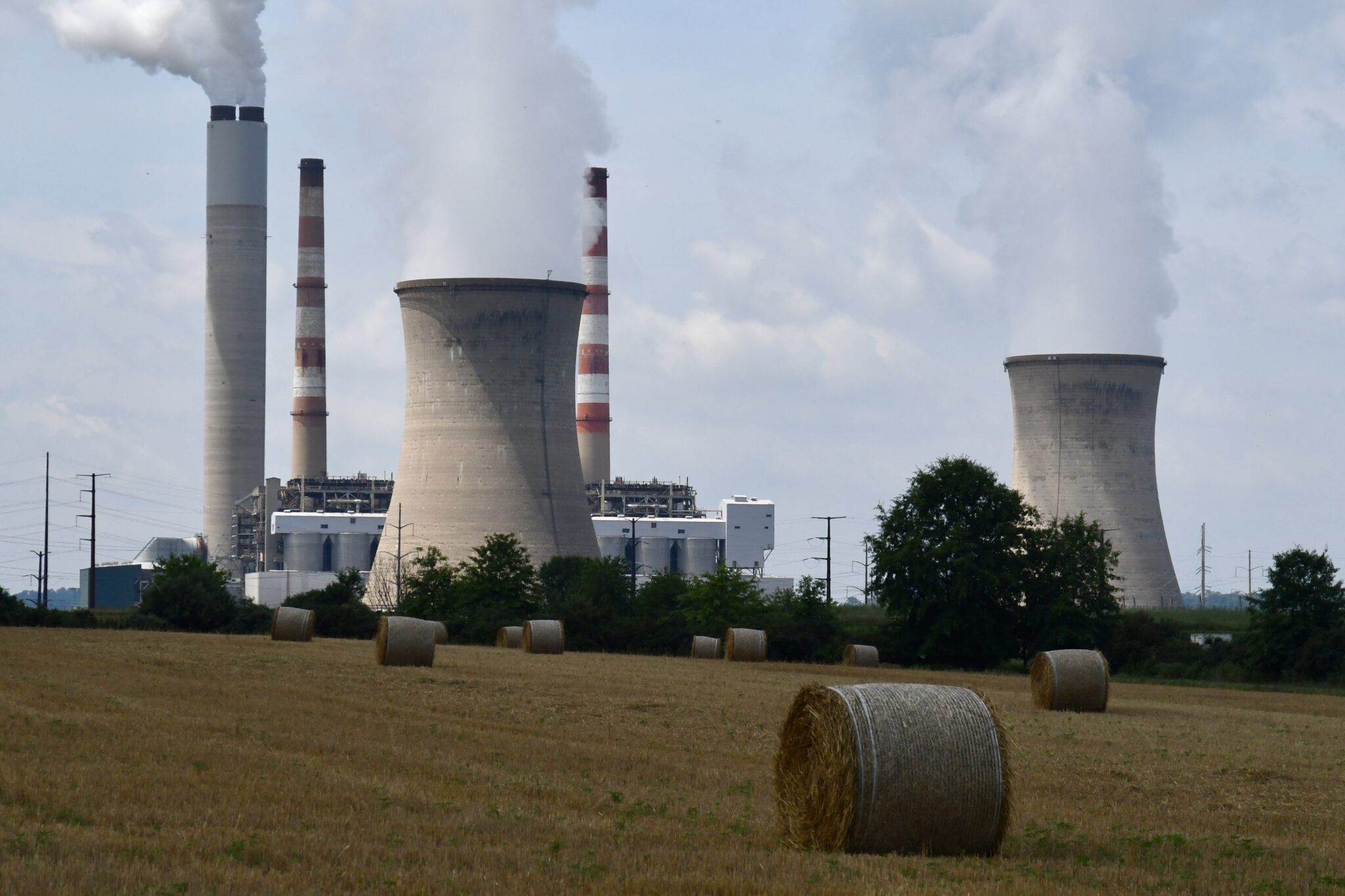
PJM Interconnection has deployed a suite of emergency operational directives across its multi-state footprint to resolve acute reserve margin shortfalls triggered by late-season heat and scheduled generator maintenance. The regional transmission organization (RTO) issued concurrent Maximum Generation and Load Management alerts for October 13 across its territory, which encompasses 13 states and the District of Columbia. The administrative actions followed an active Capacity Advisory effective October 12 through October 14, driven by elevated cooling demand that rapidly compressed available operating reserves.
To arrest deteriorating balance conditions, dispatchers initiated a mandatory Maintenance Outage Recall for October 14, requiring generation owners to suspend discretionary capital work and return offline assets to commercial service. Simultaneously, transmission owners and distribution utilities were instructed to defer non-essential testing and line maintenance, maximizing throughput capacity and mitigating the immediate risk of firm load shedding across commercial and residential hubs.
Federal Intervention and Environmental Dispatch Orders
Operational reserve depletion prompted the U.S. Department of Energy (DOE) to issue an emergency order under Section 202(c) of the Federal Power Act at PJM’s direct request. The directive authorizes the grid operator to compel generating units into service regardless of contractual schedules, explicitly granting temporary waivers to exceed federal, state, and local air quality permit thresholds. This emergency flexibility prevents the forced curtailment or defensive shutdown of thermal units constrained by annual runtime or emissions ceilings.
The federal order also expands PJM’s emergency authority over intensive consumers, notably the high-density hyperscale data center corridors in Virginia and Maryland. PJM gained explicit latitude to instruct large commercial and industrial consumers to curtail consumption or transition to behind-the-meter generation. While these environmental exemptions unlock marginal generation, they subject participating asset owners to rigorous run-time accounting, operational logging, and emissions reconciliation to verify emergency compliance.
Operational Protocols of Maximum Generation and Export Controls
A Maximum Generation Alert establishes a structured operational state where all resource providers must maximize real-time availability. Generation and transmission asset managers must formally review, postpone, or cancel testing and maintenance. By halting deliberate outages, the RTO secures critical high-voltage transmission pathways and raw generating capacity needed to satisfy aggregate base load and operating reserve requirements.
The protocol also governs cross-border transmission flows with adjacent balancing authorities. Under active Maximum Generation conditions, external system operators receive formal notification that scheduled energy exports from PJM may be curtailed to preserve internal system integrity. This mechanism enables neighboring regions to adjust unit commitment schedules and deploy local reserves before inter-regional interchange reductions occur. PJM clarified that these actions target wholesale market participants and asset owners, functioning entirely upstream of retail customers to prevent involuntary disconnections.
Shoulder-Season Maintenance Vulnerabilities
The operational crunch exposes structural vulnerabilities inherent in electric utility shoulder-season scheduling. Power plant operators traditionally concentrate major mechanical overhauls, environmental retrofits, and statutory maintenance in spring and autumn, capitalizing on historically moderate temperatures and lower wholesale power demand. Consequently, hundreds of megawatts are scheduled offline months in advance.
Unseasonable temperature spikes in mid-October disrupt this baseline, producing sudden cooling demand while baseline dispatch capacity remains offline. While the October 14 Maintenance Outage Recall mandates the return of offline generation, thermal and mechanical units undergoing major disassemblies cannot instantly re-synchronize. This physical lag elevates baseline risk, making the bulk power system exceptionally sensitive to unexpected mechanical trips on running units.
Load Management and Industrial Demand Response
In parallel with supply-side mobilization, PJM activated its Load Management Alert to access contracted demand-side capacity. The notice positions dispatchers to declare Pre-Emergency or Emergency Demand Response events, calling upon enrolled commercial and industrial end-users to reduce line draw. In exchange for capacity payments, participating facilities must shed operational load or start onsite backup systems.
This contractual curtailment acts as a shock absorber for the bulk transmission system, offsetting generation deficits without resorting to public rolling blackouts. For energy-intensive sectors, participation involves careful management of operational trade-offs between commercial throughput and grid stabilization commitments. Together with emissions waivers and unit recalls, PJM’s multi-layered response illustrates the increasing complexity of grid management when unseasonal weather intersects with fixed maintenance schedules across deregulated markets.

Photo by TheDigitalArtist on Pixabay.