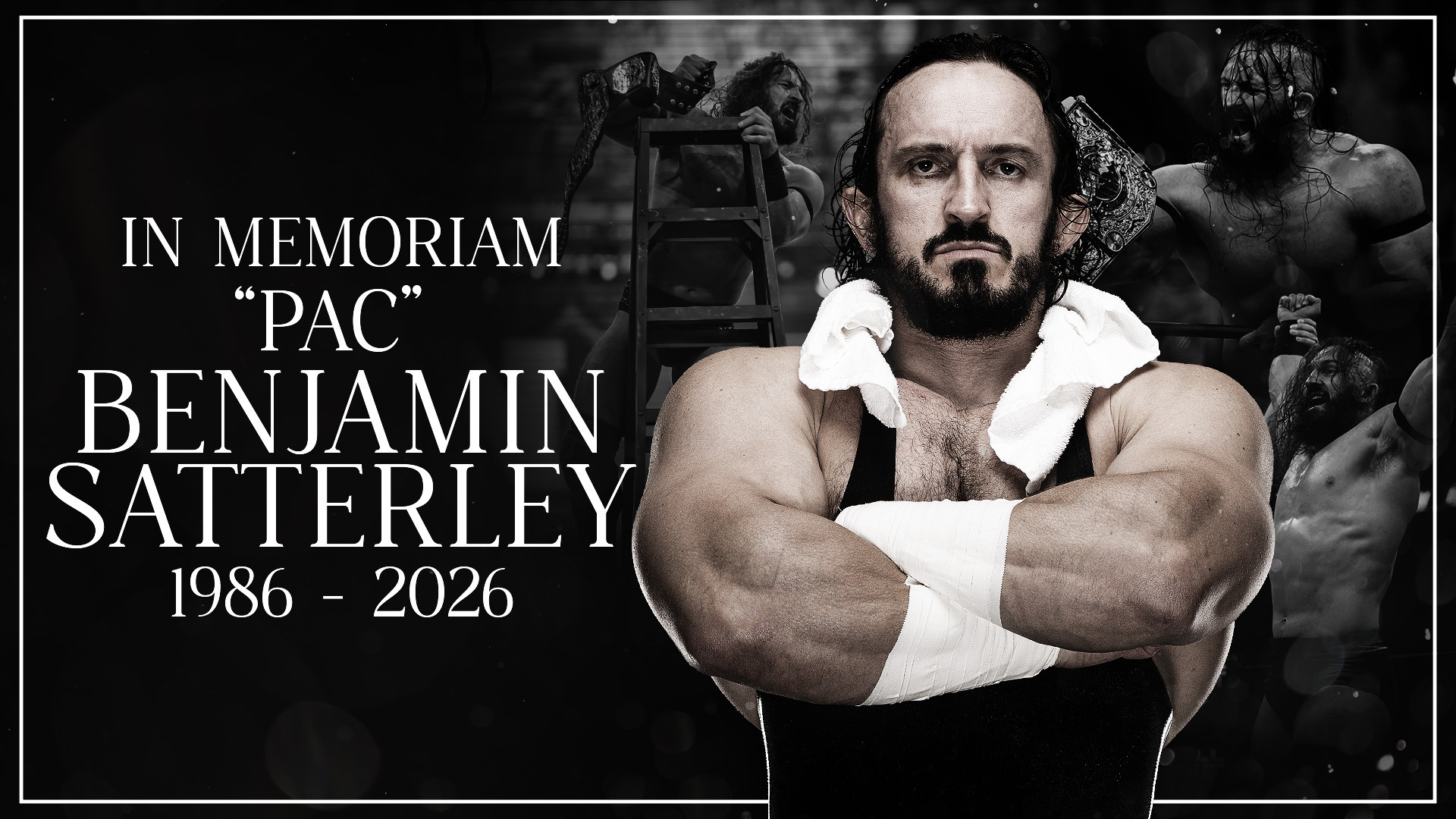
Official Cook County Ruling: Bronchial Asthma Confirmed in Pac’s Death
The Cook County Medical Examiner’s Office in Illinois has officially concluded its inquiry into the sudden passing of professional wrestler Benjamin Satterley, known globally as Pac. The final determination states bronchial asthma as the definitive cause of death, ruling the manner of death as natural. This administrative finding, following a multi-week investigation, formally eliminates any suspicion of trauma or criminal involvement from the official record for Satterley, who was 40 years old.
This conclusive medical determination provides critical clarity regarding an event that sent shockwaves through the sports entertainment industry, occurring just 24 hours after a major pay-per-view broadcast. By identifying an acute respiratory condition as the decisive physiological factor, the county report not only closes the jurisdictional probe but also underscores the profound health demands faced by high-level touring performers. Early reports from outlets like the New York Post and California Post had highlighted the immediate pronouncement of death by first responders, a detail now contextualized by the confirmed rapid onset of an acute medical crisis.
Emergency Response and the Scene in Des Plaines
Municipal documentation indicates that emergency personnel were dispatched at approximately 4:00 p.m. on September 27 to a commercial parking lot outside a CAVA restaurant in Des Plaines, Illinois. This location, roughly two miles north of Chicago O’Hare International Airport, is a common logistical nexus for talent transitioning out of the metropolitan area after large-scale arena productions. Authorities were alerted via a 911 call from a civilian who discovered Satterley unresponsive inside a stationary rental car.
First responders’ field reports noted no indications of physical struggle, violent trauma, or suspicious markings on Satterley’s body during their initial inspection. Crucially, they observed saliva on the front of his shirt and located medication within the vehicle. These direct physical observations, combined with the lack of external injury, supported the medical examiner’s subsequent finding of a sudden, incapacitating medical episode. The proximity to O’Hare illustrates the common, often solitary, logistical patterns professional wrestlers follow, where individual rental transport facilitates transitions between venues, hotels, and air terminals. This incident tragically illuminates how a sudden physiological crisis can unfold within the routine, yet isolated, logistics chain of the touring entertainment industry.
The Physiological Demands of Elite Performance and All Out
The temporal proximity between Satterley’s final performance and his death critically highlights the severe athletic strain inherent in contemporary sports entertainment. On the evening of September 26, Satterley competed against Andrade El Idolo in the opening match of All Elite Wrestling’s All Out pay-per-view. This high-profile bout was an intensive, fast-paced contest demanding substantial aerobic endurance, explosive physical execution, and acute respiratory regulation under extreme stress—all immediately preceding his transit window.
Satterley was renowned internationally for an athletic style that seamlessly merged explosive aerial maneuvers with high-impact, physical combat. Such complex routines at the pay-per-view level necessitate sustained cardiovascular output, making pre-existing conditions like bronchial asthma a significant vulnerability. The stark transition from peak athletic exertion on Saturday night to acute respiratory collapse on Sunday afternoon outlines the unforgiving physiological realities confronting professional wrestlers, particularly those managing chronic medical conditions amidst a demanding travel schedule.
AEW officially confirmed Satterley’s passing on September 27, prompting an immediate global outpouring of tributes. His match against Andrade El Idolo now stands as the final documented contest of a decorated twenty-year career, defined by rigorous physical execution and an unwavering commitment to in-ring excellence. The official ruling of bronchial asthma underscores how underlying clinical conditions can interact precipitously with the intense lifestyle and continuous travel rhythms characteristic of elite independent contractors.
A Transnational Competitive Trajectory and Enduring Influence
Born in Newcastle upon Tyne, England, Benjamin Satterley forged a celebrated professional career that fundamentally reshaped performance standards across international promotions. He honed his craft within the demanding British independent circuit, utilizing exceptional agility and aerial precision to establish a regional profile. This domestic success quickly propelled him to competitive tenures in Japan and the United States, cementing his reputation as one of the most structurally influential European wrestlers of his era.
His unique technical profile earned him opportunities across four of the world’s most prominent professional wrestling enterprises: World Wrestling Entertainment (WWE), New Japan Pro-Wrestling (NJPW), Consejo Mundial de Lucha Libre (CMLL), and All Elite Wrestling (AEW). In WWE, performing as Adrian Neville, he captured championship honors and served as an architectural cornerstone for the company’s emerging developmental brand, NXT. His tenures in Mexico with CMLL and Japan with NJPW further reinforced his rare ability to bridge diverse national wrestling styles, from high-flying lucha libre to hard-hitting strong style, demonstrating unparalleled versatility.
Upon joining All Elite Wrestling, Satterley reinvented himself as ‘The Bastard’ Pac, anchoring main-event programs and solidifying the promotion’s early competitive credibility. His presence provided AEW with an elite international asset capable of commanding pay-per-view cards through peerless technical legitimacy and intense character work. Satterley’s remarkable ability to achieve high standing across competing corporate platforms established him as an indispensable and historically significant performer within modern industry history.
Peer Reverence and the Unified Industry Response
The confirmation of Satterley’s death precipitated an extraordinary outpouring of institutional solidarity and individual tributes across the global wrestling sector. Performers, executives, and production personnel from WWE, AEW, and independent organizations published formal memorials, universally recognizing his exceptional work ethic, peer mentorship, and profound impact on the craft. This collective reaction transcended traditional promotional divides, demonstrating the deep personal and professional respect he commanded across competing locker rooms.
Colleagues frequently highlighted Satterley’s intense professional privacy and uncompromising commitment to the integrity of in-ring performance. In an industry increasingly defined by media accessibility and commercial self-promotion, he maintained an elusive, performance-centric posture that elevated the artistic weight of his appearances. His peers consistently viewed his physical standard and conditioning as a benchmark for professional dedication, making the news of his sudden passing particularly difficult for the performing community to process. Public condolences, coordinated by companies such as AEW and amplified by platforms like Fightful, reflected a unified sector mourning a transcendent athlete whose technical innovations influenced an entire generation of junior heavyweight and openweight performers.
Logistical Vulnerabilities in Independent Travel
The specific factual timeline established by authorities illuminates the often-solitary administrative conditions under which professional wrestling talent operates between bookings. Performers frequently depart major event arenas during late-night or early-morning windows, managing their own airport departures and vehicular navigation without personal escorts or immediate oversight. When acute medical events manifest during these self-directed transit periods, the structural distance from immediate medical support systems increases significantly, potentially delaying critical intervention.
First responders arrived in the Des Plaines commercial parking lot only after an external observer noticed Satterley motionless within his rental vehicle. While administrative action commenced promptly once dispatch units mobilized, the clinical reality of severe bronchial asthma often requires immediate intervention during sudden, debilitating spasms. The noted presence of medication in the initial responder filings suggests Satterley had an active awareness of his respiratory condition and potentially attempted self-treatment, yet the speed and severity of the fatal onset tragically precluded effective survival measures.
These operational conditions highlight the isolated intervals embedded within professional wrestling schedules, where athletes navigate complex commercial infrastructure while recovering from elite exertion. The Des Plaines incident demonstrates how standard corporate arrangements can leave talent largely solitary in the hours bridging major media spectacles and subsequent transit legs. While the official ruling is definitively natural, the environment of the passing underscores the inherent logistical isolation experienced by touring performers, an isolation that can have fatal consequences during unforeseen medical emergencies.
The Enduring Structural Legacy of Benjamin Satterley
Benjamin Satterley leaves behind a definitive footprint that profoundly shaped the physical architecture of modern wrestling across three continents. By integrating British technical foundations with high-risk aerial innovation and northern English grit, he created an individualistic performance template that set new standards and influenced contemporary match construction globally. His legacy is indelibly etched across historic runs in the United Kingdom, championship tenures in WWE, and foundational main-event contributions in AEW.
The official determination by the Cook County Medical Examiner’s Office provides conclusive factual closure to the technical questions surrounding his sudden death on September 27. With severe bronchial asthma identified as the formal cause of death, the sports entertainment community faces the permanent absence of one of its most capable and influential physical storytellers. His historical standing remains anchored by an unyielding commitment to physical discipline, competitive authenticity, and unparalleled cross-promotional excellence throughout his distinguished career.
As promotional organizations navigate the void left by his sudden departure, the documented records in Illinois establish a tragic, natural conclusion to an extraordinary athletic life. Satterley’s contributions will remain an institutional touchstone for talent aspiring to bridge technical credibility with international commercial stardom. His decades of high-level performance across WWE, AEW, NJPW, and CMLL secure his permanent position in the annals of global wrestling history as a true innovator and legend of the squared circle.