Betting Market Pricing: Quantifying Charlotte’s Baseline Collapse
Oddsmakers have established Temple as a 21-point home favorite over the Charlotte 49ers, pricing the Owls at an implied win probability of 93 percent. This three-touchdown spread emerges despite Temple holding an overall record of 2-4 and an underwhelming 1-3 mark at Lincoln Financial Field. The market valuation reflects extreme operational deficiencies in Charlotte rather than dominant baseline efficiency from the home favorite.
Temple enters Week 7 following a 34-20 homecoming loss to UConn, halting momentum established in their road upset of South Florida and compressing their path toward the six-win bowl eligibility threshold. Conversely, Charlotte sits at 0-6, burdened by systemic failures across all phases that eliminate standard home-field weighting from oddsmakers’ baseline models.
The UConn Post-Mortem: Administrative Audits and Execution Breakdowns
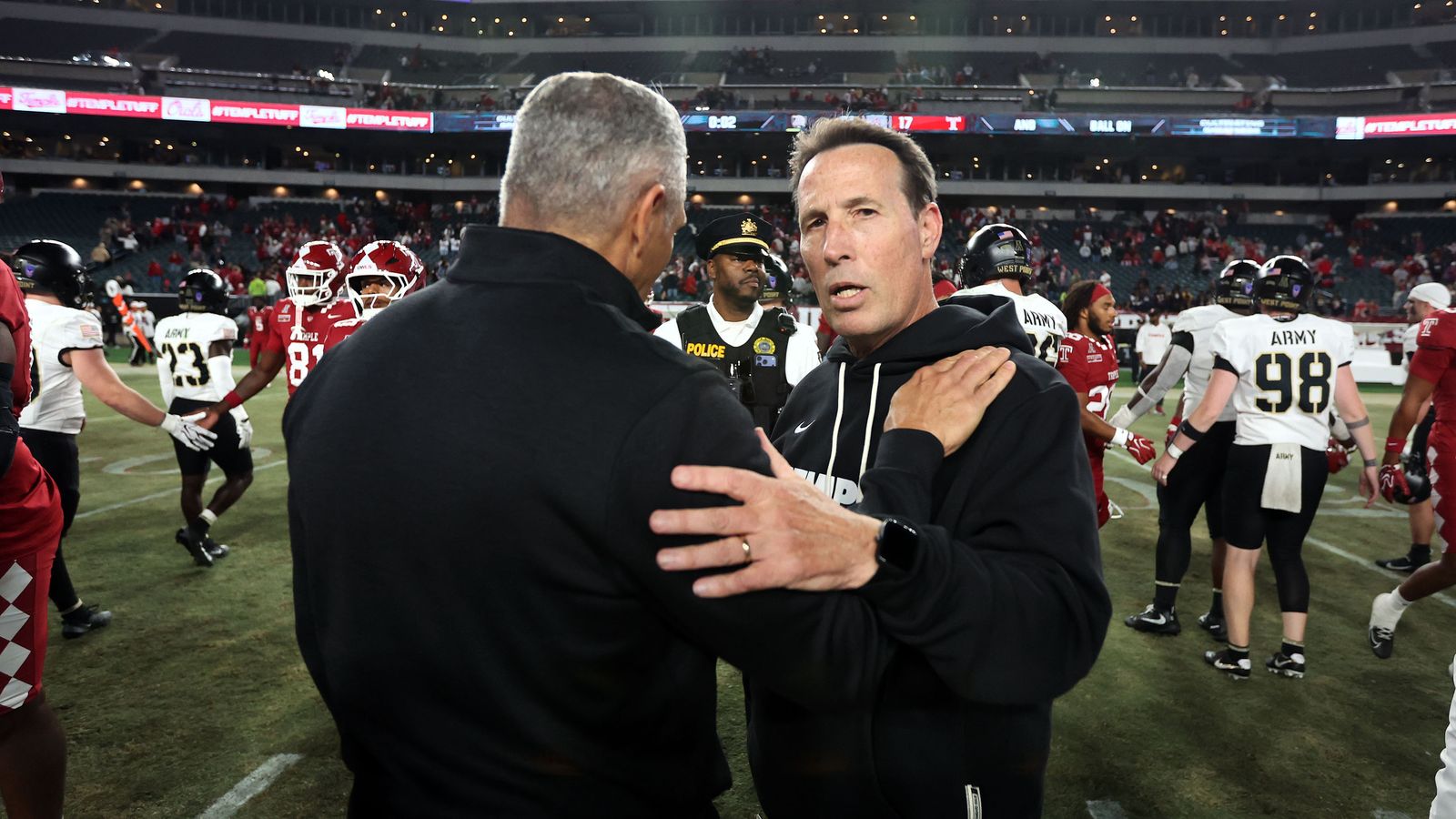
The institutional response to Temple’s homecoming defeat began immediately. By midnight following the loss, head coach KC Keeler issued text directives to his offensive and defensive coordinators, requiring comprehensive written diagnostics outlining identified strengths, systemic vulnerabilities, and mandatory remediation targets.
Keeler publicly diagnosed Temple as a bad football team in its existing form, while arguing the roster’s baseline talent exceeds its 2-4 record. Staff evaluations pinpointed fundamental execution breakdowns: elevated pad levels, undisciplined eye progression, blown run-gap assignments, and unforced procedural penalties. Most damaging was an illegal procedure infraction that negated a Temple touchdown, compounding multiple first-half turnovers that created insurmountable negative leverage against the Huskies.
Defensive Scheme Simplification: Brian Smith Restricts the Menu
Temple’s defensive performance against UConn revealed a distinct split in schematic viability across both halves. In the first two quarters, UConn capitalized on defensive miscommunication and compromised gap integrity within Temple’s complex coverage checks, generating 373 total yards and 24 points.
At halftime, Keeler mandated an operational pivot, instructing defensive coordinator Brian Smith to take expensive items off the menu. The directive stripped high-variance check-with-me coverages in favor of streamlined, assignment-sound fundamental calls. The tactical simplification allowed front-seven defenders to play with superior leverage, faster processing speeds, and direct gap discipline.
The downstream metrics validated the schematic contraction: UConn managed approximately 140 total yards and 10 points over the final two quarters. Keeler subsequently conceded that the staff failed by not implementing these structural reductions before the first-half deficit proved decisive.
Charlotte’s Statistical Profile: Historically Inefficient Metrics
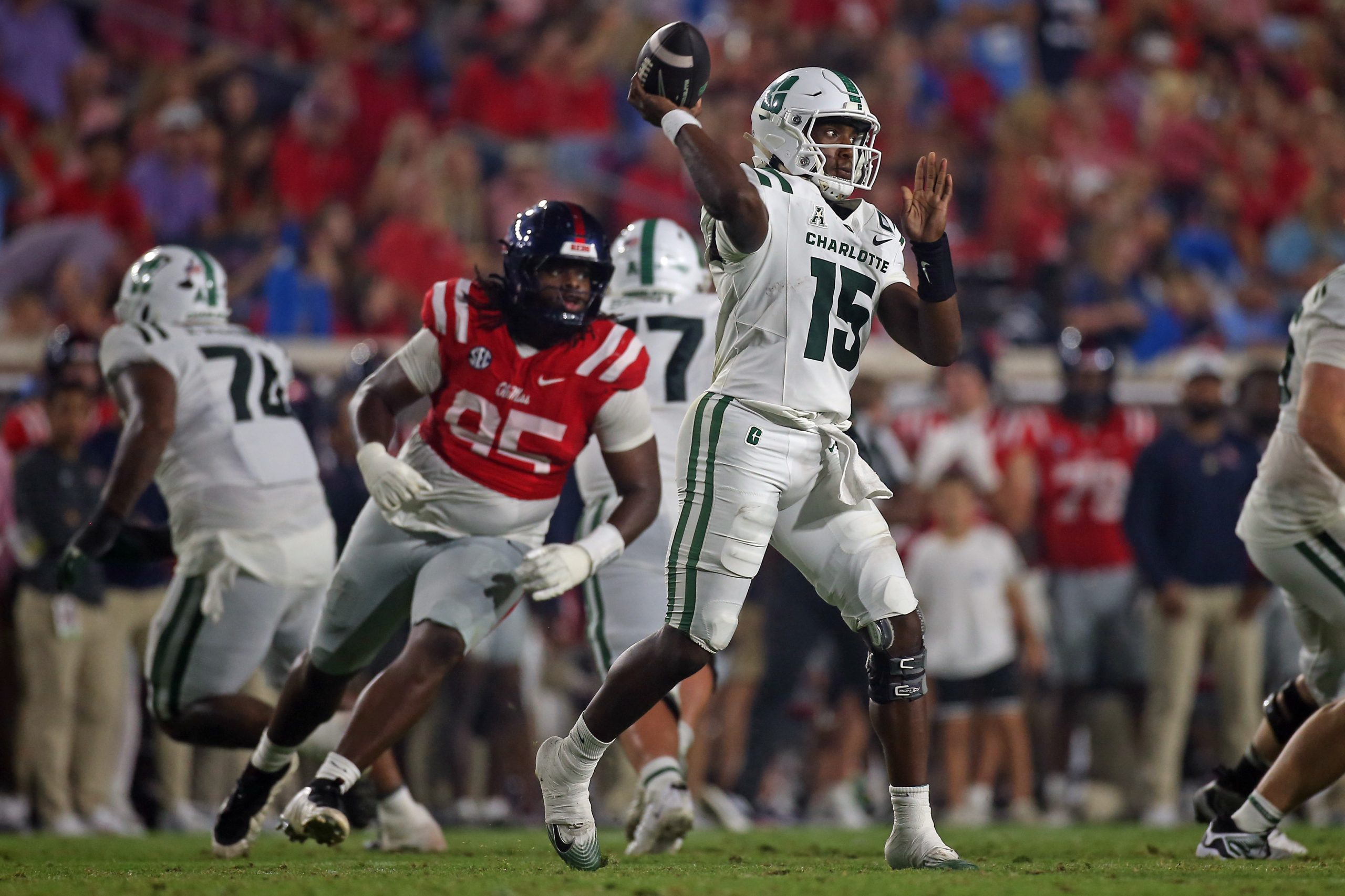
Charlotte’s 0-6 record reflects comprehensive breakdowns against both FBS and lower-tier competition. The 49ers have dropped matchups to Ole Miss, Appalachian State, Louisiana, Memphis, North Texas, and FCS-level The Citadel. Their three most recent outings resulted in non-competitive defeats by margins of 40, 41, and 27 points.
Offensively, the 49ers average 101 rushing yards and 186 passing yards per contest. These limited outputs are exacerbated by a -10 turnover margin, consistently conceding short-field position to opponents. Charlotte ranks last across the entire Football Bowl Subdivision with a -26.2 scoring differential.
Offensive drive stagnation has overburdened Charlotte’s defensive unit, which ranks third-worst nationally in scoring defense at 42.2 points surrendered per game. The 49ers also rank seventh-worst in the FBS in total defense, allowing 466.8 yards per contest.
Strategic Implications for Week 7
For Temple, this matchup is an operational test of Keeler’s accountability mandate and Smith’s streamlined defensive framework. While a win is mandatory to preserve postseason bowl aspirations, covering a three-touchdown spread carries psychological volatility for a team that has dropped three home games this season. Executing sound gap assignments and eliminating pre-snap flags should yield a decisive talent advantage; conversely, any procedural regression against the FBS’s lowest-rated scoring differential program would signal deeper systemic dysfunction.