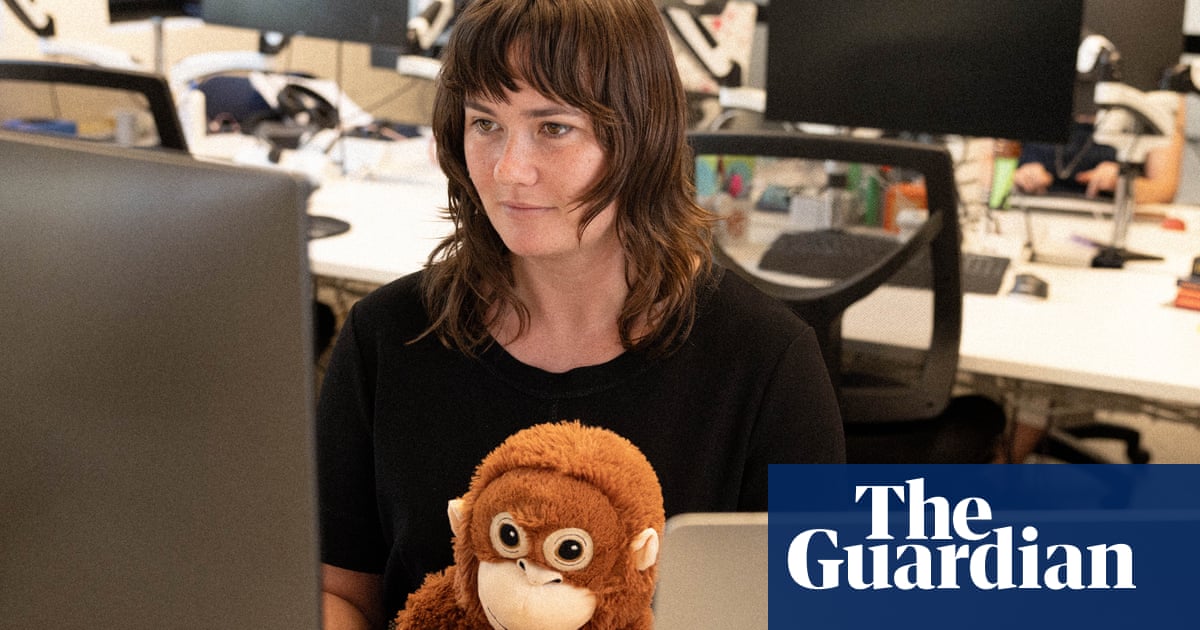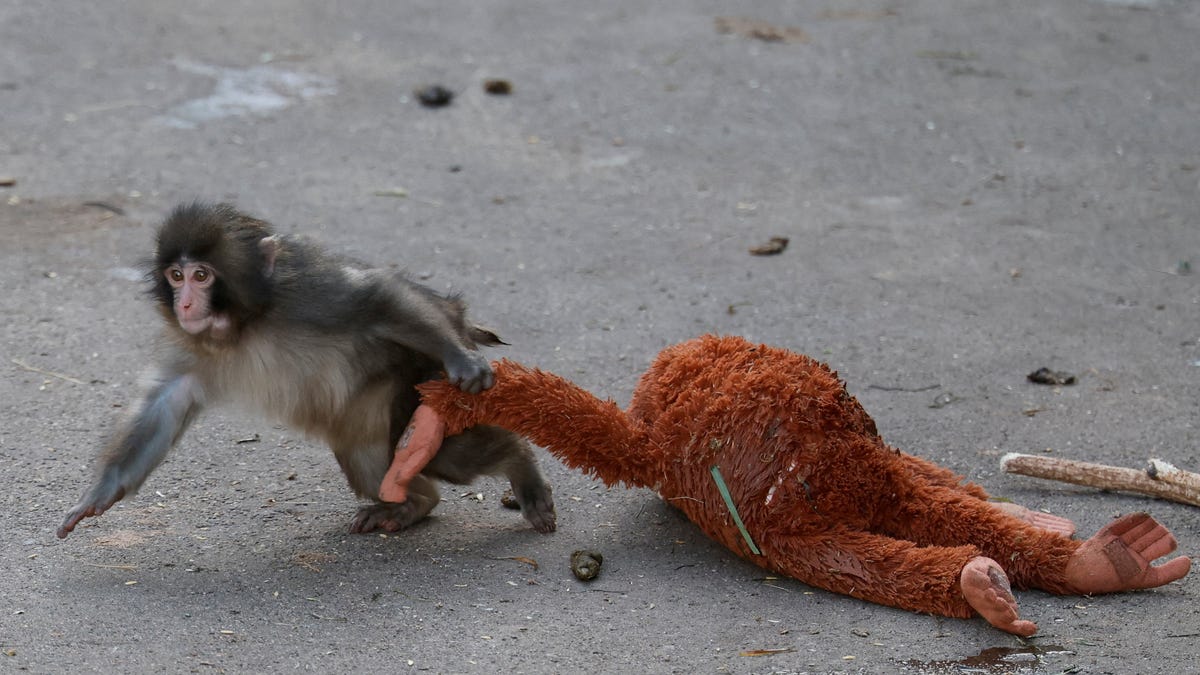
The viral trajectory of Punch, a seven-month-old Japanese macaque at Ichikawa City Zoo and Botanical Gardens, serves as a significant case study in the convergence of primate husbandry and global retail logistics. Following his abandonment by his mother on July 26, 2024, zoo staff implemented a tactical intervention using a commercial surrogate: the IKEA Djungelskog orangutan. This decision, while pragmatically addressing a welfare gap, has precipitated a measurable shift in consumer behavior and secondary market valuations across international territories.
Institutional Husbandry and Anthropomorphic Surrogacy
The selection of a mass-produced plush toy over specialized medical surrogates highlights a shift in zoological management. In the hierarchical social structure of Japanese macaques, maternal rejection often leads to developmental stunting and physical aggression from dominant troop members. The Djungelskog toy provides a ‘physical anchor,’ mitigating the immediate psychological trauma of isolation. However, this reliance on a specific consumer SKU creates an unconventional institutional vulnerability, where the animal’s ongoing stability is contingent upon the availability of a specific retail product.
Strategically, the zoo faces the challenge of social integration. While the surrogate prevents immediate exclusion, it cannot replicate the complex social learning required for a macaque to navigate troop politics. Administrators must balance the short-term survival benefits against the long-term risk of ‘social maladjustment,’ determining the optimal window for weaning the infant from its inanimate companion without triggering a regression in health.
The ‘Moo Deng’ Shift: From Humor to Pathos-Driven Consumption
While previous viral animal phenomena, such as Thailand’s Moo Deng, capitalized on chaotic aesthetic appeal, Punch’s global reach is rooted in pathos. This shift in digital consumption patterns suggests that audiences are increasingly mobilized by narratives of vulnerability and resilience. This emotional engagement translates directly into commercial action; specifically, a surge in IKEA’s click-and-collect demand and significant inventory depletion in the Australian and Japanese markets.
For Ichikawa City Zoo, this visibility is a dual-edged sword. While it increases educational outreach and foot traffic, it also subjects the facility’s husbandry protocols to intense public scrutiny. The zoo must navigate the ‘commodification of welfare,’ ensuring that the viral narrative does not overshadow the scientific necessity of the animal’s eventual reintegration into a natural social group.
Supply Chain Volatility and Secondary Market Impacts
The ‘Punch Effect’ has demonstrated how organic product placement within a conservation context can disrupt global supply chains. The Djungelskog orangutan, previously a stable inventory item, has transitioned into a high-demand asset. Reports from secondary markets, including eBay Australia, indicate sharp price appreciation as consumers seek to acquire the ‘surrogate’ associated with the macaque’s survival. This illustrates a rare form of market volatility where a niche zoological intervention dictates retail inventory movement across disparate geographic regions.
Ultimately, the case of Punch underscores the interconnectedness of modern institutions. The survival of a single primate in Ichikawa has created a feedback loop involving retail giants, international logistics, and digital media. The long-term success of this intervention will be measured not by viral metrics, but by the zoo’s ability to transition Punch from a retail-dependent surrogate to a stable, socially integrated member of the macaque troop.