Defensive Lineage and Roster Construction in Jacksonville
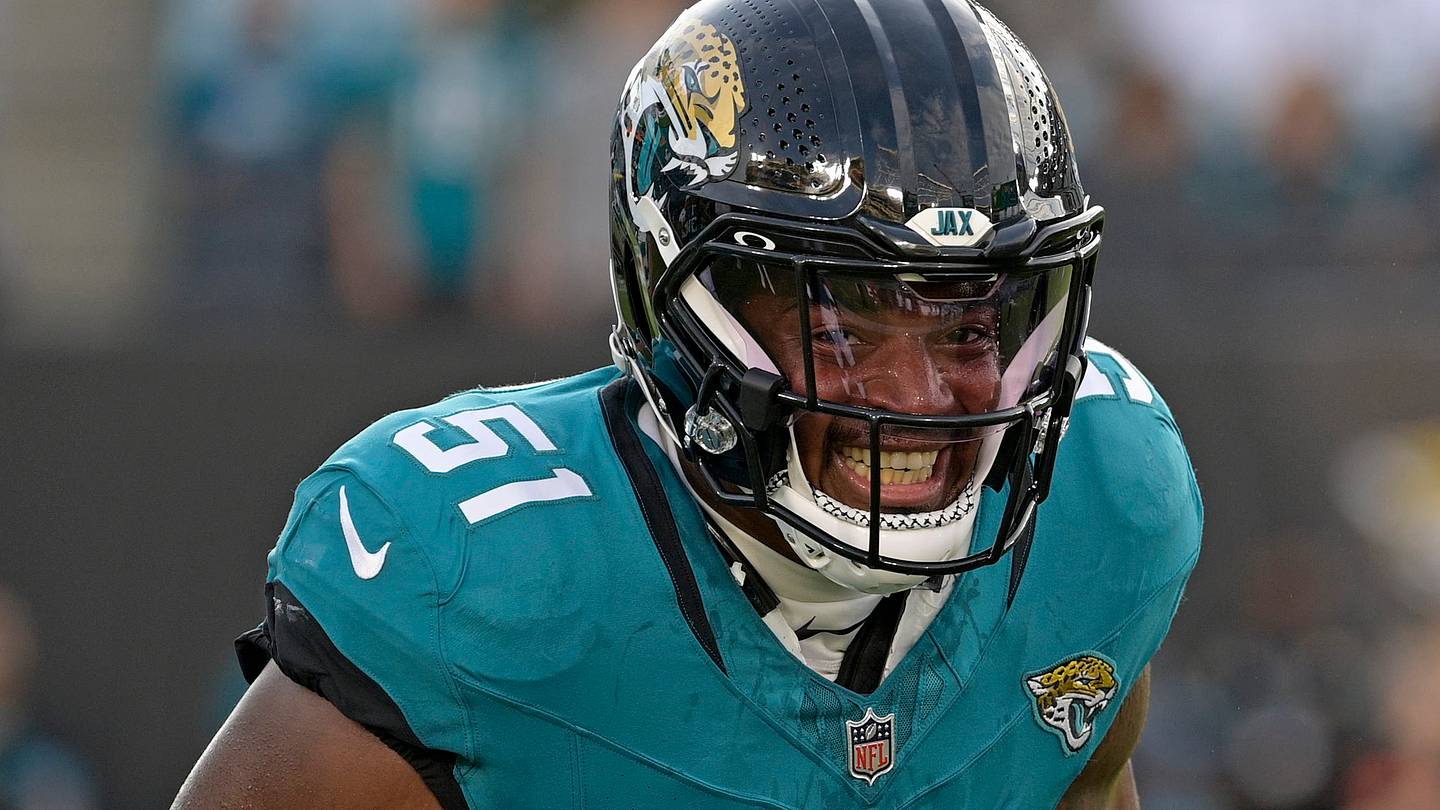
The Jacksonville Jaguars’ defensive architecture faced an immediate inflection point following the departure of Second-Team All-Pro linebacker Devin Lloyd to the Carolina Panthers. Rather than suffering regression across the second level, the unit preserved its structural integrity through the emergence of 2023 draft pick Ventrell Miller.
Drafted out of the University of Florida during former general manager Trent Baalke’s tenure, Miller has rapidly stabilized Jacksonville’s interior run fits and pass coverage responsibilities. Through five weeks of the regular season, Miller ranks second on the roster with 33 total tackles, exhibiting sound pursuit discipline and reliable diagnostic processing.
Advanced charting validates Miller’s foundational impact. Pro Football Focus (PFF) assigned him a 91.8 defensive grade through Week 5, ranking him first among all qualifying NFL linebackers. This production showcases efficient contract-to-performance surplus value, a vital institutional metric when replacing All-Pro production within early-round rookie wage scales.
Asset Valuation Asymmetries in Trade Deadline Discourse
Miller’s elite early-season trajectory has paradoxically generated external trade speculation. A prominent framework proposed by AtoZ Sports analyst Ryan Roberts suggested shipping Miller to the Buffalo Bills in exchange for offensive tackle Tylan Grable and a 2027 seventh-round selection.
The transactional rationale targets Jacksonville’s vulnerability along the offensive line following starter Anton Harrison’s placement on Injured Reserve. Losing Harrison created an immediate deficit in edge protection, forcing the front office to weigh immediate pass-blocking needs against depth sustainability.
From a roster-building perspective, the proposed exchange presents a steep valuation asymmetry. Sacrificing an ascending, premier-graded inside linebacker on a cost-controlled rookie deal to acquire reserve-grade offensive tackle depth and a distant seventh-round flier yields a negative net-present value. Liquidation of high-performing core assets to temporarily mitigate injury-driven attrition often generates long-term structural vulnerabilities.
Strategic Capital Imbalances and the Contender Premium
For the Buffalo Bills, executing such an acquisition would constitute a major capital arbitrage: securing the league’s top-graded linebacker to reinforce defensive second-level rotations while surrendering negligible developmental capital. Playoff contenders routinely leverage deep rosters to exploit distressed assets, but Jacksonville’s structural return in this dynamic remains severely negative.
Trade discourse frequently isolates positional deficits without evaluating the resulting secondary schematic vacuums. Dismantling an interior defensive framework that successfully absorbed the departure of an All-Pro caliber talent to solve a swing tackle deficit introduces severe structural variance back into the core defense.
Divisional Leverage: Tight End Space Allocation in the AFC South
The imperative to retain Miller is underscored by divisional mechanics within the AFC South. High-percentage intermediate passing schemes define current divisional rivals, particularly the Houston Texans.
During their head-to-head matchup, Houston tight end Dalton Schultz converted a critical 16-yard intermediate reception to advance into plus territory. The play highlighted the spatial demands placed on linebackers in down-and-distance management: closing throwing windows, executing boundary drops, and eliminating yards after the catch against veteran targets. Divesting from disciplined run-and-chase defenders directly compounds schematic vulnerabilities against division opponents designed to exploit intermediate middle-field voids.
Execution Deficits and Film Analysis: Week 5 Structural Lessons
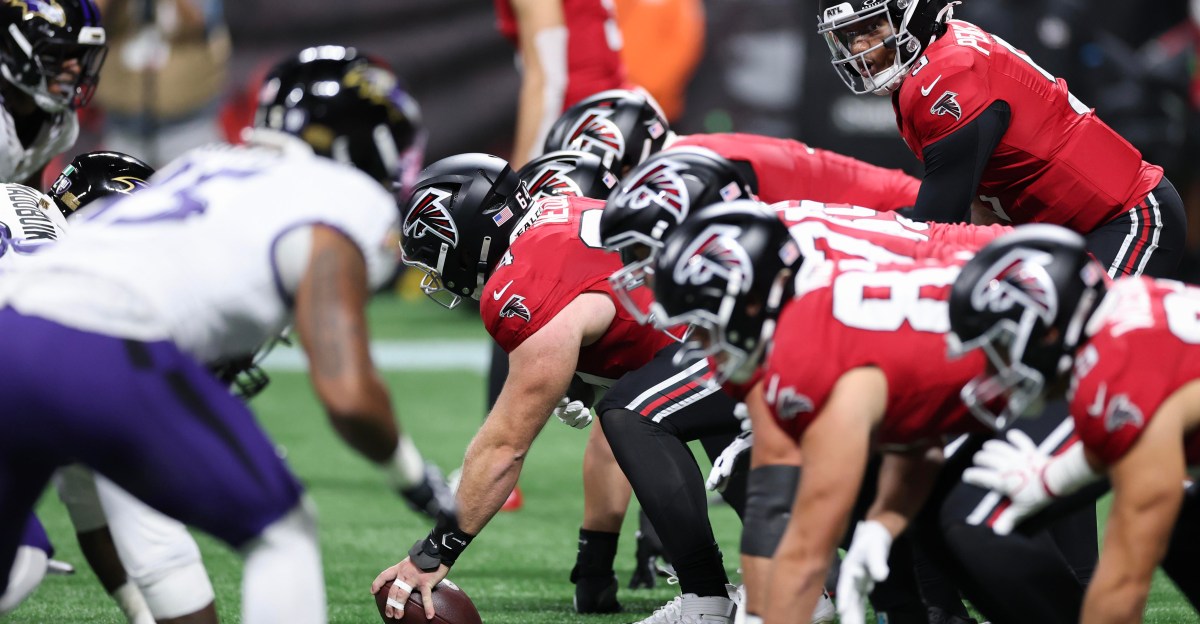
Operational volatility extended across the league in Week 5, highlighted by the Atlanta Falcons’ overtime defeat against a depleted Baltimore Ravens squad. Detailed film reviews conducted by analysts Kevin Knight and Tre’Shon Diaz on Dirty Birds and Brews isolated acute late-game execution breakdowns.
The evaluation emphasized offensive decision-making around rookie quarterback Michael Penix Jr., situational play-calling sequences, and assignment lapses along the defensive front in overtime. The comparative lesson remains distinct: whether navigating quarterback development or managing personnel injuries, structural discipline and asset retention dictate the threshold between playoff contention and systemic failure.
The Emergence of Technical Sports Media Ecosystems
These tactical evaluations illustrate the expanding role of independent, analytically focused sports media. Platforms like The Falcoholic utilize video and audio film analysis, distributed through YouTube, community Discord channels, and subscription hubs, providing granular tactical critique directly to fanbases.
This technical media infrastructure shifts community discourse from surface-level box-score assessment toward front-office capital efficiency, draft hit rates, and schematic leverage. Modern franchise decisions are now continuously appraised against public-facing analytics, reinforcing that tactical roster retention outweighs reactionary short-term trading.