Big 12 Volatility: BYU’s Cushion vs. Texas Tech’s Precarious Bubble
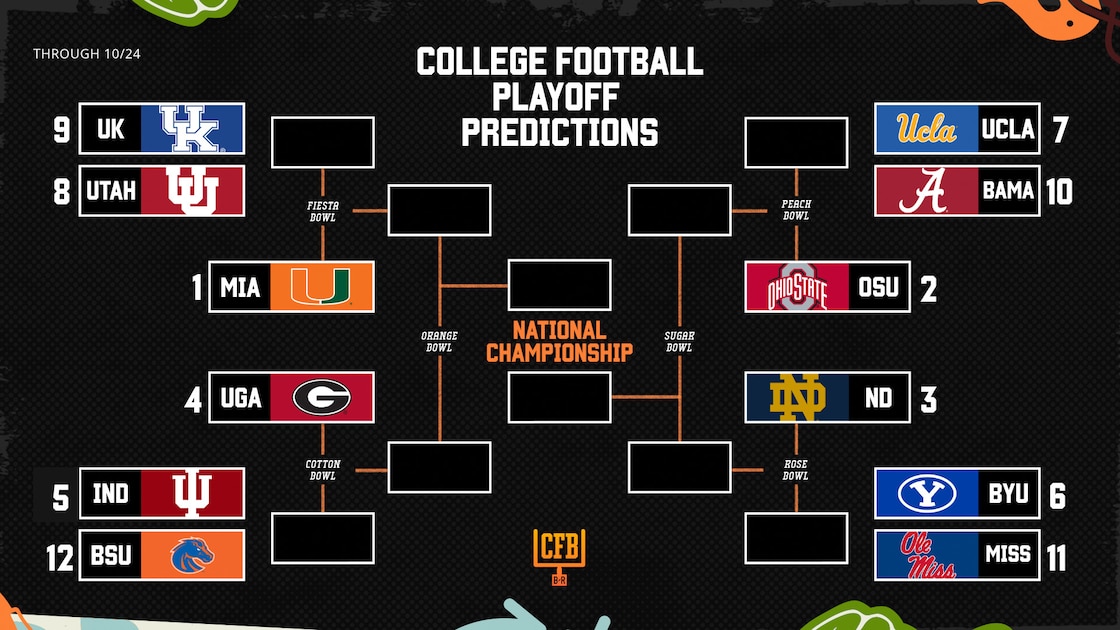
Week 8 upended the Big 12 hierarchy, delivering sharp adjustments to the 12-team College Football Playoff bracket architecture. In Orlando, No. 2 BYU suffered a double-overtime road defeat to UCF. While this setback will drop the Cougars from the second spot in the AP Top 25, their non-conference equity—anchored by an earlier marquee victory over Notre Dame—provides a crucial buffer. The selection committee historically rewards top-tier non-conference triumphs, insulating BYU within projected at-large playoff seeding despite the unranked conference loss.
Conversely, No. 8 Texas Tech saw its postseason margin for error vanish after an unranked road defeat to Cincinnati. Unlike BYU, the Red Raiders lack a defining non-conference benchmark to offset their first loss of the 2026 campaign. In a 12-team format governed by resume strength, this intra-conference stumble pushes Texas Tech out of protected top-12 positioning and leaves their playoff viability dependent on downstream tiebreakers and strength-of-schedule metrics across the remaining Big 12 schedule.
The SEC Dual-Loss Bottleneck: Selection Committee Attrition
The Southeastern Conference absorbed substantial damage across its upper tier in Week 8, as No. 7 Ole Miss and No. 11 Tennessee both suffered their second losses of the season. Entering late October with two losses severely constrains strategic positioning for at-large bids, testing the committee’s historical deference to SEC schedule strength.
Following these defeats, only two teams across the entire SEC maintain fewer than two losses: the Georgia Bulldogs and the Kentucky Wildcats. This structural compression eliminates the conference’s traditional multi-team undefeated tier. For Ole Miss and Tennessee, future at-large viability now hinges on zero remaining margin for error and favorable chaos among rival Power Four contenders.
Analyzing Tier A Floors: Georgia’s Variance vs. Roster Depth
Despite a home loss to Auburn, Georgia (6-1) retains its standing within the top analytical tier of national contenders. Postseason evaluators systematically differentiate between systemic schematic failure and high-variance execution errors. The Auburn upset was largely dictated by three turnovers from quarterback Gunner Stockton, an uncharacteristic breakdown head coach Kirby Smart emphasized is remediable over the final stretch of conference play.
Georgia’s baseline metrics across high-leverage situations preserve its championship floor. In an expanded 12-team bracket, isolated turnover-driven anomalies rarely displace an established program with proven capacity against top competition, ensuring the Bulldogs remain a projected bracket fixture.
The Undefeated Premium: Miami’s Ascent and the Utah-Houston Benchmark
The AP Poll’s rapid elevation of the Miami Hurricanes to No. 1 reflects the historic scarcity of unblemished records in 2026. Across the entire FBS, only six programs remain undefeated. This parity premium elevates Miami from a theoretical contender into the primary national target, validating their high-leverage execution while heightening scrutiny on their upcoming operational consistency.
The weekend’s slate concluded with another pivotal conference measuring stick: No. 10 Utah hosting No. 14 Houston. Designated as the premier matchup of Week 8, this head-to-head clash served as an effective elimination threshold for Big 12 title-game positioning. In the expanded postseason model, these ranked intra-conference matchups function as de facto playoff play-in games, directly distributing automatic-bye viability and shaping the remaining at-large pool.