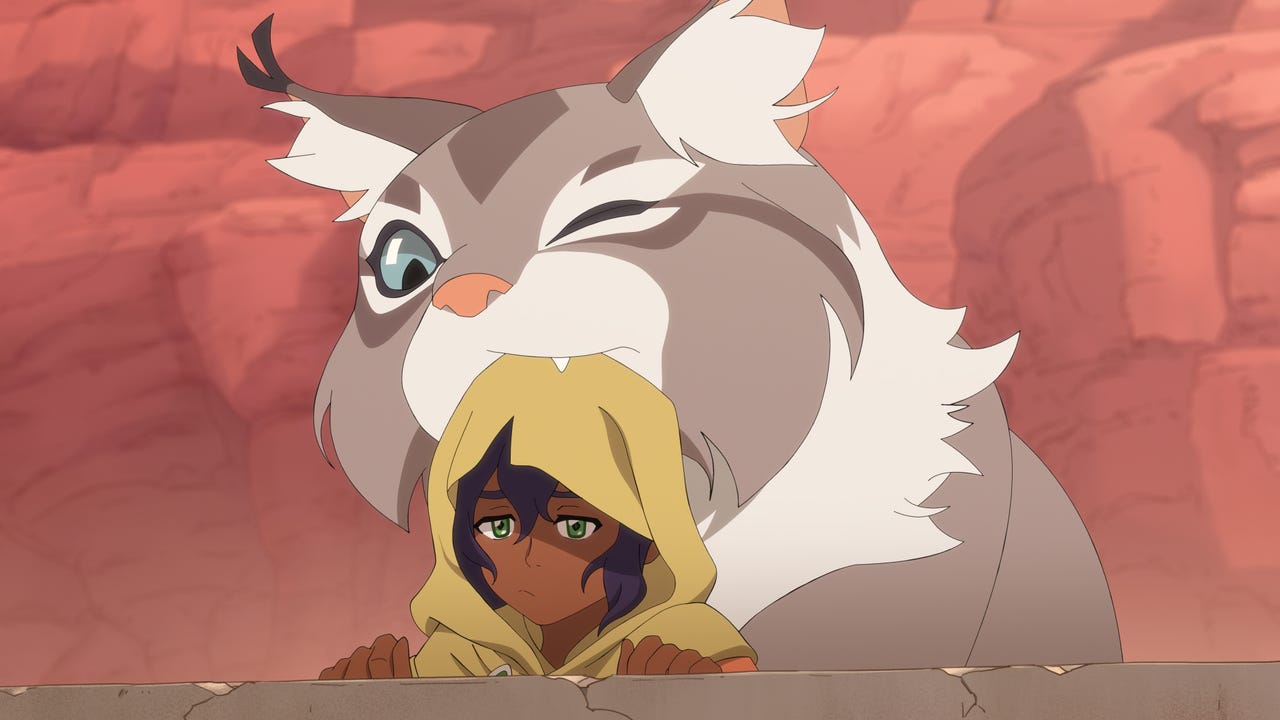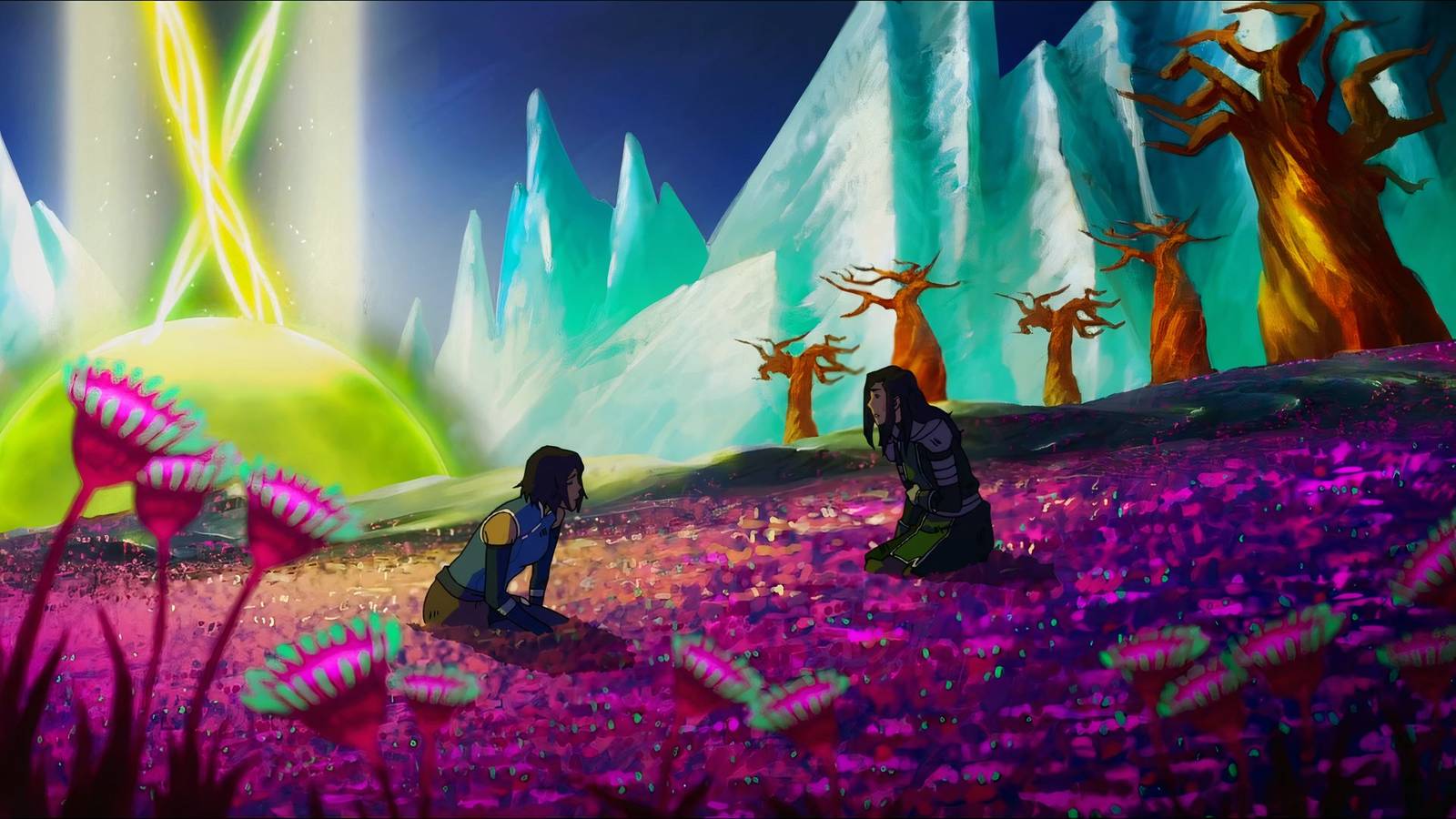
The midpoint of Avatar: Seven Havens Book 1: Survival (Episodes 4-6) represents a fundamental pivot in the franchise’s narrative architecture. Shifting away from introductory world-building, the series now engages in a rigorous analysis of institutional collapse and the subsequent struggle for systemic restoration. By introducing twin Avatars, Pavi and Nisha, the narrative disrupts the ten-millennia-old precedent of singular spiritual authority, replacing it with a dual-node power structure that reflects a world in fragment.
Structural Disruption: The Twin Avatar Anomaly
The emergence of Pavi and Nisha (Saheli Kahn and Aishu Devan) introduces a spiritual redundancy into a system historically predicated on a single point of failure. This biological and metaphysical anomaly challenges the legacy of Avatar Wan, who consolidated the role as the sole bridge between realms. By bifurcating the Avatar’s essence, the series explores internal friction within the highest office of spiritual governance, suggesting that in a post-cataclysmic world, the traditional centralized model is no longer viable.
This decentralization occurs within the geopolitical vacuum of the Seven Havens—isolated survivalist pockets. While two Avatars provide a strategic fail-safe, they also create a crisis of legitimacy. The residents of Ellora, hardened by generations of scarcity, view this anomaly not as a blessing, but as a destabilizing force in an already fragile social ecosystem.
The Legacy of Institutional Debt: Inheriting Korra’s Cataclysm
A primary thematic pillar is “inherited failure.” The narrative explicitly links the current era of isolationism to the actions of Avatar Korra, who is framed as the architect of the global collapse two centuries prior. This transition from the multiculturalism of Republic City to the claustrophobic survivalism of Ellora indicates a total failure of the globalized infrastructure established by Aang and Korra.
The distrust directed toward the new Avatars is a symptom of this institutional trauma. Pavi and Nisha operate from a position of profound reputational deficit; the Avatar is no longer seen as a peacekeeping diplomat but as a catalyst for environmental and social ruin. Their mission is less about maintaining balance and more about navigating the debt of their predecessors.
Asymmetric Threats and the Geopolitics of Scarcity
The localized setting of Ellora serves as a microcosm for the broader challenges of the Havens. The “Survival” mandate shifts the franchise’s priorities from grand-scale diplomacy to the raw maintenance of human existence. This tension is exacerbated by the Faceless—non-state actors exploiting the lack of centralized law enforcement. Unlike previous eras where the Avatar commanded national militaries, Pavi and Nisha face decentralized, asymmetrical threats that ignore traditional elemental boundaries.
The introduction of a mysterious red diamond artifact suggests a technological or spiritual bypass to bending, further complicating the security landscape. The Faceless represent the lawlessness filling the void left by the collapse of the Four Nations’ political order, turning the Havens into a theater of constant, low-intensity conflict.
Memory Recovery as Strategic Intelligence
In episodes 4-6, the quest for lost memories serves as a vital recovery of institutional knowledge. In a world where historical records have been eroded by two centuries of chaos, Pavi and Nisha’s memories are the only bridge to the truth behind the cataclysm. This makes memory recovery a strategic necessity rather than a personal journey; understanding why the world broke is the only prerequisite for fixing it. The series positions the twins as the only individuals capable of deconstructing the legends of Korra to find actionable solutions for the present.
Conclusion: Reimagining the Mythos
Avatar: Seven Havens is a bold strategic evolution for the franchise on Paramount+. By focusing on a high-tension survival scenario and the complexities of a divided Avatar spirit, the series deepens the exploration of power’s limitations. As the season progresses, the path to restoration will likely require a fundamental reimagining of what it means to be the Avatar in a world defined by suspicion, scarcity, and the shadows of a broken past.