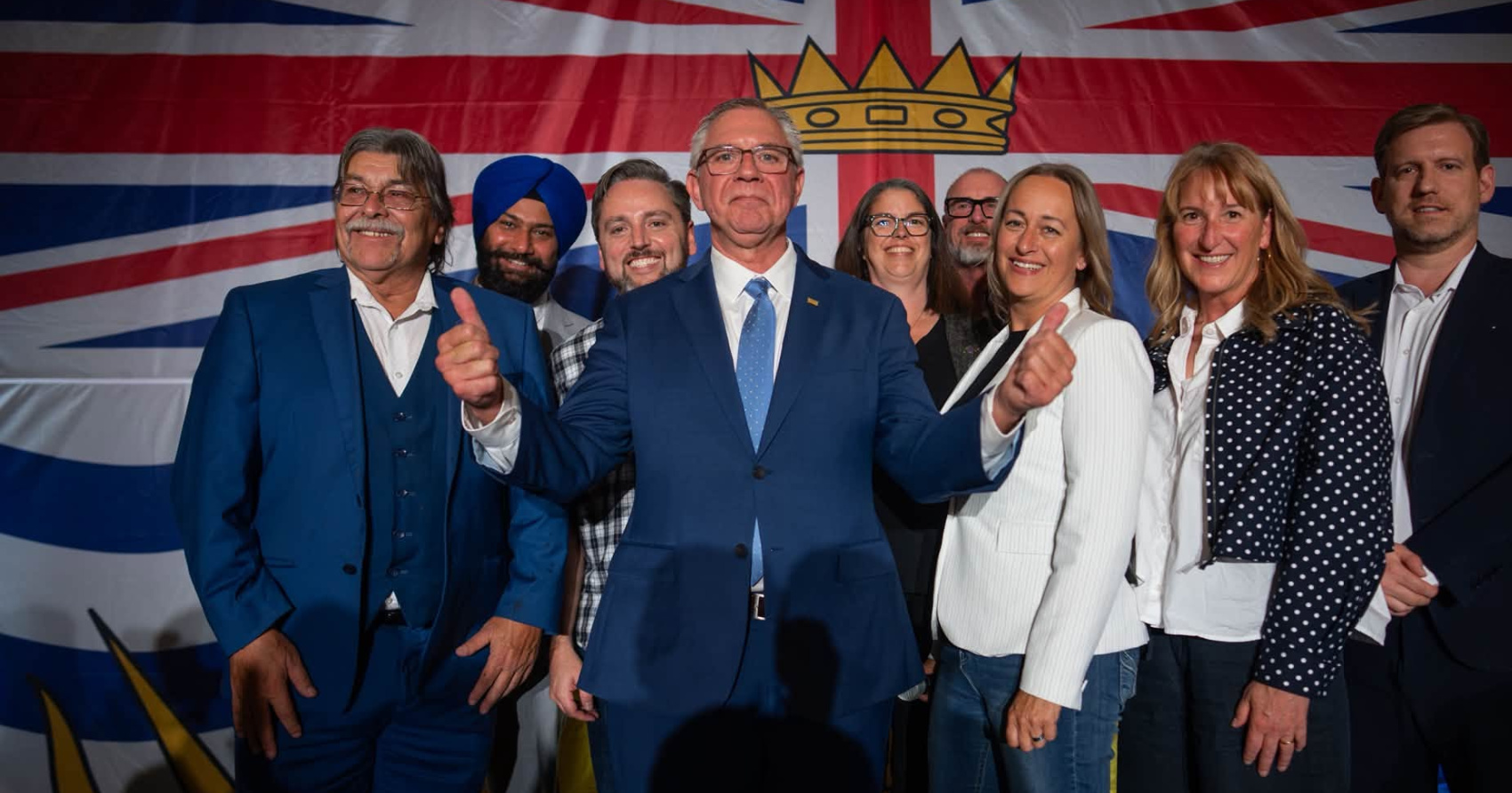
Legislative Realignment: BC Conservatives End Century-Long Drought
David Eby has conceded defeat and resigned as leader of the British Columbia New Democratic Party (BC NDP), terminating his tenure as premier following a decisive provincial election. The Conservative Party of BC secured a projected legislative majority under Lorne Doerksen, executing the most profound parliamentary realignment in the province in generations. Eby announced his departure late Saturday evening via social media, formalizing the conclusion of the NDP’s governing mandate and initiating executive transition protocols in Victoria.
The ascension of the BC Conservatives marks the party’s first provincial administration since Simon Fraser Tolmie vacated the premiership in 1933. After a 71-year absence from the Legislative Assembly—an institutional marginalization reversed when John Rustad directed the party’s structural rebuilding ahead of the 2024 general election—Doerksen leveraged rebuilt constituency machinery to capture an outright majority, fundamentally dismantling the province’s traditional party duopoly.
The Snap Election Gamble and Advance Voter Contraction
The legislative defeat unfolded precisely one month and two days after Eby dissolved the Legislative Assembly. The strategic objective—circumventing parliamentary friction to secure an unencumbered mandate—faltered against widespread voter skepticism toward an unscheduled election. Turnout analytics revealed early vulnerabilities in the incumbent mobilization model: provincial records confirmed roughly 110,700 fewer advance ballots cast compared to the 2024 general election benchmark.
This systemic contraction in early balloting compromised the NDP’s strategy of banking suburban ridings ahead of general voting day. In the absence of high organic participation, campaign operations struggled to defend high-growth regional blocks across southwest British Columbia, transforming the timing of the writ from a calculated tactical advantage into an insurmountable liability.
Suburban Realignment Across Surrey and the Fraser Valley
Metropolitan battlegrounds—predominantly Surrey, Langley, and the Tri-Cities—dictated the election’s outcome. Recognizing that retaining executive power required defending suburban growth corridors, Eby concentrated operational resources across these ridings throughout the campaign’s final 48 hours. On Friday, October 23, Eby campaigned in Surrey Fleetwood beside active structural works for the Surrey-Langley SkyTrain extension, attempting to tie the NDP platform directly to regional transit delivery.
Despite Eby leveraging the infrastructure backdrop to pitch a further SkyTrain extension into Newton, the suburban electorate shifted decisively toward the Conservatives. Commuter households experiencing severe infrastructure deficits, transit congestion, and rising living expenses ultimately prioritized regulatory and fiscal changes over the incumbent administration’s capital project pipeline.
Macroeconomic Divergence and Capital Infrastructure Scrutiny
The campaign presented stark ideological choices in provincial public finance:
- BC NDP Platform: Targeted redistributive fiscal policies, including higher tax brackets for top earners, targeted state subsidies to mitigate retail grocery and fuel price volatility, and ring-fenced budgetary allocations to address clinical personnel shortages across regional healthcare networks.
- BC Conservative Platform: Fiscal restructuring, tax reductions, regulatory streamlining, and systemic efficiency reviews across government operations.
The transfer of executive authority places multi-billion-dollar provincial capital commitments under structural scrutiny. While the Surrey-Langley transit corridor represents significant procurement, engineering contracts, and intergovernmental funding pacts, Doerksen’s fiscal realignment platform mandates reassessments of state capital liabilities, procurement terms, and municipal matching commitments.
Constitutional Transition and Parliamentary Mechanics
With Eby’s formal resignation and certified Conservative control of the legislature, the transition of executive power commences immediately across public finance, transportation, natural resources, and social services. Senior bureaucrats and deputy ministers must now draft operational briefings aligned with Doerksen’s administrative priorities.
Concurrently, the BC NDP enters a period of structural rebuilding and caucus reorganization following severe defeats in traditional urban-suburban strongholds. The incoming Conservative majority will assume control over the legislative agenda, standing committees, and statutory budgets, setting a radically different policy trajectory for British Columbia’s governance.