
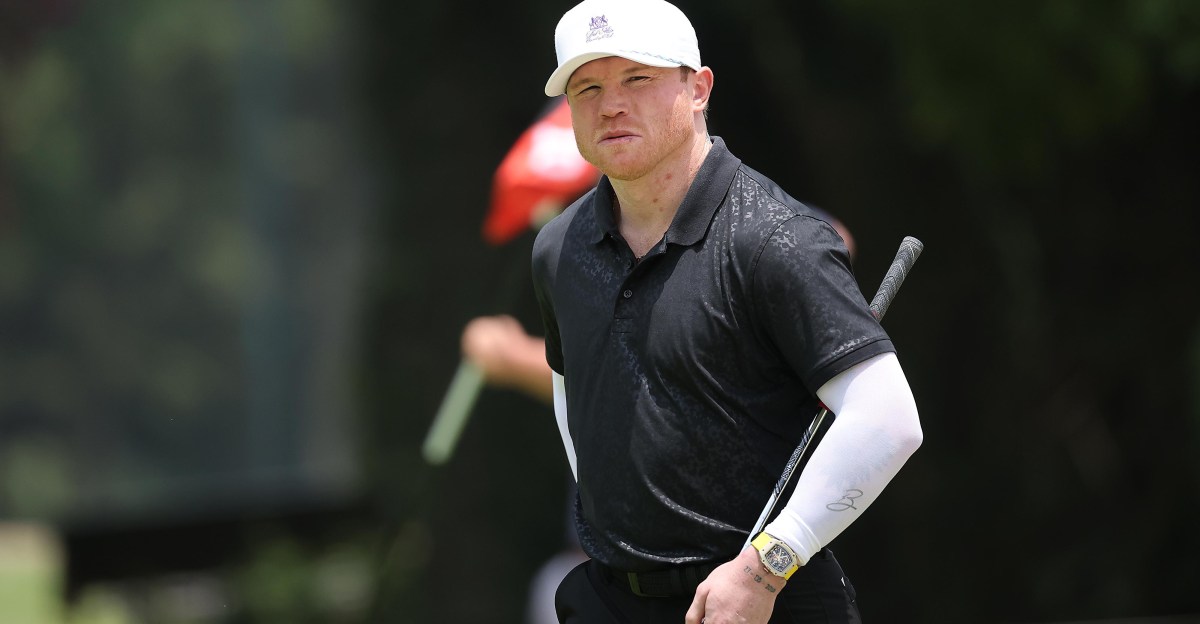
The October 31, 2026, fixture matching Saul ‘Canelo’ Alvarez against Christian Mbilli at Riyadh’s Kingdom Arena establishes a critical stress test for modern boxing governance. Promoted under the Ring Magazine banner and distributed globally via DAZN PPV and DAZN Ultimate, the contest places Mbilli’s World Boxing Council (WBC) super middleweight title at the focal point of converging institutional shifts: sovereign event underwriting, bifurcated streaming monetization, and post-undisputed divisional realignment.
Divisional Realignment and Matchmaking Economics
Mbilli enters his mandatory title defense with an unbeaten ledger of 29-0-1 (24 KOs), validated by attrition-based victories over Sergiy Derevyanchenko, Maciej Sulecki, and Rohan Murdock. However, his standing as defending champion arrives under competitive scrutiny following a taxing split draw against Lester Martinez on the Alvarez–Crawford undercard. While the result preserved his zero-loss ledger, it exposed defensive lapses under sustained fire.
For Alvarez (63-3-2, 39 KOs), the pairing represents a calculated bid to recover commercial and regulatory leverage. Having ceded the undisputed 168-pound championship to Terence Crawford via unanimous decision on September 13, 2025, Alvarez operates without universal sanctioning leverage for the first time in years. Securing Mbilli’s WBC belt restores an essential instrument for controlling future mandatory obligations and dictating contractual terms for high-yield bouts.
Oddsmakers opened Alvarez as a -260 favorite against Mbilli at +200. This pricing reflects market trust in Alvarez’s counter-punching precision against front-foot volume, balancing Mbilli’s physical pressure against the technical vulnerabilities exposed during the Martinez stalemate.
Bifurcated Streaming and Global Window Scheduling
The commercial architecture engineered by DAZN tests a dual-tier framework: simultaneous release across transactional DAZN PPV and the high-tier DAZN Ultimate subscription. This hybrid deployment measures audience retention elasticities against direct digital event purchases, marking a transition away from conventional single-price point cable broadcasts toward platform ecosystem lock-in.
Scheduling the main card at 09:15 ET (13:15 GMT) prioritizes European, Middle Eastern, and Asian broadcast corridors over traditional Saturday-evening primetime windows in the Americas. This temporal shift challenges domestic viewing customs in Mexico and the United States, positioning Western hemisphere audiences as secondary to integrated pan-regional viewership.
This centralized Gulf model contrasts sharply with the broader landscape of concurrent fight-week staging. Independent domestic cards, such as Delta Forever Hungry Promotions’ Atlantic City Boardwalk Brawl on Millions.Co, deploy rigid $20.00 PPV thresholds that reject retail micropricing conventions. Concurrently, regional boutique broadcasts like Highland Boxing on TrillerTV+ in Pattaya, Thailand, highlight a split combat sports economy: state-funded mega-events monopolize elite championship belts, while independent promoters absorb regional developmental overhead.
Riyadh Operational Logistics and Undercard Strategy
Kingdom Arena’s emergence as a premier combat sports capital highlights the migration of elite championship capital from Las Vegas and New York to the Gulf. Nonetheless, rapid centralization presents complex operational dependencies. Documented concerns from an undercard trainer regarding event execution underscore real-time logistical strains, including transcontinental camp transit, commission coordination, and tight athlete acclimatization windows.
These frictions disproportionately affect undercard participants who lack the independent infrastructures of main-event headliners. Supporting prospects must calibrate metabolic peaks and weight cuts amid shifting international itineraries.
The undercard serves as an operational testing ground, led by the featherweight meeting between David Picasso and Carl Martin. Positioning undefeated prospects on an Alvarez-headlined DAZN broadcast accelerates global sanctioning exposure. A decisive victory accelerates mandatory title trajectories, whereas an unconvincing outing stalls developmental investment across major sanctioning bodies.
Stylistic Dynamics and WBC Governance
The tactical dynamic contrasts Mbilli’s relentless interior output with Alvarez’s disciplined, low-cadence countering. Mbilli’s output tests Alvarez’s lateral mobility and work rate over twelve frames—vulnerabilities Crawford exploited. Conversely, Mbilli’s wide defensive angles offer counter-punching targets for Alvarez’s signature left hook and body assault.
Ring Magazine’s direct operational involvement alongside venue organizers and digital platforms points to an evolving media paradigm. By bridging independent archival ranking, editorial branding, and direct fight promotion, the model blurs traditional demarcations between boxing journalism and event staging. The conclusion in Riyadh will establish the WBC titleholder at 168 pounds while offering a definitive benchmark for state-backed sports media operations.