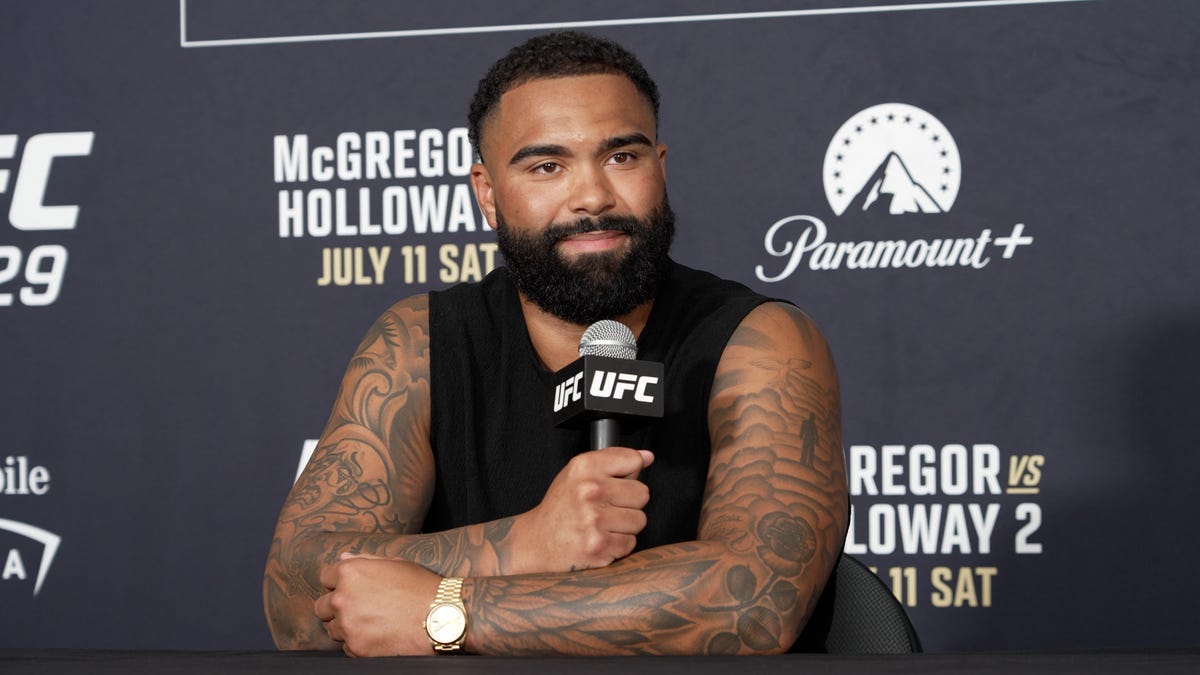
The arrival of Gable Steveson at UFC 329 transcends a typical promotional debut; it is a calculated deployment of elite athletic capital into a heavyweight division currently defined by a shallow talent pool. By positioning Steveson on the high-visibility McGregor vs. Holloway 2 undercard, the UFC is leveraging the brand equity of an Olympic gold medalist to fill an immediate vacuum in the divisional hierarchy. This isn’t merely a talent acquisition; it is a strategic attempt to fast-track a blue-chip asset into the title picture.
Market Volatility and the Betting Anomaly
The betting markets have responded to Steveson’s debut with a statistical outlier, pricing him as high as a -2500 favorite against Elisha Ellison. This collapse of traditional valuation metrics—usually applied to newcomers with limited professional experience—indicates a market consensus that Steveson’s Olympic wrestling pedigree creates a structural advantage that regional experience cannot bridge. For sportsbooks, this creates a unique risk profile, as the lopsided odds reflect a belief that Steveson is a finished athletic product rather than a developmental prospect.
This pricing disparity also exposes the perceived fragility of the heavyweight gatekeeper tier. Ellison, despite a 5-2 record, is being treated by institutional bettors as a statistical placeholder. The massive capital inflow toward Steveson suggests that his entry has recalibrated how the market values high-ceiling grappling specialists against traditional strikers in the current heavyweight meta.
The NFL Pivot: Operational Risk and Leverage
Steveson’s 2024 stint with the Buffalo Bills served as a critical stress test for his physical ceiling. While he did not secure a roster spot, the attempt demonstrated a high tolerance for operational risk and rare physical versatility. Strategically, this diversion enhanced his leverage during UFC negotiations; by proving he had viable options in other multi-billion-dollar leagues, Steveson entered the promotion as a premium partner rather than a standard fighter. His return to MMA is now framed as a deliberate choice to dominate a specific competitive vertical.
Structural Dynamics of the Heavyweight Division
The heavyweight landscape is undergoing a generational transition. With established veterans nearing the end of their cycles, Steveson’s entry is timed to exploit a period of limited high-ceiling growth. His wrestling-heavy style offers a direct counter-strategy to the striking dominance currently seen in the top five. The UFC’s aggressive matchmaking—bypassing the slow build characteristic of regional circuits—aims to maximize Steveson’s prime athletic years and generate high-revenue matchups against names like Tom Aspinall or Ciryl Gane in a condensed timeframe.
The Jon Jones Factor: Strategic Mentorship
Steveson’s technical integration has been accelerated through training with Jon Jones. This mentorship provides more than just technical drills; it offers a blueprint for navigating the psychological and tactical complexities of championship-level combat. While Ellison identifies Steveson as “green,” the exposure to Jones’s strategic intelligence serves as a force multiplier, potentially compensating for Steveson’s lack of cage time. The primary risk remains the transition from a controlled wrestling mat to the chaotic variables of the Octagon, where striking defense and submission awareness remain unverified.
Institutional Implications
For Elisha Ellison, UFC 329 is a low-probability opportunity to disrupt the promotion’s long-term financial planning. For the UFC, Steveson is a proof of concept for the “fast-track” model of elite talent development. If Steveson delivers a dominant performance, it will validate a shift in scouting toward high-level collegiate and Olympic wrestlers, potentially creating a formalized pipeline from the NCAA to the Octagon. The success of this debut will dictate the pace of Steveson’s career and the future recruitment strategies of the organization.