The Meteorology of a Rapid Seasonal Transition
The Susquehanna Valley and broader Northeast regions are experiencing a stark meteorological pivot, transitioning abruptly from a historically cool May to intense, summer-like heat. This phenomenon, termed ‘sudden summer’ by meteorologists, signifies a sharp departure from early-month thermal baselines, necessitating immediate regional infrastructure adjustments and enhanced public preparedness.
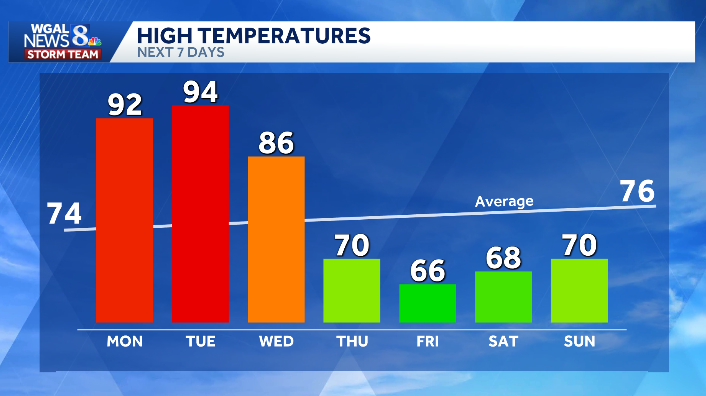
The designation of Monday through Wednesday as ‘Impact Days’ by local weather services highlights the operational risks associated with this accelerated warming. With ‘feels like’ temperatures projected to reach the mid-to-upper 90s Fahrenheit (approximately 32-35°C), primary concerns focus on the sudden strain on cooling systems and the potential for heat-related health impacts, particularly among vulnerable populations.
Strategic Implications of Thermal Volatility
This transient weather pattern underscores the systemic vulnerability of regional energy grids and public health infrastructure to sudden thermal spikes. When temperatures surge to near-record levels following a period of cooler weather, the lack of public acclimatization and the potential for intense, high-demand spikes on energy infrastructure present a complex management challenge for municipal authorities.
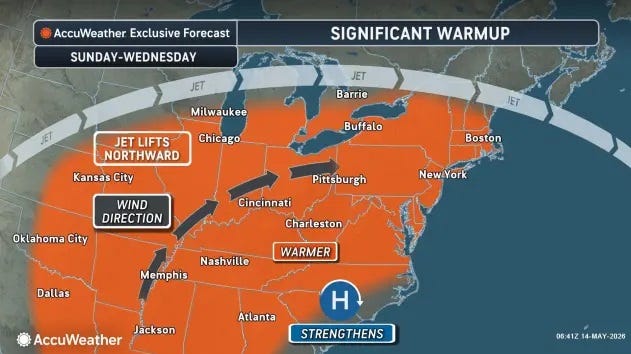
Meteorological data indicates this surge is concentrated in the Midwest and Northeast, while the I-95 corridor, including major urban centers like Baltimore, New York, and Boston, benefits from moderating onshore flows. This geographical nuance is a critical variable, demonstrating how local topography and proximity to maritime influence act as structural buffers against extreme heat events.
Institutional Response and Economic Factors
The reliance on short-term meteorological forecasts to activate ‘Impact Day’ protocols represents a standard institutional response to mitigate rapid environmental change risks. By identifying specific windows of high heat, authorities can strategically mobilize public messaging and resource allocation, bridging the gap between environmental volatility and institutional capacity.
The anticipated cold front arriving mid-week acts as a structural reset, preventing the current heat event from escalating into a prolonged heat wave. This temporal limitation is significant, averting the compounding effects of sustained high temperatures, such as extended agricultural stress or depletion of emergency cooling resources, which would necessitate more extensive long-term mitigation strategies.
Predictive Modeling’s Role in Public Safety
The precision of these forecasts reflects the increasing importance of high-resolution meteorological data in modern governance. As weather patterns become more erratic, differentiating short-term fluctuations from long-term climate shifts is essential for strategic planning by public utilities and emergency services.
The current Susquehanna Valley situation exemplifies the necessity of integrating real-time environmental monitoring with public communication channels. Clear, actionable data on heat intensity and duration enables stakeholders to make informed decisions regarding energy consumption, outdoor activity, and health precautions, thereby reducing the systemic impact of the event.
Systemic Constraints and Future Outlook
While this heat surge is framed as a temporary weather pattern ‘flip,’ the underlying volatility is a key consideration for long-term regional planning. The interplay between inland heating and coastal cooling influences highlights the complexity of regional climate dynamics, where minor variations in atmospheric pressure or wind direction can significantly alter an event’s impact.
As the region anticipates the mid-week cold front, focus shifts from immediate heat management to the potential for severe weather associated with the transition. This sequence—a rapid temperature rise followed by a potentially volatile cooling front—is a recurring pattern in regional meteorology demanding constant vigilance and adaptive management from both public and private sectors.