
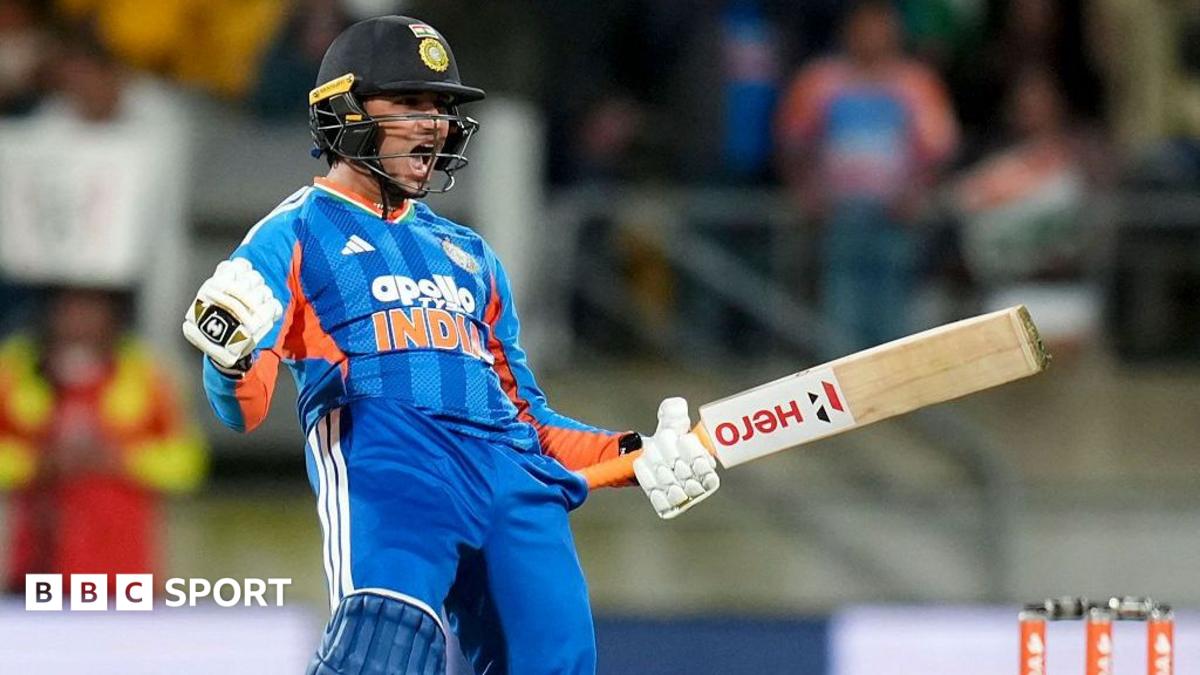
India has secured an unassailable 3-0 lead in their five-match T20 series against New Zealand, achieving a historic series-clinching victory at Wellington’s Hnry Stadium. The visitors successfully chased a formidable target of 199 runs in a mere 13.2 overs, finishing with six wickets in hand. This decisive win demonstrates India’s dominance and sets a new benchmark for run chases.
The Anatomy of an Unprecedented Powerplay Dominance
The foundation of India’s record-breaking chase was laid in the opening powerplay of the second innings. Amassing an astonishing 118 runs without loss within the first six overs, India shattered the existing record for the highest powerplay total in men’s international T20 cricket. This aggressive start immediately dictated the match’s trajectory.
Opening batter Abhishek Sharma was the architect of this onslaught, reaching his half-century in just 15 deliveries. Complementing him was fifteen-year-old Vaibhav Sooryavanshi, who played a crucial supporting role, scoring 45 runs off 19 balls. Their explosive 133-run partnership in just seven overs dismantled New Zealand’s bowling attack and strategic plans.
The sheer volume of runs scored during the powerplay drastically altered the required run rate, reducing it to under six runs per over before the fielding restrictions ended. This strategic advantage left New Zealand’s bowlers and captain with limited tactical options to regain control of the contest.
Boundary Efficiency and Dominant Scoring Metrics
Abhishek Sharma’s individual innings was a masterclass in boundary hitting, culminating in a century off just 35 balls. This equals Rohit Sharma’s record for the fastest international T20I century by an Indian batter. Abhishek’s final score of 113 runs came from only 38 deliveries, a remarkable strike rate of 297. His innings comprised nine fours and eleven sixes, with an extraordinary 102 runs coming directly from boundaries. This level of boundary efficiency made traditional defensive bowling and fielding tactics virtually obsolete.
Sooryavanshi’s rapid 45 off 19 balls provided essential support, preventing New Zealand from isolating Abhishek and employing defensive strategies. His aggressive start ensured sustained pressure on the bowling unit and fundamentally disrupted the home team’s strategy.
Bowling Challenges and Defensive Capitulation
New Zealand’s bowlers struggled to contain India’s relentless batting. Seamer Kyle Jamieson bore the brunt of the attack, finishing with figures of 2 for 45, with his dismissal of Abhishek coming only after the match was effectively decided. Jamieson’s breakthrough occurred in the tenth over, well after India had established complete control over the required run rate.
Only captain Mitchell Santner displayed economic discipline, conceding just 17 runs for one wicket in his four overs. While Santner’s personal performance offered a glimmer of control, it could not mitigate the systemic damage inflicted upon the rest of the bowling attack, which consistently conceded over fourteen runs per over.
Even after Sooryavanshi’s dismissal in the eighth over, Abhishek continued his boundary barrage, bringing India to the brink of victory. The remaining 21 runs needed were scored with ease by the middle order, securing the win with a significant 40 deliveries to spare.
First Innings Performance vs. Second Innings Collapse
The magnitude of New Zealand’s defeat is amplified by their strong first-innings performance. They posted a competitive total of 198 for 3 in their allotted 20 overs, a score typically considered defendable in Wellington. Daryl Mitchell anchored the innings with a composed unbeaten 89 off 52 balls, showcasing calculated acceleration.
Under normal circumstances, a target of 199 would necessitate a measured and strategic chase with careful wicket preservation. However, India’s exceptional batting display rendered Mitchell’s well-crafted innings almost irrelevant, as the target was overhauled in fewer than eight overs. This stark contrast highlights a significant paradigm shift in modern white-ball cricket, where previously secure totals are now vulnerable to aggressive opening partnerships.
Industry Reactions and Tactical Implications
The tactical brilliance of India’s chase drew immediate widespread commentary across the cricket fraternity. Analysts and former players, including Irfan Pathan and Vikrant Gupta, lauded the extraordinary potency of India’s opening combination. The unprecedented partnership dynamic has been widely discussed as a potentially game-altering strategy in T20 cricket.
The synergy between Abhishek’s seasoned power-hitting and Sooryavanshi’s precocious talent represents a compelling narrative and a significant challenge to traditional player development timelines. Broadcast networks and commercial stakeholders recognize that such high-octane performances drive audience engagement and expansion.
For governing bodies and tournament organizers, matches characterized by such scoring velocity reinforce the appeal of attacking batting models. Commercial partners increasingly favor contests featuring high boundary counts, even if the overall match duration is shortened. India’s aggressive tactical approach not only ensures decisive results but also maximizes entertainment value.
Series Ramifications and Future Strategies
With India clinching the series 3-0, the remaining two matches offer both teams opportunities for strategic experimentation. India can afford to test their bench strength without compromising competitive integrity, while New Zealand faces critical questions regarding their bowling composition and tactical approach to powerplays.
The failure of conventional defensive strategies in Wellington necessitates a fundamental reassessment of New Zealand’s white-ball containment models. Captain Mitchell Santner must find ways to rebuild his bowling unit’s confidence after such a swift and decisive defeat. The hosts are under pressure to identify tactical solutions to prevent similar powerplay dominance in upcoming fixtures.
India’s performance has set a new benchmark, likely influencing risk tolerances and strategic planning across international cricket. Their decision to attack a near-200 target without a conventional accumulation phase signals a potential permanent evolution in match management. The Wellington chase stands as an authoritative statement of modern tactical dominance and aggressive intent.