Strategic Asset Management: The 49ers’ Draft Capitalization Strategy
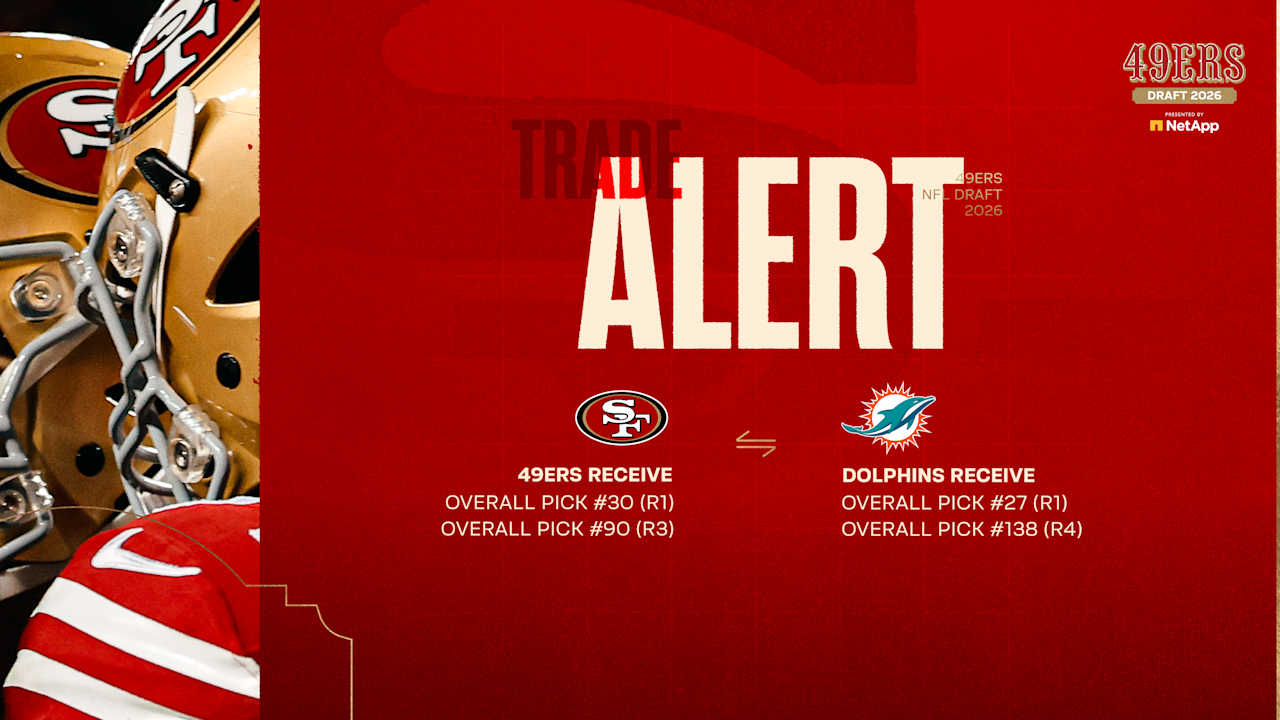
During the 2026 NFL Draft, the San Francisco 49ers executed a series of strategic maneuvers, prioritizing the accumulation of mid-round draft capital over a single late-first-round selection. The initial transaction involved moving from pick No. 27 to No. 30 in a deal with the Miami Dolphins, gaining a third-round selection (No. 90) while only sacrificing a fourth-round pick (No. 138). The strategy continued as the 49ers immediately traded back from No. 30 to No. 33 with the New York Jets, adding a fifth-round pick (No. 179) for a minimal movement of three spots.
The cumulative effect of these two transactions transformed the 49ers’ draft portfolio. By moving back a net total of six spots from their original position at No. 27, the team successfully acquired two additional selections (Nos. 90 and 179) for the cost of one mid-round pick (No. 138). This approach demonstrates a clear organizational priority: leveraging existing roster strength to maximize future flexibility and depth rather than investing heavily in a single high-value prospect.
Roster Construction and Financial Optimization
For high-performing organizations like the 49ers, the strategic value of mid-round picks lies in operational leverage and roster depth optimization. The additional selections provide flexibility to address multiple positional needs, mitigate risk associated with injuries, and manage future salary cap constraints. The cost-controlled talent from the middle rounds provides essential support for high-priced veteran contracts, a critical consideration for a team operating under tight salary cap limits.
The economic benefits are significant. Mid-round picks carry lower guaranteed salaries and shorter contracts compared to first-round selections, which include the expensive fifth-year option. By acquiring multiple players on cost-effective rookie contracts, the 49ers ensure a sustainable talent pipeline, reducing reliance on expensive free agency acquisitions to fill rotational roles. This strategy aligns with a long-term sustainability model crucial for maintaining roster quality amid veteran attrition and cap pressures.
Market Dynamics and Risk Mitigation
The decision to trade down exploits market dynamics and positional scarcity. The willingness of other teams (such as the Patriots trading ahead of the Buffalo Bills to select Caleb Lomu) to pay a premium for specific players creates opportunities for teams like the 49ers to capitalize by trading down. This suggests that the 49ers had identified multiple players available in their target range, making the marginal difference between pick No. 27 and pick No. 33 statistically negligible in terms of expected value.
Trading down serves as a form of risk mitigation. The organization reduces the risk associated with investing a high-value pick in a single player, spreading the investment across multiple selections. This strategy reflects an analytical approach that prioritizes volume and probability over single-player certainty. The additional picks provide leverage for future trades, allowing the organization to move up in subsequent rounds or acquire established players to address unforeseen needs.
Competitive Context and Long-Term Organizational Philosophy
The 49ers’ trade-down strategy contrasts with teams that trade up, which often signals a perceived need for a specific, high-end talent to fill a critical gap. By trading down, the 49ers signal confidence in their existing roster and prioritize sustainable depth. The organization’s philosophy focuses on long-term stability and efficiency, leveraging a strong current roster to acquire assets for future challenges, including potential free agency departures or injuries.
The acquisition of additional Day 2 picks has significant implications for player development. A larger volume of picks increases the probability of finding quality players who can contribute immediately or develop into future starters. This approach creates internal competition and provides a steady stream of talent for special teams and rotational roles, ensuring a high level of performance across the entire roster. This strategy positions the 49ers for sustained success by ensuring they can effectively manage turnover without compromising long-term competitiveness.