
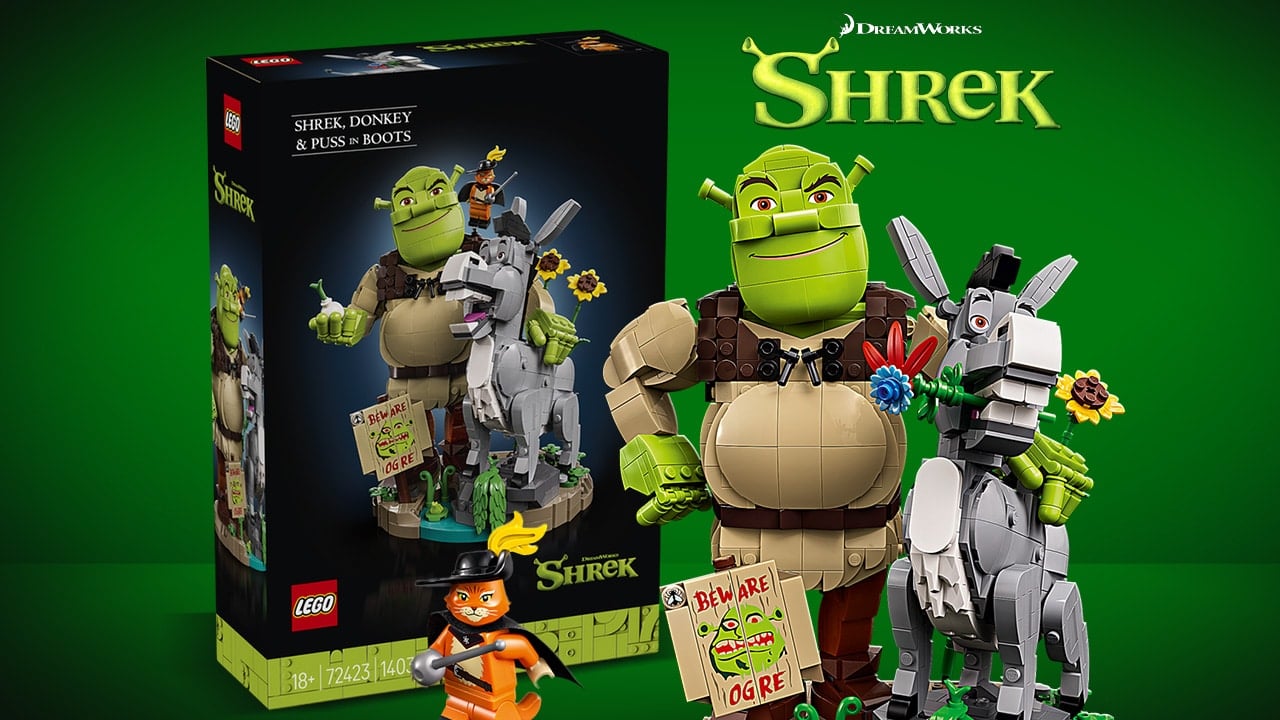
The unveiling of the LEGO Shrek, Donkey, and Puss in Boots Icons set (72423) represents a sophisticated intersection of legacy IP monetization and the burgeoning Adult Fan of LEGO (AFOL) sector. By synchronizing this 1,403-piece release with the franchise’s 25th anniversary, LEGO is not merely selling nostalgia; it is capturing long-term brand equity from a demographic that has transitioned from youth consumers to high-disposable-income adults.
Strategic Demographics and the 18+ Value Proposition
The 18+ Icons designation functions as a critical market signal, prioritizing structural complexity and display aesthetics over traditional playability. This classification permits a high density of specialized parts, facilitating a level of geological and organic detail in the swamp environment that retail sets for younger audiences cannot sustain. At a $129.99 price point, the set is positioned as a mid-tier premium asset, bridging the gap between entry-level licensed sets and massive flagship builds.
Operational Engineering: Printed Components vs. Adhesive Depreciation
Set 72423 distinguishes itself through a zero-sticker policy, utilizing exclusively printed elements. This is a high-cost operational choice that prioritizes long-term product durability and secondary market value. For collectors, printed warning signs and character eyes eliminate the risk of adhesive peeling—a common point of friction in high-end sets. This commitment to quality control suggests that LEGO is prioritizing brand prestige and consumer retention over immediate margin maximization in the Icons line.
Supply Chain Management and Tactical Scarcity
The implementation of a three-set household limit for the June 1, 2026, launch is a tactical measure against third-party reseller inventory depletion. By enforcing these constraints, LEGO manages the initial supply-demand curve to ensure equitable distribution among its core DTC (Direct-to-Consumer) audience. The two-month exclusivity window on LEGO.com before broad retail expansion allows the company to capture maximum margin while gathering granular consumer data during the peak launch phase.
Portfolio Diversification: Icons vs. BrickHeadz
The simultaneous release of Shrek-themed BrickHeadz serves as a strategic price-point anchor. While the Icons set targets the premium display market, the BrickHeadz provide a low-barrier entry point for casual fans. This tiered approach maximizes the licensing ROI by capturing value across multiple budget brackets. Specifically, the inclusion of ‘Gingy’ in the BrickHeadz format—while excluded from the 72423 set—creates a cross-purchase incentive for completionists, increasing the total transaction value per customer.
Conclusion: Leveraging Nostalgia as a Financial Catalyst
LEGO Shrek (72423) serves as a benchmark for how legacy animation properties can be revitalized for a mature audience. Through precise engineering, strategic pricing, and controlled distribution, LEGO is successfully evolving from a toy manufacturer into a luxury collectible curator. The success of this launch will likely dictate the roadmap for future collaborations with DreamWorks and other high-equity legacy IPs.

Photo by kirill_makes_pics on Pixabay.