
The Strategic Stakes of Mid-Decade Redistricting
Virginia Democrats have filed an emergency appeal with the U.S. Supreme Court, requesting a stay on a state court ruling that invalidated new congressional maps. This high-stakes legal challenge highlights the growing trend of mid-decade redistricting, as both parties leverage judicial intervention to secure structural advantages ahead of the midterm elections.
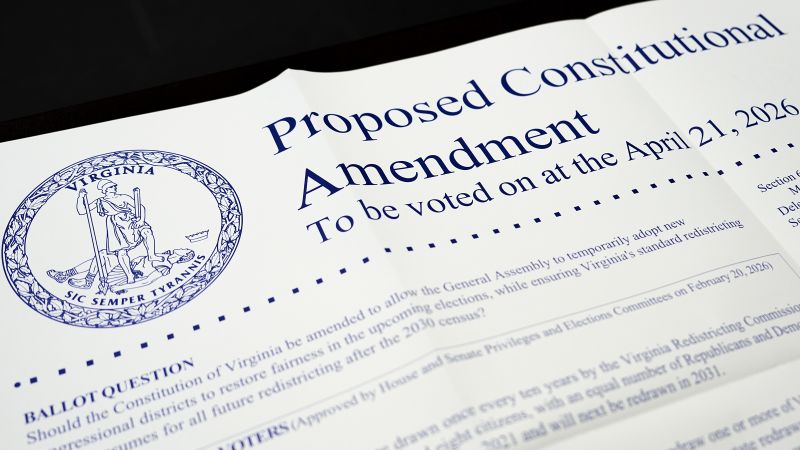
At the center of the dispute is a ballot measure that would have created four additional Democratic-leaning districts. The implementation of these boundaries via an April referendum has become a focal point for national legal debates concerning the temporal limits of electoral adjustments.
The Virginia Supreme Court’s Procedural Ruling
The Virginia Supreme Court’s 4-3 decision to void the constitutional amendment was primarily based on procedural timing. The court ruled that the legislature improperly initiated the amendment process after the commencement of early voting for the general election.
The petitioners argue that the U.S. Supreme Court has historically established that the formal election does not occur until Election Day. By attempting to decouple administrative early voting from the legal definition of an election, Democrats seek to establish a federal precedent that would invalidate state-level restrictions on late-cycle legislative modifications.
Institutional Implications and Judicial Oversight
By elevating the case to the federal level, Democrats are challenging the state judiciary’s role as the final arbiter of local election law. The outcome will likely serve as a critical precedent for how state legislatures manage the tension between constitutional amendments and ongoing election cycles.
The role of the federal judiciary in this context is increasingly fraught. As parties utilize the court system to resolve disputes that were traditionally managed through legislative compromise, the judiciary faces intensified scrutiny regarding its neutrality and its capacity to act as a consistent arbiter of electoral fairness.
National Context and Legal Precedent
This litigation is part of a broader, nationwide effort to recalibrate electoral districts amidst shifting demographic and political incentives. Recent federal rulings, including those affecting the Voting Rights Act of 1965, have prompted states to re-examine existing maps, creating a patchwork of legal standards that the U.S. Supreme Court is now frequently forced to address.
With narrow margins for House control, every individual district functions as a high-value asset. This reality drives political actors to exploit every available legal avenue, placing the judiciary at the center of the political process and straining the traditional boundaries between administrative policy and judicial review.
Long-Term Institutional Impact
The Virginia case underscores a shift toward permanent litigation in election administration. Entrusting the judiciary with the resolution of map-setting disputes imposes significant institutional risks, as the courts are increasingly perceived as instruments of partisan strategy. The final ruling will not only dictate the upcoming electoral landscape in Virginia but will also clarify the federal standard for legislative autonomy during active election seasons.

Photo by VACHAMP1984 on Pixabay.