The 1-1 draw between Rayo Vallecano and Girona FC at the Estadio de Vallecas serves as a profound case study in divergent institutional priorities. For Rayo Vallecano, currently 10th with 43 points, the result functions as a competitive maintenance exercise ahead of their historic UEFA Conference League final against Crystal Palace. Conversely, for 17th-placed Girona, the single point represents a marginal lifeline in a high-volatility relegation battle, leaving them precariously three matches away from potential Segunda División descent.
Tactical Equilibrium and European Strategic Management
Rayo’s domestic campaign has been defined by defensive resilience and a high frequency of draws—the highest in the top half of the table at 13. This ‘low-risk, high-floor’ approach has allowed manager Iñigo Pérez to stabilize the squad’s mid-table position while diverting psychological and physical resources toward continental silverware. The match at Vallecas demonstrated this managed intensity; Rayo controlled the early phases with a proactive high press, led by the offensive mobility of Fran Pérez, yet transitioned into a conservative mid-block once parity was challenged.
The club’s -6 goal difference reflects a pragmatic efficiency. While Rayo lacks the clinical edge to transform draws into victories, their structural integrity ensures they rarely concede ground to bottom-tier opponents. This stability is critical as the institution prepares for the financial and reputational windfall of a European final, allowing for a ‘managed rotation’ of the starting XI without risking domestic standing.
Girona’s Defensive Porosity and Survival Arithmetic
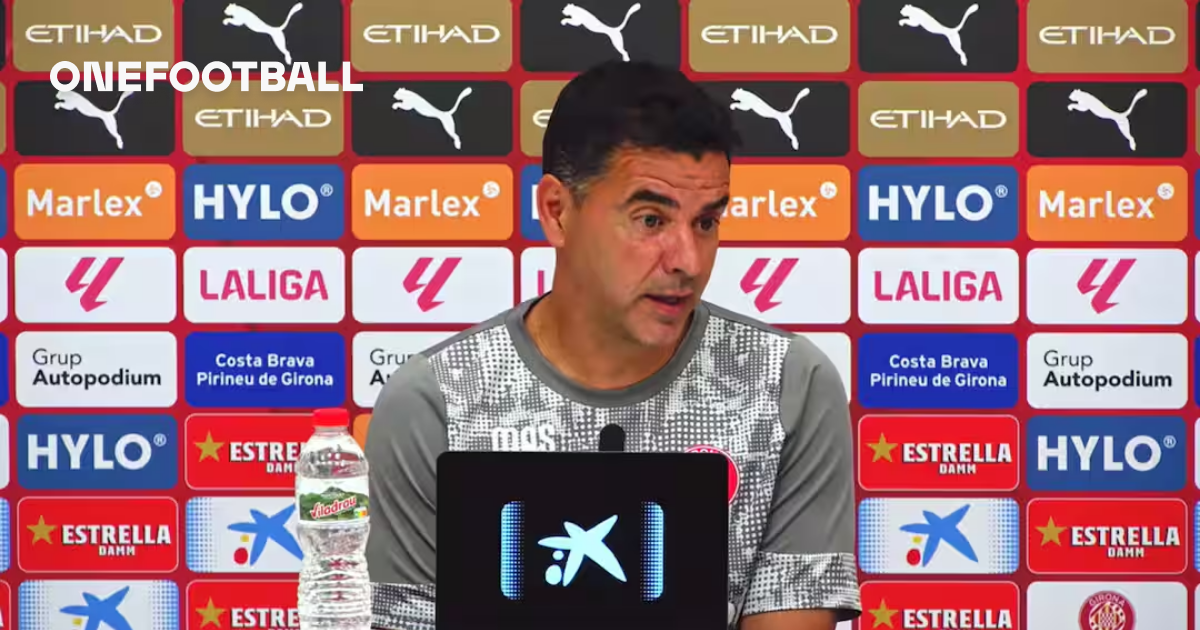
Girona enters the final stretch of the season defined by systemic fragility, having conceded 52 goals—a metric that underscores their 17th-place vulnerability. Manager Míchel Sánchez has been forced to adopt a reactive tactical posture, prioritizing point accumulation over his preferred expansive style. The reliance on Paulo Gazzaniga’s shot-stopping—highlighted by a crucial save against Sergio Camello in the 45th minute—masks a deeper inability to manage transitions effectively.
With only 39 points, Girona is locked in a three-way tie with Mallorca and Espanyol. Their -15 goal difference puts them at a significant disadvantage in tie-breaker scenarios, making outright wins essential in their final fixtures. The strategic use of Christian Stuani as a late-game disruptor highlights a reliance on veteran leadership to salvage points when the collective offensive structure, which has produced only 37 goals in 35 games, falters.
Institutional Outlook and Financial Stakes
The closing matchdays present diametrically opposed challenges. Rayo Vallecano must maintain professional standards while avoiding injuries to key personnel before the Crystal Palace showdown. This period of ‘controlled competition’ is a test of depth and technical discipline. For Girona, the stakes are existential. Relegation would trigger a mandatory restructuring of player contracts and a sharp reduction in television revenue, threatening the long-term viability of Míchel’s sporting project. The point at Vallecas provides atmospheric hope, but the underlying metrics suggest Girona remains on a statistical precipice.