Incident Overview and Emergency Response
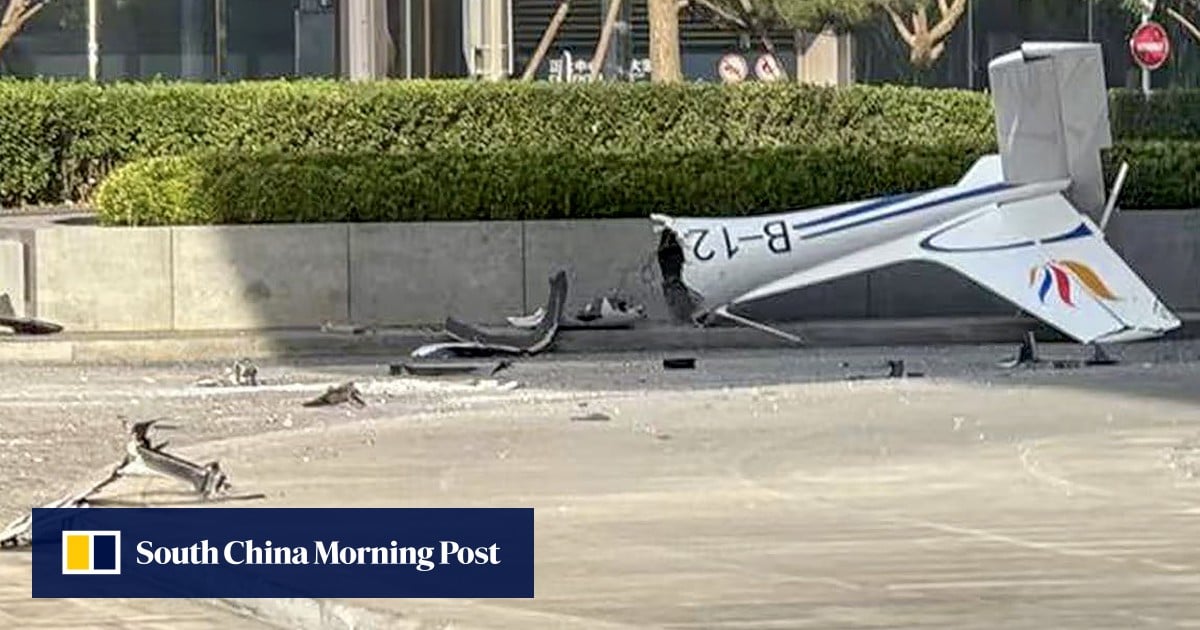
On Friday, a Sunward SA 60L Aurora light sport aircraft collided with the upper levels of the 528-meter CITIC Tower in Beijing’s central business district. The impact caused significant structural debris to shower onto nearby pedestrian areas and thoroughfares.
Local emergency services, including police and fire units, immediately cordoned off the area to manage public safety. Authorities executed a full-scale evacuation of the skyscraper, a critical commercial hub, to mitigate risks from potential further structural failures or secondary debris.
Airspace Governance and Structural Context
Known as ‘China Zun,’ the CITIC Tower is Beijing’s tallest building, located within one of the world’s most restrictive urban airspaces. Since May 1, the municipal government has enforced rigid protocols for all low-altitude flights, including mandatory approvals for drones and private aircraft.
This incident highlights the operational friction between expanding general aviation interests and the stringent security architecture required to protect high-density, critical infrastructure. The use of a domestic light sport aircraft necessitates an analysis of whether current navigational aids or pilot awareness protocols are sufficient for navigating the capital’s complex thermal and high-rise environment.
Regulatory and Security Implications
Preliminary investigations are focusing on how the aircraft deviated from established flight corridors. While the vessel is reportedly operated by a private aviation firm, the breach of airspace over such a high-profile target suggests a systemic failure in either navigation or air traffic communication.
The physical damage, including the identified tail section and vehicle impacts on the ground, has prompted urgent calls for a review of aerial resilience standards. Urban planners and security officials are evaluating whether existing mitigation strategies can account for the kinetic energy of light aircraft in dense metropolitan zones.
Strategic Impact on Private Aviation
This collision functions as an unintended stress test for Beijing’s emergency coordination. While the rapid deployment of medical and security units demonstrates high readiness, the breach itself exposes vulnerabilities in urban airspace management.
Moving forward, the private aviation sector in China likely faces intensified regulatory oversight. Anticipated changes include more rigorous pilot certification requirements and mandatory geofencing compliance for all light aircraft operating near sensitive urban nodes, which may stifle the growth of the local recreational aviation industry.
Institutional and Economic Consequences
The CITIC Tower houses multinational financial institutions and high-value corporate tenants, making the disruption a matter of significant economic concern. Beyond immediate business continuity challenges, the event triggers complex liability assessments involving the aircraft owner, insurance underwriters, and municipal regulators.
The investigation will ultimately pivot toward the intersection of mechanical failure, pilot error, and the effectiveness of current flight path monitoring. This incident underscores the precarious balance major global cities must maintain when integrating light aviation into the tightly controlled airspace surrounding essential national infrastructure.