
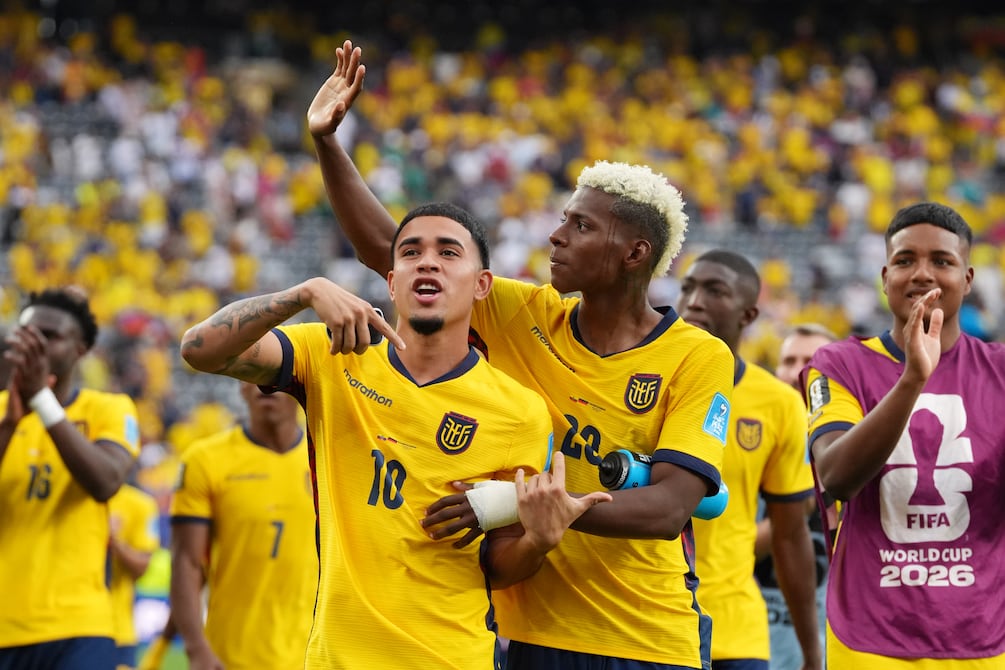
The Structural Evolution of Ecuador’s World Cup Campaign
Ecuador’s progression to the 2026 World Cup knockout stages, anchored by a high-stakes victory over Germany, signals a fundamental shift in the team’s competitive profile. Qualifying via the Group E third-place pathway validates the federation’s capacity to navigate high-intensity scenarios against established footballing powers.
The upcoming round-of-sixteen fixture against Mexico represents a critical institutional juncture. It is an opportunity to substantiate the team’s tactical framework, moving beyond the volatility of the group stage to demonstrate consistent, result-oriented execution.
The Strategic Role of Kendry Páez
Kendry Páez has emerged as the focal point of Ecuador’s tactical depth. His development—navigating the transition from River Plate toward his Chelsea commitments—reflects a sophisticated management of young talent within the global football ecosystem. His public emphasis on systemic discipline over individual prestige aligns with the pragmatic needs of tournament football.
Institutional Dynamics and Player Development
Ecuador’s success is predicated on the integration of veteran leadership with high-potential youth. This mentorship structure mitigates the risks associated with tournament volatility. For external stakeholders and European scouts, these matches function as an accelerated laboratory for assessing Páez’s maturity and professional output under intense global scrutiny.
Competitive Implications of the Knockout Stage
The elimination phase demands a recalibration of risk management. Unlike group play, the binary nature of knockout football penalizes tactical errors instantly. Ecuador’s defensive-to-offensive transition will face significant stress-testing against a tactically distinct Mexican side, forcing the Ecuadorian Football Federation to prioritize operational reliability and situational awareness.
Market and Institutional Context
The movement of players between South American leagues and European clubs is a byproduct of modern football finance. Páez’s trajectory highlights how international tournaments act as catalysts for these institutional relationships, providing leverage for both players and clubs in future valuation and contract negotiations.
Analytical Synthesis
Ecuador’s Group E performance, including bouts with Costa de Marfil and Curazao, illustrates a team of significant tactical fluidity. Success in the next phase depends on balancing the psychological toll of a compressed schedule with the rigorous application of the current defensive structure. The blend of youth and experience remains a calculated hedge against the high-variance nature of World Cup competition.

Photo by Pixies on Pixabay.