
AC/DC Toronto Concert Cancellation: A Catalyst for Industry Reassessment
The abrupt cancellation of the highly anticipated AC/DC concert in Toronto, originally slated for September 16 at Rogers Stadium, directly stems from severe structural damage inflicted by a recent massive rain and hail storm. Live Nation’s decision, announced mere hours after the City of Toronto received an independent engineering report on the venue’s integrity, underscores critical operational, financial, and strategic challenges facing the global live entertainment industry.
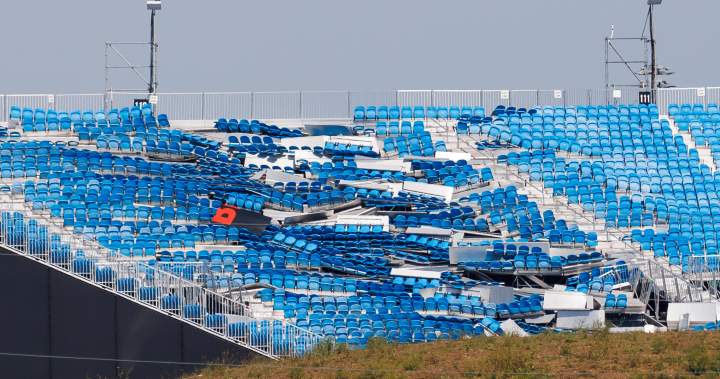
Initial reports depicted bleachers strewn across the stadium, providing immediate visual evidence of significant structural compromise far beyond superficial repairs. Following a thorough assessment, Live Nation Canada’s President of Business Operations, Wayne Zronik, affirmed, “Safety has to come first.” This declaration highlights a strategic imperative: mitigating substantial liability exposure and preserving long-term brand integrity, even at the cost of immediate revenue and widespread fan disappointment. The external validation from engineering experts was pivotal, solidifying the operational necessity of the cancellation and reinforcing municipal oversight on public safety for major civic assets.
Financial Fallout and Fan Disappointment
For thousands of fans, the immediate consequence is profound disappointment coupled with the logistical burden of processing refunds. While Live Nation expressed regret, the incident invariably tests fan loyalty and the perceived reliability of large-scale event scheduling, potentially impacting future ticket sales and consumer confidence across the sector.
For Live Nation itself, the financial implications extend beyond lost ticket revenue. They encompass the substantial costs associated with refund processing, potential contractual obligations to AC/DC, and significant operational expenditures already invested in event planning and marketing. Such high-profile cancellations trigger complex financial unwinding processes that directly impact quarterly performance metrics, reflecting the precarious balance sheets inherent in event promotion.
Long-Term Rebuilding, Economic Ripple Effects, and Venue Future
Live Nation’s statement regarding the need to “take the time to remove and rebuild the affected parts of the stadium to ensure it is ready to welcome fans next summer” reveals a strategic commitment to comprehensive structural remediation, not just temporary repair. This implies a significant capital expenditure and an extended closure that will severely impact Rogers Stadium’s revenue streams, as it will be unable to host other events for the remainder of the current season and potentially well into the next off-season. This loss of potential bookings represents a substantial financial hit for the venue operator and its stakeholders, influencing Toronto’s standing as a premier destination for major events.
Beyond immediate stakeholders, the cancellation creates significant ripple effects across Toronto’s local economy. Businesses in the hospitality sector – including hotels, restaurants, and transportation services – which anticipate a surge in demand from concert-goers, will experience an unexpected downturn in revenue, demonstrating the broader economic leverage of major cultural events on urban economies. The City of Toronto’s continued involvement, from public safety to reconstruction approvals, highlights the intricate interplay between private event promoters, venue owners, and municipal authorities in managing such civic assets and their economic impact.
Systemic Vulnerabilities and Industry Resilience
This incident serves as a stark reminder of the escalating operational risks posed by extreme weather events to large-scale public infrastructure. Venue operators and event promoters globally are increasingly confronted with the imperative to integrate climate resilience into their long-term planning, infrastructure design, and comprehensive risk management strategies. The reliance on independent engineering reports for critical safety decisions, for example, is a cornerstone of responsible infrastructure management, ensuring objective, data-driven assessments supersede commercial pressures.
Insurance frameworks, though often unseen, play a critical role in mitigating the financial fallout. Event cancellation and property damage policies are designed to absorb some of the economic shock, but the complexity of claims, potential for increased premiums, and policy limitations remain significant considerations. The necessity for enhanced contingency planning within the live entertainment sector—including alternative venue options, robust communication protocols, and financial safeguards against unpredictable external factors—is now more apparent than ever.
Ultimately, the cancellation of the AC/DC concert due to storm damage at Rogers Stadium transcends a simple event disruption. It illuminates the systemic challenges faced by the live entertainment industry in an era of heightened environmental volatility and complex inter-organizational dependencies. This event functions as a potent case study in crisis management for major corporations like Live Nation, highlighting the delicate balance between immediate operational response, financial stewardship, and long-term strategic planning. The path to recovery will test the resilience and adaptability of all involved stakeholders, serving as a powerful catalyst for industry-wide reassessment and proactive infrastructure investment.