
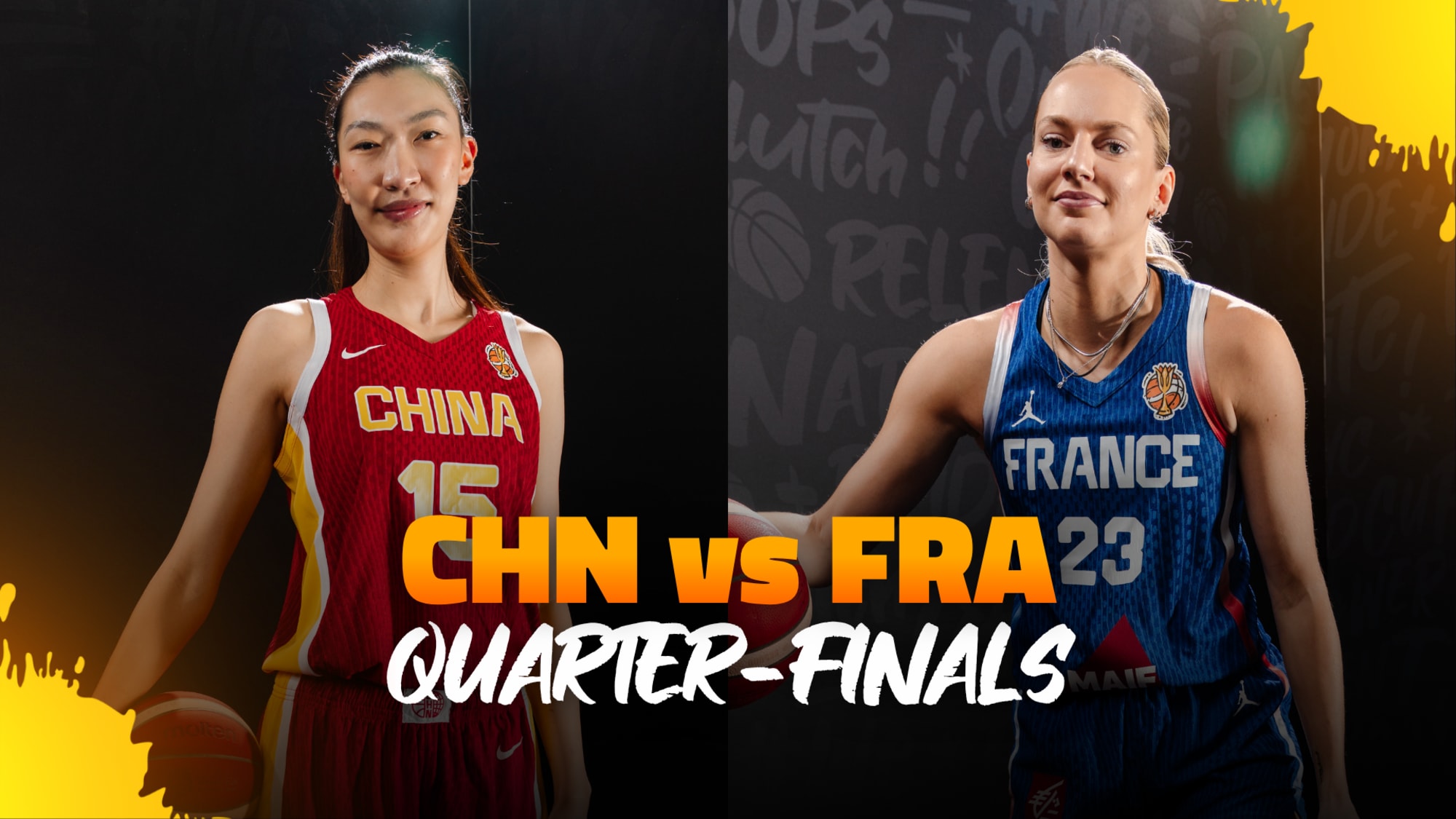
Historical Weight and Contrasting Paths to the Final Eight
The 2026 FIBA Women’s Basketball World Cup knockout stage opens in Berlin with diametrically opposed institutional narratives. France, entering Thursday’s quarterfinal as the tournament frontrunner and reigning Olympic silver medalist, seeks to dismantle an enduring historical anomaly: the program has not achieved a top-four World Cup finish since the inaugural 1953 tournament. Standing in the way is China, the 2022 silver medalist in Sydney, now two wins away from consecutive podium appearances despite navigating a mid-cycle roster transition.
The qualification phase highlighted this contrast in tournament entry points. While France advanced with unblemished authority, China survived a physical 75-72 qualification playoff against Puerto Rico. The victory showcased late-game poise under elimination duress, yet it also exposed structural vulnerabilities against athletic, aggressive defensive rotations.
The 33.0-Point Efficiency Gulf: Transition Volume vs. Half-Court Execution
The statistical divergence between both squads defines the primary schematic battleground. France leads all World Cup teams with an average of 101.7 points per game, generating a 33.0-point scoring disparity over China (68.7 PPG). This gap is a product of contrasting tactical frameworks rather than shooting variance alone. France’s system maximizes open-floor possessions, rapid ball circulation, and turnover conversion, routinely overwhelming opponents before secondary half-court coverages can set.
For China, survival requires systematically suppressing game tempo. China’s lower scoring baseline stems from deliberate, interior-focused sets engineered to maximize points per possession while limiting total possessions. If China cannot halt French primary breaks and force extended 24-second half-court defensive trips, the compounding mathematical leverage of France’s triple-digit pace will break the contest open early.
The Marquee Paint Duel: Dominique Malonga vs. Han Xu
The tactical axis of this quarterfinal sits directly in the low post. France’s 20-year-old phenom Dominique Malonga has emerged as a dominant two-way force, ranking among her team’s top three in scoring, rebounding, efficiency, steals, and blocks. Her blend of vertical pop, lateral mobility, and rim protection permits France to pressure perimeter passing lanes without conceding uncontested interior layups.
Malonga faces her sternest test yet in Han Xu, who enters Thursday with four consecutive double-doubles. In the qualification win over Puerto Rico, Han anchored China with 21 points and 11 rebounds, proving virtually unguardable in single-coverage low-post isolations and pick-and-roll dives. If Han establishes early low-block positioning and forces Malonga into early foul trouble, France will be compelled to send dig-downs or baseline traps, conceding open spot-up perimeter looks.
Interior Depth and Secondary Creation: Zhang, Tang, and Yang
China’s tactical advantage lies in its specialized frontcourt depth. Off the bench, Zhang Ziyu provided an immediate counterweight against Puerto Rico, registering 13 points in relief to ensure sustained post scoring when Han rested. Maintaining that 40-minute interior siege is central to China’s strategy to wear down France’s frontline rotation.
Perimeter containment and complementary scoring will dictate whether that size translates to the scoreboard. Tang Ziting demonstrated China’s defensive floor, battling through contact for loose possessions against Puerto Rico’s Imani McGee-Stafford to disrupt baseline drives. Offensively, perimeter guard Yang Shuyu, who contributed 15 points in the playoff round, must consistently convert kick-out opportunities to prevent France from packing the lane against Han and Zhang.
Knockout Volatility: Lessons from Australia’s Near-Collapse
The single-elimination dynamics of Berlin were underscored in Wednesday’s qualification action. Australia clinched its tenth consecutive World Cup quarterfinal berth via an 82-80 win over Italy, but only after relinquishing a 26-point third-quarter cushion. Italy mounted a furious 28-13 final period to tie the contest at 77-77 before the Opals secured the win to set up a quarterfinal against Spain. Australian coach Sandy Brondello praised her squad’s poise under adversity while acknowledging the severe execution lapses that nearly cost them their tournament life.
That collapse serves as an explicit case study for France. In knockout basketball, large statistical cushions dissipate rapidly against structured interior execution and defensive shifts. As Han Xu noted post-game, China recognizes France’s pedigree as Olympic finalists but enters the quarterfinal uninhibited by France’s winning margins.
Keys to the Semifinal Berth
Thursday’s quarterfinal reduces to three clear tactical factors:
- Possession Control: France thrives when pushing tempo above 80 possessions; China requires deliberate half-court sequences that force France into set-piece execution.
- Turnover Differential: Live-ball turnovers will be fatal for China, as French run-outs bypass half-court rim protection entirely.
- Foul Conservation: Both Malonga and Han represent the cornerstones of their respective interior schemes; early personal fouls will drastically compromise defensive structures.
The victor advances directly to Saturday’s semifinals. For France, a win ends a 73-year medal-round drought; for China, it solidifies a sustained run among international basketball’s absolute elite.

Photo by planet_fox on Pixabay.