Orbital Intersection and Stream Synchronization
The temporal convergence of the Alpha Capricornid and Southern Delta Aquariid meteor streams on July 30–31, 2026, presents a high-density debris interval. This synchronization involves the intersection of Earth’s orbit with the particulate trails of Comets 169P/NEAT and 96P/Machholz. For institutional bodies such as the NASA Meteoroid Environment Office and the American Meteor Society (AMS), this period facilitates critical data collection on atmospheric entry velocities and flux density. The presence of early-cycle Perseids further necessitates rigorous radiant-point differentiation to maintain the integrity of long-term population models.
Lunar Illumination and Limiting Magnitude Thresholds
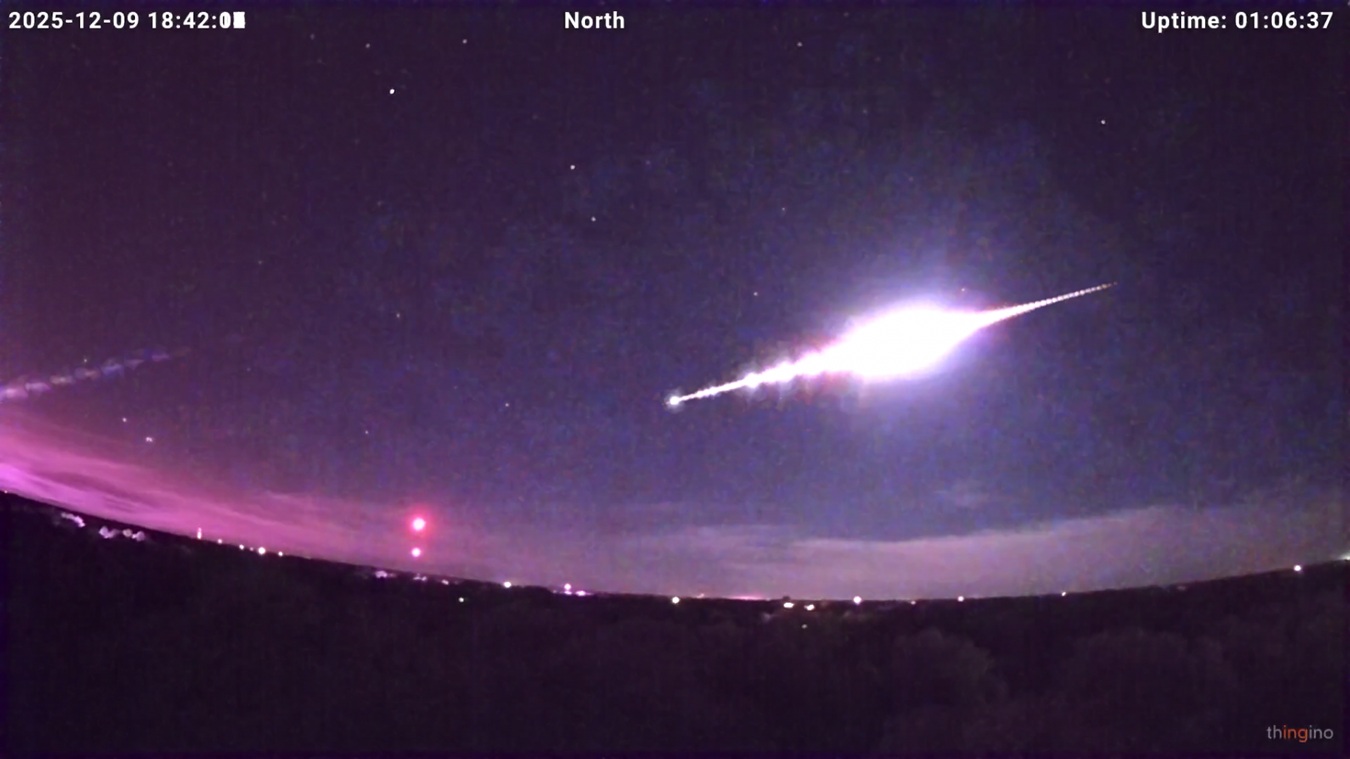
The 2026 peak is characterized by severe observational constraints due to the lunar cycle. With the full moon occurring on July 29, the sky will maintain high background luminance throughout the peak window. According to AMS coordinator Bob Lunsford, this triennial alignment elevates the limiting magnitude, effectively obscuring low-mass particulates. NASA’s Bill Cooke highlights that the persistent presence of the moon above the horizon eliminates traditional dark-sky windows. Consequently, detection is restricted to high-intensity ‘fireballs’ (bolides)—a specific characteristic of the 169P/NEAT stream—while the higher-frequency, lower-magnitude Southern Delta Aquariids will suffer significant observational attrition.
Quantitative Flux Analysis and Geospatial Variance
Projected meteor rates reflect a sharp divergence based on observer latitude and temporal windows. Post-peak data suggests that evening observers at 45°N and 25°S will experience suppressed rates of approximately 3 meteors per hour. However, pre-dawn windows show a marginal recovery, with rates scaling to 18 per hour in mid-northern latitudes and 15 per hour in tropical regions. This variance is a function of radiant elevation; as the radiants ascend, the slant range decreases, improving detection probability despite the photon noise introduced by 100% lunar illumination. Data accuracy remains contingent on minimizing local light pollution and atmospheric extinction.
Cometary Morphology and Entry Kinematics
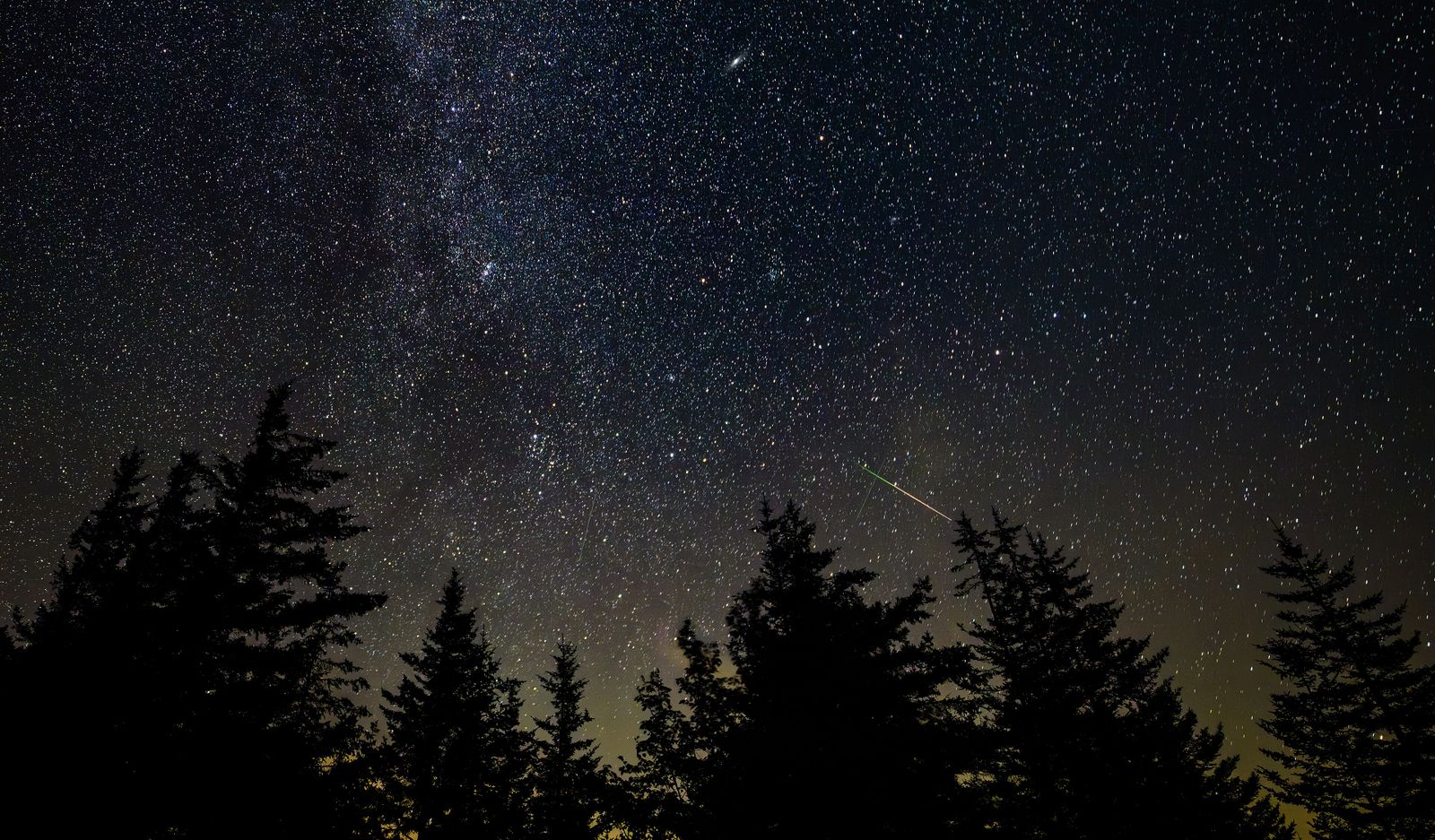
The Southern Delta Aquariids (96P/Machholz) typically manifest as high-velocity, small-grain particulates. Conversely, the Alpha Capricornids (169P/NEAT) are categorized by larger parent material, resulting in slow-moving, high-luminosity events that often culminate in terminal fragmentation. This kinetic energy dissipation allows researchers to distinguish between streams via spectral and velocity profiles. While often referred to colloquially as ‘shooting stars,’ these phenomena are strictly classified as meteors during atmospheric transit. The structural integrity of 169P/NEAT debris is of particular interest for fireball frequency modeling and terminal ballistics analysis.
Institutional Modeling and Future Baseline Integration
Despite suboptimal visibility, the 2026 cycle remains scientifically vital. Data gathered under high-background-light conditions provides a baseline for evaluating the sensitivity of automated detection networks. By aggregating citizen science reports with professional video monitoring, institutions can refine orbital models for the 96P/Machholz and 169P/NEAT streams. This period of interference serves as a stress test for detection algorithms, ensuring that future peaks under new moon conditions can be contextualized against a comprehensive range of environmental variables. Furthermore, the multi-stream overlap allows for a sophisticated spatial analysis of the inner solar system’s debris distribution.