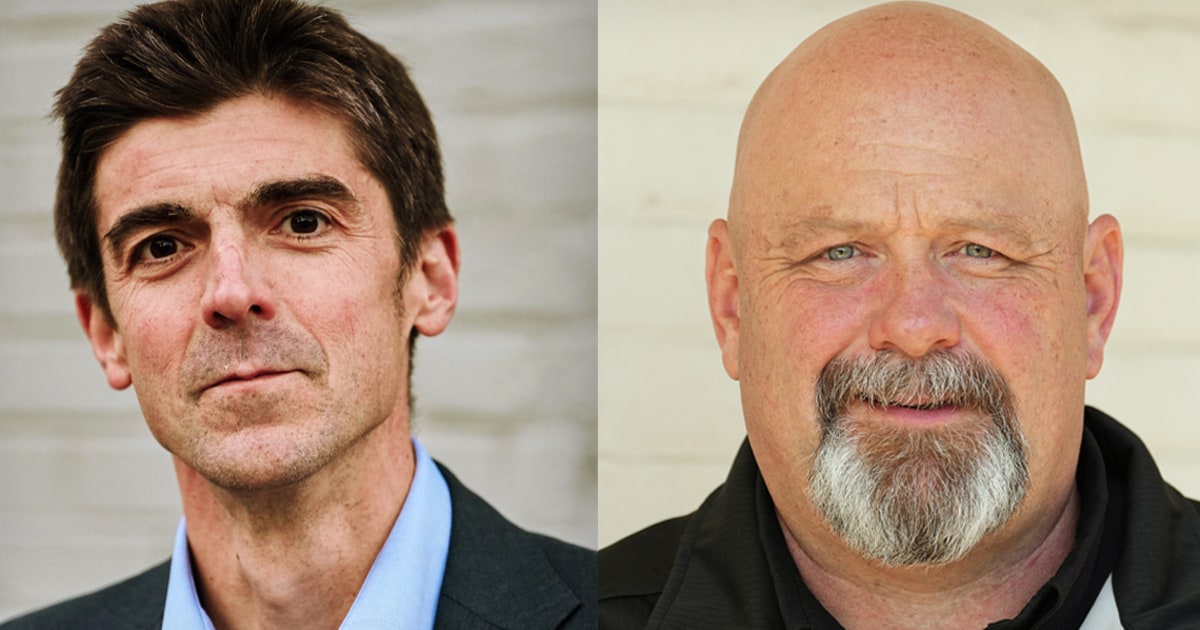
Pennsylvania’s 7th Congressional District has transitioned from a standard primary into a high-stakes laboratory for the Democratic Party’s competing electoral philosophies. As a perennial bellwether, the Lehigh Valley serves as the ultimate test for whether the path to a House majority lies in working-class economic populism or a defense of institutional norms.
The Bipolarity of Candidate Identities
Bob Brooks, president of the state firefighters union, embodies a traditionalist labor-populist strategy. By anchoring his narrative in blue-collar authenticity and structural economic bias, Brooks attempts to reclaim the ‘white-working-class’ demographic that has drifted toward Republican populism. His campaign relies on the operational infrastructure of union networks to mobilize a base that views the political system as inherently ‘rigged’ against the industrial core.
In stark contrast, Ryan Crosswell, a former federal prosecutor and Marine veteran, has positioned his candidacy as a crusade for institutional stability. His high-profile resignation from the Justice Department—reportedly in protest of political interference in the Eric Adams corruption case—underpins his ‘No Kings’ platform. Crosswell’s strategy pivots toward moderate suburbanites and constitutionalists who prioritize the rule of law and executive accountability over specific populist economic grievances.
Institutional Friction and Demographic Risks
The primary is increasingly defined by the tension between local grassroots sentiment and national party intervention. Reports of a ‘coronation’ of Brooks by D.C.-based Democratic organizations have sparked concerns regarding tactical overreach. This top-down preference risks alienating the Lehigh Valley’s influential Hispanic electorate, particularly following the perceived marginalization of candidates like Carol Obando-Derstine. In a district where demographic shifts are decisive, any erosion of Hispanic support creates a strategic bottleneck that the GOP is eager to exploit.
The National Republican Congressional Committee (NRCC) has already weaponized this internal discord. By framing the primary as a state of ‘disarray’ and labeling Brooks a ‘Bernie Bro,’ Republican strategists are conducting preemptive strikes to define the eventual nominee. The necessity of late-stage financial infusions from D.C. to stabilize Brooks’ campaign suggests a vulnerability in his local resonance—a factor that incumbent Republican Ryan Mackenzie is already leveraging to consolidate his general election position.
The Financial and Global Context
The primary serves as a zero-sum game for capital allocation. Every dollar spent on internal Democratic friction is a dollar diverted from the general election challenge against Mackenzie. Furthermore, the ‘midterm mood’ is being complicated by international volatility, including conflicts in the Middle East. Voters are forced to weigh localized economic pressures against global instability, requiring candidates to bridge the gap between Article One constitutionalism and the ‘kitchen table’ realities of inflation.
Christopher Borick of Muhlenberg College emphasizes that the 7th District remains a microcosm of the national electorate. The outcome of the Brooks-Crosswell divide will signal whether the Democratic Party believes its most viable path to victory is a return to labor roots or a forward-looking defense of the democratic architecture. As the primary concludes, the party must reconcile these fractured narratives or risk a fragmented coalition in November.