
Strategic Paradigm Shift: The Sooryavanshi Volatility
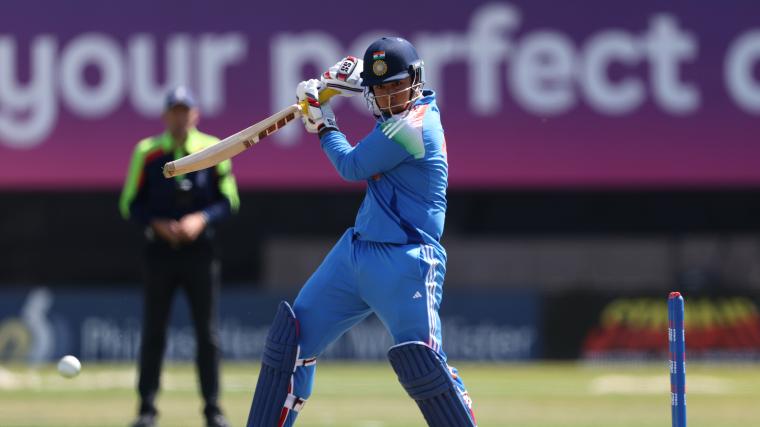
The Tri-Nation A Series final between India A and Sri Lanka A at Dambulla has evolved into a case study of high-velocity tactical aggression. Vaibhav Sooryavanshi’s record-breaking performance—a half-century in 11 deliveries, culminating in 94 runs off 29 balls—has fundamentally disrupted traditional List A scoring models. This innings was not merely an exhibition of power hitting; it was a strategic assault designed to compromise Sri Lanka’s bowling rotations and force defensive field placements during the initial powerplay, thereby creating a surplus of scoring opportunities for the following middle order.
Institutional Significance and Scouting ROI
Sooryavanshi’s performance validates the BCCI’s decentralized talent identification model. A 15-year-old prospect from Samastipur, recently integrated into the Rajasthan Royals’ developmental pipeline, his ability to maintain psychological composure under the pressure of a tournament final suggests a high ceiling for professional scalability. This ‘A’ level exposure serves as a critical filter, transitioning raw talent into match-ready assets for the senior national side and high-valuation IPL cycles. The tactical friction observed, including a notable on-field altercation, underscores the high-stakes environment where temperament is as valuable as technical proficiency.
Middle-Order Consolidation and Target Metrics
Following the initial volatility, Tilak Varma and Ruturaj Gaikwad transitioned the innings into a phase of structured accumulation. Varma’s half-century served as a stabilizing anchor, shifting the strategic objective toward a 400-plus total. This projection is a calculated response to the Dambulla surface’s high-scoring nature and the perceived depth of the Sri Lankan batting lineup. The synergy between Sooryavanshi’s early explosion and the subsequent consolidation by Varma and Gaikwad demonstrates a sophisticated understanding of innings pacing, ensuring the initial momentum was capitalized upon rather than squandered.
Operational Breakdown of the Sri Lankan Attack
Sri Lanka A’s bowling unit has struggled with operational consistency. Kugathas Mathulan’s figures (0/42 in four overs) highlight a systemic failure to execute defensive lengths against an aggressive top order. The inability to contain Kumar Kushagra’s late-over surges indicates a breakdown in tactical execution, particularly regarding slower-ball variations and yorker precision. As India A nears its target, the strategic burden shifts to the Sri Lankan batters, who must now attempt an unprecedented chase against an India A side that has optimized every phase of the game.