
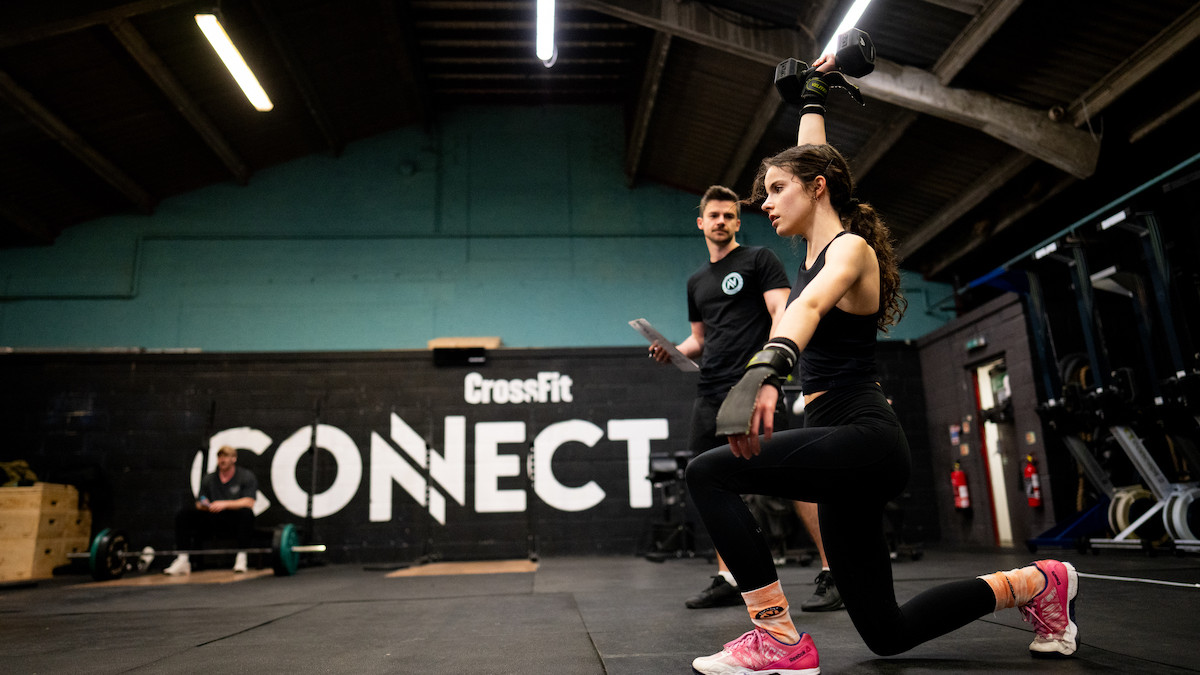
CrossFit Open 26.2: Programming Decisions and Competitive Stratification
The second workout of the 2026 CrossFit Open, presented by the Air National Guard, introduced a complex combination of movements designed to test specific athletic capacities under a strict time constraint. The programming featured alternating dumbbell snatches, dumbbell overhead walking lunges, pull-ups, chest-to-bar pull-ups, and ring muscle-ups. The inclusion of ring muscle-ups marked a significant strategic shift from the bar muscle-ups seen in the previous two Opens. This change altered the specific skill set required for top performance, prioritizing technical precision and stability over brute strength, thereby serving as a deliberate filtering mechanism for elite athletes.
The workout’s structure escalated the difficulty of pulling movements from pull-ups to chest-to-bar pull-ups and finally to ring muscle-ups. This design choice, particularly when compared to Open Workout 25.2, reflects a consistent programming strategy aimed at identifying athletes capable of managing increasing gymnastic complexity under fatigue. The 15-minute time cap further intensified the challenge, forcing efficient pacing and transitions to prevent athletes from hitting the time limit before reaching the most difficult movements.
The operational impact of the ring muscle-up requirement cannot be overstated. Unlike bar muscle-ups, ring muscle-ups demand greater stability, specific strength, and technical precision. This programming decision inherently disadvantages athletes who specialize in barbell movements or simpler gymnastics, creating a specific competitive advantage for those who have prioritized ring work in their training cycles. The shift in movement selection for a high-stakes qualifier like the Open directly influences athlete training methodologies and resource allocation throughout the competitive season, favoring athletes with a broader skill set across multiple disciplines.
Athlete performance data confirms the strategic intent behind the programming. The ring muscle-up acted as the primary bottleneck for competitive advancement. While over 58,000 women and 100,000 men across all divisions were able to perform at least one chest-to-bar pull-up, the number dropped significantly for the ring muscle-up. Only 9,918 women and 41,773 men achieved at least one repetition. This stark difference in completion rates demonstrates the effectiveness of the ring muscle-up in segmenting the competitive field and identifying the top tier of athletes based on specific, high-level gymnastic proficiency. For athletes aiming for qualification, efficient ring muscle-up performance under fatigue is non-negotiable.
Stakeholder Dynamics: Balancing Competitive Rigor with Mass Participation
The programming of Open workouts often generates significant debate among stakeholders, reflecting the tension between maintaining competitive integrity for elite athletes and ensuring accessibility for the mass participation base. The discussion on the podcast “THE SPIN” regarding 26.2 highlights this conflict, with Tyler, a top 5% athlete, arguing the workout was “too easy,” while Spin disagreed. This divergence in perspective reveals a fundamental challenge in designing a single workout that satisfies both elite competitors and the general community.
For elite athletes like Tyler, a workout perceived as “too easy” fails to adequately differentiate performance at the top level. If the workout does not present a sufficient challenge, it can lead to a large number of athletes achieving similar high scores, making the qualification process less effective at identifying truly superior fitness. This perspective prioritizes the competitive aspect of the Open, viewing it primarily as a filter for the CrossFit Games season. The use of advanced skills like ring muscle-ups is designed precisely to address this concern, ensuring adequate stratification at the highest levels of competition.
Conversely, the perspective that the workout was appropriately challenging or even difficult for the broader community emphasizes the Open’s role as a mass participation event. The Open serves as a significant revenue source and community engagement tool for CrossFit, Inc. If workouts are consistently too difficult for the majority of participants, it risks alienating the core community base. The debate over programming difficulty reflects the strategic balancing act required to maintain both competitive relevance for the elite and broad market appeal for the general participant.
The Roman Khrennikov Case Study: Strategic Invitations and Injury Management
The controversy surrounding Roman Khrennikov’s special invite to the French Throwdown provides a critical case study in elite athlete management, strategic event selection, and the role of non-meritocratic pathways in competitive sports. Khrennikov’s performance in the Open was significantly below his historical standard, with a 612th place finish in Week 1, followed by a 101st place finish in Week 2. This performance fluctuation stands in stark contrast to his past record, where he finished no worse than 18th in the world over the previous three years.
The source data links Khrennikov’s performance decline to a significant medical event: hip surgery in October 2024. The timing of the surgery relative to the Open season suggests a direct correlation between physical recovery and competitive readiness. The speculation raised by Tyler—that Khrennikov received a special invite because he was unable to perform at his peak during the qualifier—highlights the strategic implications of injury management for elite athletes and event organizers.
For event organizers, the decision to issue a special invite to an athlete like Khrennikov represents a strategic calculation. While a special invite potentially undermines the meritocratic integrity of the standard qualification process, it ensures the participation of high-profile athletes who drive audience engagement, ticket sales, and media interest. Khrennikov’s historical performance and star power likely outweigh the immediate risk of his current performance level, particularly when a plausible injury explanation exists. This decision prioritizes brand value and commercial draw over strict adherence to qualification rules.
The Khrennikov case reveals a potential strategic loophole for athletes recovering from injury. By receiving a special invite, an athlete can bypass the standard qualification process, allowing them to participate in major events without demonstrating current fitness. This creates a strategic incentive for athletes to carefully manage their public image and injury status, potentially prioritizing recovery over competitive performance in the Open if a special invite is anticipated. The system, therefore, allows for a degree of flexibility in athlete selection that prioritizes brand value over strict adherence to qualification rules.
Market Dynamics and Competitive Leverage Beyond Meritocracy
The competitive landscape of CrossFit extends beyond individual athlete performance to include event management and media positioning. The discussion of Jayson Hopper lobbying for a spot in the elite individual division at Wodapalooza highlights the strategic maneuvering required to secure competitive opportunities. This lobbying effort, alongside Khrennikov’s special invite, demonstrates that qualification for major events is not always purely merit-based, but also involves negotiation and strategic positioning within the industry ecosystem.
The media’s focus on these controversies and predictions, including Wodapalooza predictions and the Khrennikov speculation, serves a commercial purpose. By generating discussion around athlete performance, injury status, and event invites, media outlets create narrative momentum for the competitive season. This narrative engagement drives viewership and interest in upcoming events, increasing the commercial value of both the athletes and the events themselves. Media analysis influences public perception of the fairness and effectiveness of the qualification process, impacting athlete reputation and sponsorship value.
The programming choices in the Open, particularly the inclusion of movements like ring muscle-ups, function as a market segmentation tool. By setting a high standard for elite performance, the Open ensures that only a small percentage of participants can achieve top scores. This creates a clear distinction between the mass participation base and the elite competitive field, allowing event organizers to cater to both segments with different levels of engagement and content. The Open’s success relies on maintaining this balance between accessibility for the community and competitive rigor for the elite.
Conclusion: Strategic Implications of Programming and Athlete Management
The analysis of CrossFit Open 26.2 reveals a complex interplay between operational programming, competitive stratification, and strategic athlete management. The programming choices, particularly the inclusion of ring muscle-ups and the strict time cap, effectively filtered the competitive field based on specific skill sets, ensuring that only athletes with high levels of gymnastic proficiency advanced to the top tiers.
The debates surrounding programming difficulty highlight the inherent challenge of balancing mass participation with elite competitive integrity. The differing perspectives of elite athletes and the general community underscore the strategic decisions required to maintain the Open’s dual function as both a community event and a high-stakes qualifier.
The Khrennikov case study demonstrates the strategic value of special invites in managing elite athletes, particularly those recovering from injury. The decision to prioritize star power and historical performance over current form reveals a strategic calculation by event organizers to maximize audience engagement and commercial value. This dynamic influences athlete incentives and raises questions about the long-term integrity of the qualification process, highlighting the complex relationship between competitive meritocracy and commercial interests in professional sports.

Photo by Ichigo121212 on Pixabay.