
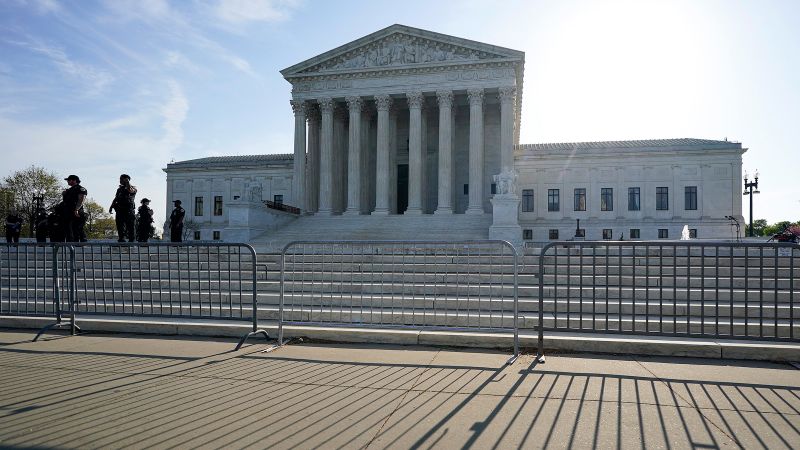
Procedural Reversal and the Purcell Principle
The Supreme Court’s decision to stay the lower court’s injunction against Alabama’s 2023 congressional map signifies a strategic application of the Purcell principle. By halting the requirement for a second majority-Black district, the Court has prioritized electoral stability and state-led administrative finality over immediate judicial remediation of alleged Section 2 violations under the Voting Rights Act (VRA). This move effectively freezes the status quo for the 2026 cycle, despite previous rulings in Allen v. Milligan that suggested a shift toward expanded minority representation.
Shadow Docket Jurisprudence and Legal Uncertainty
The use of an unexplained order—a hallmark of the Court’s ‘shadow docket’—creates a significant vacuum in legal guidance for state legislatures and civil rights litigants. By vacating the lower court’s decision without a detailed merits-stage opinion, the conservative majority has leveraged procedural mechanisms to recalibrate the evidentiary threshold for vote dilution. This lack of transparency complicates the efforts of legal practitioners to predict how the Louisiana v. Callais precedent will interact with future challenges to racial and partisan gerrymandering.
Administrative Friction and the May 19 Primary
The timing of the SCOTUS intervention introduces acute operational disruption to Alabama’s election infrastructure. With absentee balloting for the May 19 primary already underway, the reinstatement of the 2023 boundaries necessitates a rapid synchronization of voter registration rolls and precinct data. This 11th-hour shift heightens the risk of administrative errors, voter confusion, and potential litigation regarding the validity of ballots cast under the briefly enacted court-ordered maps.
Strategic Executive Maneuvering
Governor Kay Ivey’s tactical decision to call a special session to enact the 2023 map reflects an executive strategy of institutional resistance. By legislating a map that directly challenged federal mandates, the Alabama executive branch successfully moved the dispute from a unfavorable three-judge panel to a more sympathetic Supreme Court majority. This strategy highlights the evolving role of state legislatures in testing the limits of federal oversight and the durability of VRA enforcement mechanisms.
Impact on Partisan Balance and National Strategy
The reinstatement of the single-majority-Black district map directly influences the national battle for House control in 2026. By shielding the existing partisan configuration, the Court has removed a high-probability ‘pickup’ opportunity for Democrats. National party strategists must now reallocate resources away from Alabama, as the judicial stay ensures that the state’s congressional delegation will remain a fixed variable in the midterm landscape, reducing the volatility of the regional electoral map.
Conclusion: The Erosion of Federal Oversight
The Alabama order contributes to a broader trend of narrowing the enforcement of the Voting Rights Act. By allowing a map previously deemed non-compliant to govern an active election cycle, the Court has signaled a higher tolerance for state-led redistricting outcomes even amidst pending litigation. This shift increases the burden of proof for plaintiffs and suggests a move toward a more restrictive interpretation of racial parity in American representative democracy.

Photo by Kamyq on Pixabay.