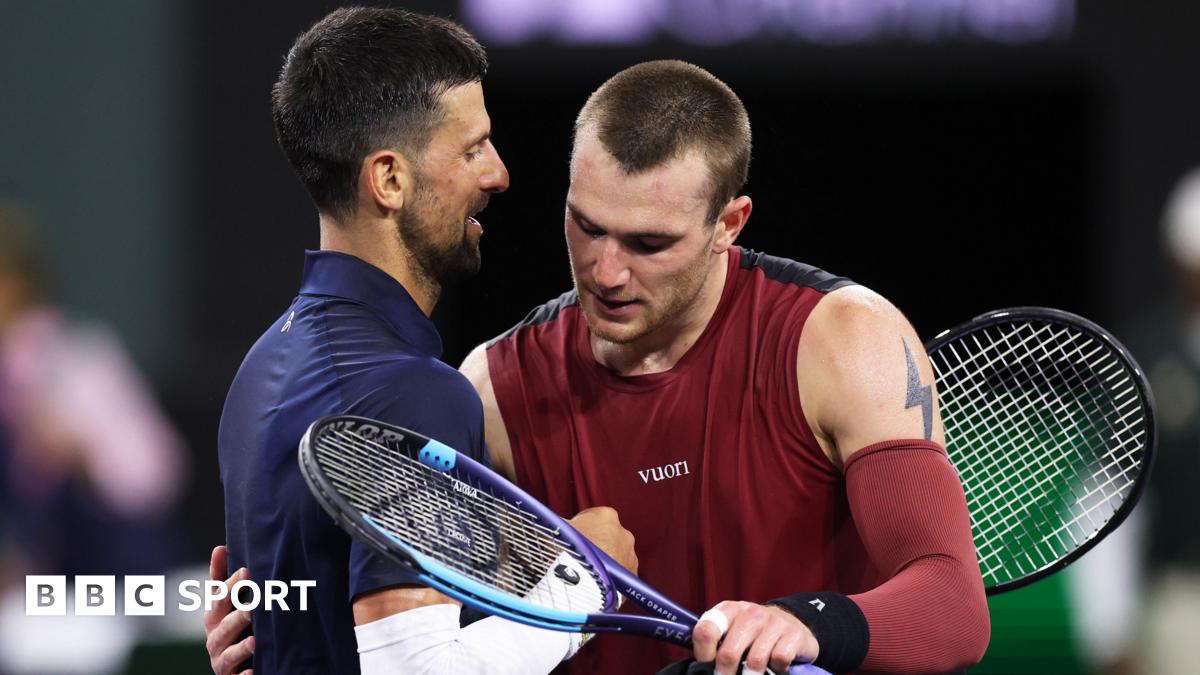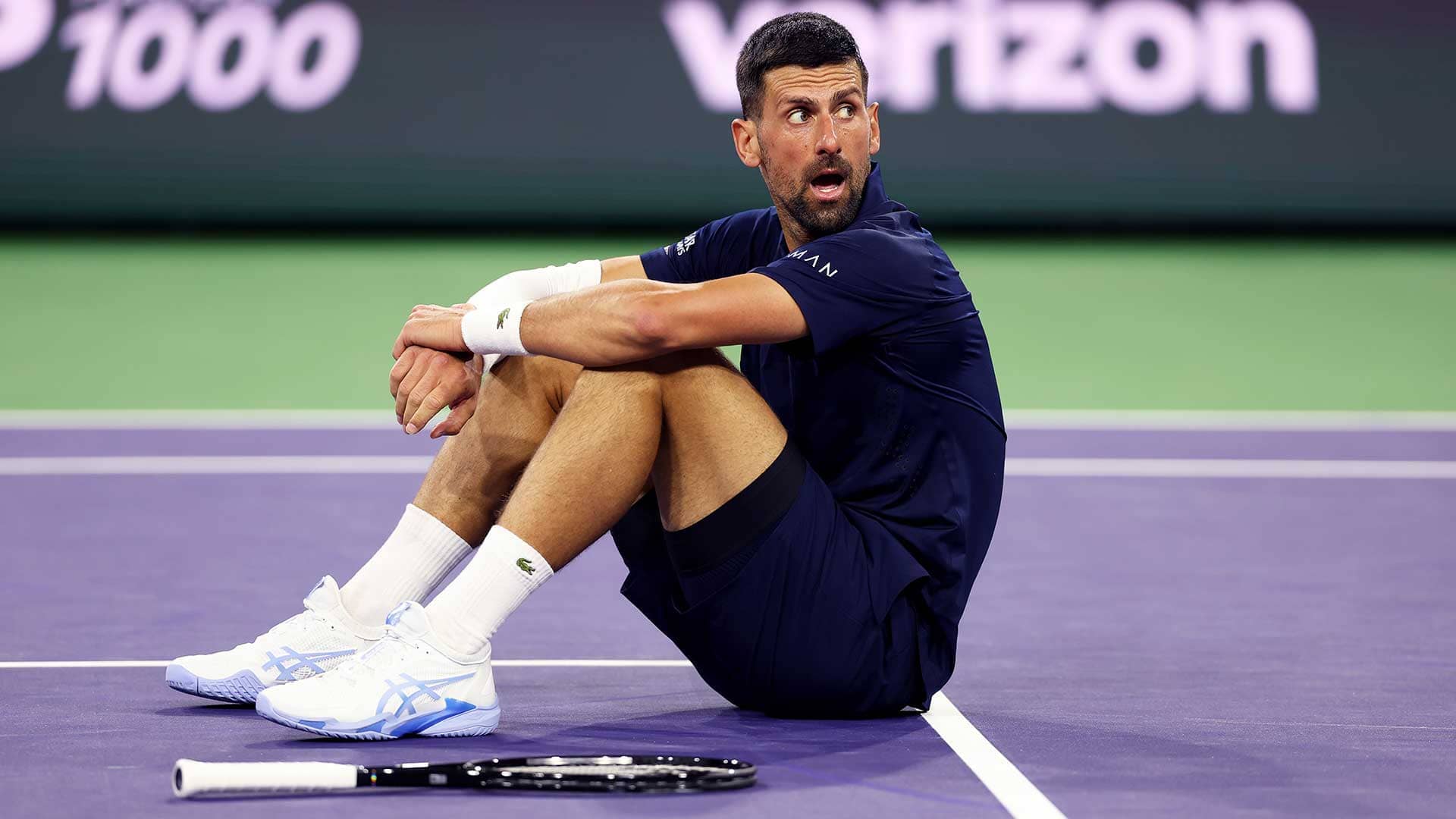
Britain’s Jack Draper achieved a significant career milestone by defeating five-time Indian Wells champion Novak Djokovic, prevailing 4-6, 6-4, 7-6 (7-5) over a taxing two-hour, 35-minute duration.
This outcome transcends a standard tournament upset; it serves as a critical inflection point for Draper, validating his competitive readiness following an eight-month hiatus imposed by an arm injury.
Analytical Density: Operationalizing Recovery Against Elite Standard
Draper framed the win as potentially “a real big moment,” quantifying the psychological leverage gained against a generational titan, especially given his constrained exposure to ATP Tour rhythm this season.
The immediate strategic challenge shifts from proving physical viability to sustaining this apex performance level across subsequent tournament rounds, rigorously testing his current physical conditioning capacity against high-stakes attrition.
For Djokovic, the defeat exposed vulnerability in mitigating protracted, high-intensity physical exchanges. This was highlighted by the critical 26-shot rally in the third set, which, despite being won by Djokovic, reportedly preceded a service break against him, suggesting a delayed performance degradation.
Momentum Capitalization vs. Generational Stress Testing
Draper’s prior run at Indian Wells, which included defeats of high-caliber players like Fritz, Alcaraz, and Rune, establishes a high performance baseline that this victory now structurally validates.
The immediate capital implication involves reinforcing sponsor confidence and potentially recalibrating Draper’s valuation, signaling a strong return on investment for entities backing players emerging from significant injury layoffs.
Conversely, for Djokovic, each loss against a younger, fully fit competitor recalibrates market perception regarding his remaining competitive lifespan and necessitates strategic workload management optimization approaching age 39.
Competitive Dynamics: Tiebreak Execution Under Pressure
The match, a described “real physical battle” before 16,000 spectators, confirmed Draper’s tactical resilience to absorb pressure and execute decisively in the concluding tiebreak.
Djokovic’s capacity to battle back from a service break deficit in the third set reaffirms his inherent tenacity, but failure to close confirms the narrow margins separating sustained dominance from competitive parity at this career stage.
Draper’s defense of his 2023 title against one of the sport’s most formidable opponents elevates this achievement beyond standard tournament progression, demonstrating superior execution against a specific institutional benchmark.
Point Expenditure Analysis and Recovery Metrics
Djokovic’s post-match commentary explicitly isolating the extended third-set rally as costly establishes a direct operational linkage between point expenditure and subsequent performance decline—a crucial variable in multi-set tournaments.
This observation mandates a strategic review within Djokovic’s support team regarding point construction and energy conservation during pressure phases, specifically against opponents known for high physical output like Draper.
Draper’s successful navigation of these protracted exchanges suggests superior anaerobic recovery capacity or a calculated risk assessment that favored aggressive point closure over defensive baseline warfare against the veteran.
Stakeholder Repercussions and Market Repositioning
The narrative surrounding Draper’s triumph repositions him structurally, shifting him from an ‘injury recovery story’ to a ‘proven disruptor’ capable of dismantling established hierarchies.
This competitive elevation impacts seeding projections, preferred tournament scheduling, and forces rival training camps to update their strategic modeling incorporating Draper’s current form.
The high attendance confirms the sustained commercial viability of matchups contrasting established legends against ascending talent, positively influencing broadcast rights valuations across the ATP ecosystem.
Psychological Milestone: Idolatry Overcome
Draper’s acknowledgment of idolizing Djokovic injects a crucial cultural dimension, illustrating the generational succession underway in professional tennis.
Overcoming a childhood idol represents a significant psychological threshold, often catalyzing a player to fully internalize their elite status rather than maintaining a deferential competitive posture.
This psychological breakthrough, if consistently applied, directly translates into optimized on-court decision-making under pressure, converting latent potential into realized competitive leverage against the remaining elite cohort.
Performance Leverage Metrics
The statistical outcome, decided by a single point in the final tiebreak, underscores the razor-thin margins defining success at this level, where marginal improvements in execution or mental fortitude become decisive factors.
Draper’s composure while defending his title against Djokovic’s caliber demonstrates a competitive maturity often accrued over significantly more years on tour.
This performance leverage is defined not just by the win, but the manner of victory—a grueling contest confirming readiness for subsequent tournament phases.
Historical Context: Accelerated Development Curve
The reversal of fortunes since Djokovic’s 2021 Wimbledon win provides a quantifiable measure of Draper’s accelerated development curve.
This high-leverage context suggests Draper has successfully integrated tactical adjustments or physical enhancements that neutralize Djokovic’s historical advantages, rendering the prior head-to-head record a less reliable future predictor.
Institutional Scheduling and Calendar Management
For organizers, the match confirms the revenue optimization strategy of pairing emerging powerhouses with established champions, maximizing gate receipts and media exposure.
The intensity of the clash necessitates immediate protocol adjustments for recovery and scheduling for both athletes, impacting readiness for the next stage.
Draper’s participation in only his second ATP Tour event of the season validates a performance calendar calibrated for peak output at high-value tournaments.
Long-Term Season Outlook
Draper anticipates referencing this victory as a defining benchmark, suggesting a strategic internal performance goal has been achieved, potentially unlocking greater confidence for the season’s remaining capital-intensive events.
The operational challenge remains translating this singular monumental win into sustained top-tier ranking progression, mitigating the risk of over-reliance on isolated peak output performances.
Leveraging this momentum directly enhances financial and competitive incentives, including access to preferred draws and increased endorsement visibility.
Djokovic’s Post-Match Competitive Calculus
Djokovic’s public acknowledgement of his effort juxtaposed with disappointment indicates an immediate institutional performance review focused on resilience metrics over outcome.
However, the specific identification of the grueling rally costing him a service break isolates a tangible operational variable demanding remediation concerning anaerobic capacity maintenance late in matches.
For a player defined by superior physical management, identified systemic weaknesses in late-match energy conservation require immediate strategic remediation to safeguard future tournament viability.
Legacy Defense vs. Generational Aspiration
Competing against an openly admitted idol places a unique strategic burden on Djokovic; each contest tests his capacity to withstand the competitive aspirations of the emergent generation.
The narrative concerning his advancing age gains sharper competitive relevance when directly contrasted with the explosive energy output displayed by opponents like Draper.
This dynamic influences media framing, shifting focus from sustained dominance toward the active defense of established records against relentless competitive pressure.
Decisive Tiebreak Execution Analysis
The 7-5 tiebreak confirms the match pivoted on execution under maximum cognitive load, testing conditioning against immediate tactical adaptation.
Draper’s success in this pressurized state suggests a superior capacity to manage the emotional volatility inherent in high-stakes tiebreaks against legendary opponents.
This specific execution skill represents a significant intangible asset carried forward from the encounter.
Venue Influence: Desert Conditions Amplification
Indian Wells’ specific desert conditions favor players maintaining high physical output over extended durations, an environmental factor that demonstrably aided Draper in the latter stages.
The venue’s demands amplify the strategic importance of Draper’s acclimatization superiority over Djokovic’s immediate competitive rhythm across preceding tough matches.
This reinforces the strategic necessity for tailored preparation cycles specific to major hard-court venues, moving beyond generalized fitness protocols.
Conclusion: Evidence of Competitive Rebalancing
The Indian Wells outcome provides concrete data supporting a rebalancing in the competitive landscape, where the established order faces active challenge from players demonstrating both physical recovery and mental fortitude.
Draper’s victory signifies the successful execution of a long-term rehabilitation and performance strategy benchmarked against the sport’s most rigorous standard.
For the ATP circuit, this result affirms the accessibility of major titles, contingent upon overcoming both current rivals and the psychological barrier imposed by players whose careers define recent tennis history.