Coastal Flood Alerts Issued for New York and Massachusetts
The National Weather Service (NWS) has issued multiple coastal flood advisories and statements across parts of New York and Massachusetts, warning residents of potential inundation due to tidal influences this weekend.
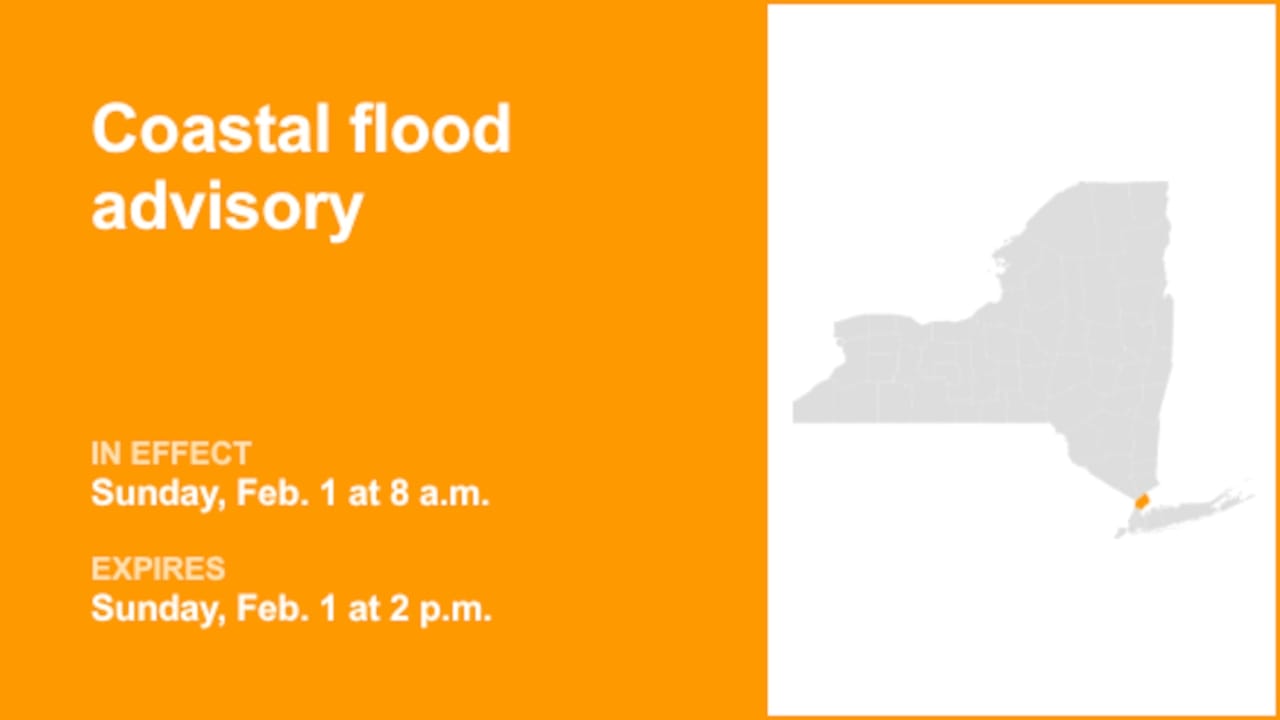
New York Coastal Flood Advisory
Westchester County, New York, is under a coastal flood advisory. The NWS issued the advisory at 3:32 p.m. on Saturday, valid for Sunday between 8 a.m. and 2 p.m. The alert anticipates up to one foot of inundation above ground levels in vulnerable areas.
This advisory is particularly concerning for low-lying coastal areas, waterfront properties, and roadways that are susceptible to tidal flooding. Residents are advised to exercise caution, avoid driving through flooded areas if possible, and be aware of potential disruptions to local transportation and infrastructure.
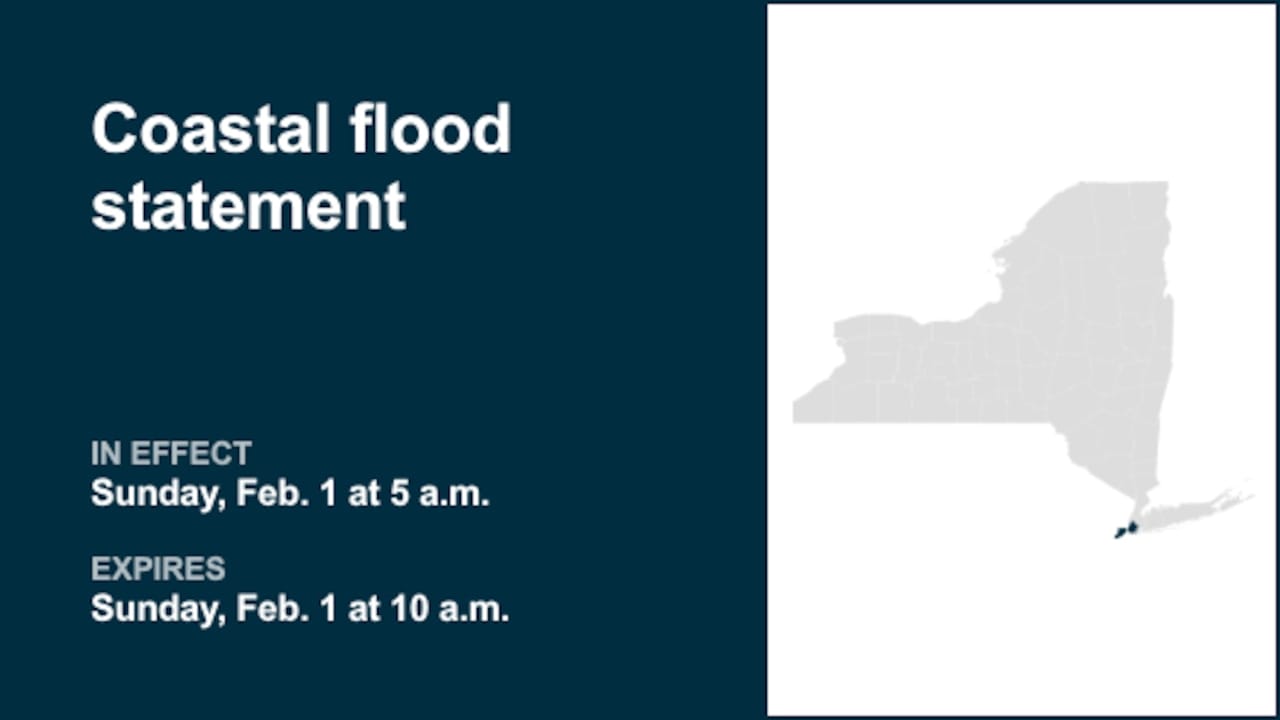
New York City Coastal Flood Statement
New York City’s boroughs of Staten Island and Brooklyn are subject to a coastal flood statement. This statement was also issued by the NWS at 3:32 p.m. on Saturday, with the period of concern running from Sunday between 5 a.m. and 10 a.m. The forecast indicates up to half a foot of inundation above ground levels.
While the predicted inundation levels are lower than those for Westchester County, this alert still warrants attention for the affected areas. Coastal communities in these boroughs may experience minor flooding, impacting streets, parking lots, and potentially basements or ground-floor structures close to the waterfront.
Massachusetts Coastal Flood Advisory
Further north, Barnstable and Dukes counties in Massachusetts are also facing coastal flood advisories. The NWS issued this advisory at 1:01 p.m. on Saturday, with a longer duration than the New York alerts. It is valid from Sunday at 8 a.m. until Monday at 2 p.m.
The advisory for these Massachusetts counties warns of one to two feet of inundation above ground levels. This level of flooding could lead to more significant impacts, including potential damage to coastal infrastructure, erosion, and prolonged road closures in low-lying areas. Boaters and those involved in maritime activities should also be aware of hazardous conditions.
Understanding Coastal Flood Alerts
Coastal flood advisories and statements are issued by the National Weather Service to alert the public about potential flooding along coastlines, typically caused by a combination of high tides and other meteorological factors such as storm surges or heavy rainfall.
An advisory is generally issued when flooding is expected to cause significant inconvenience, and if caution is not exercised, it could lead to property damage. This typically involves inundation of a few inches to a foot above normal tide levels.
A statement is a less severe alert, often used to highlight the possibility of minor flooding or to provide updated information. It indicates that some inundation is possible but generally at levels that would cause only minor disruptions or minimal damage.
Factors Contributing to Coastal Flooding
Several factors can contribute to coastal flooding. High tides are a natural, cyclical phenomenon, but when they align with other weather events, the risk of flooding increases dramatically.
Astronomical Tides: These are the regular daily tides driven by the gravitational pull of the moon and sun. During periods of higher-than-usual tides, known as spring tides (which occur during new and full moons), coastal areas are naturally more susceptible to flooding.
Storm Surge: This is an abnormal rise in sea level generated by a storm, over and above the predicted astronomical tide. Storm surges are most commonly associated with tropical cyclones (hurricanes and tropical storms) but can also occur with intense extratropical storms. The strong onshore winds push water towards the coast, causing it to pile up.
Wave Action: Even without a significant storm surge, large waves can overtop coastal defenses like seawalls and dunes, leading to flooding further inland.
Rainfall: Heavy rainfall, especially when it occurs during high tide, can exacerbate coastal flooding. Drainage systems can become overwhelmed, and the accumulation of rainwater can add to the water already pushed ashore by tides and surge.
Topography: The elevation and shape of the coastline play a crucial role. Low-lying areas and coastal communities built in natural depressions are inherently more vulnerable to inundation.
Background on Affected Regions
Westchester County, New York: Located north of New York City along the Long Island Sound and the Hudson River, Westchester County has a significant coastline that is susceptible to tidal flooding. Communities like Mamaroneck, Larchmont, and Rye are particularly exposed due to their low-lying waterfronts.
Staten Island and Brooklyn, New York City: These boroughs of New York City have extensive coastlines along the Atlantic Ocean and New York Harbor. They have experienced severe flooding in the past, notably during Hurricane Sandy in 2012, which highlighted their vulnerability. Many areas are relatively low in elevation, making them prone to tidal surges and high tide flooding.
Barnstable and Dukes Counties, Massachusetts: These counties encompass Cape Cod (Barnstable County) and the island of Martha’s Vineyard (Dukes County). Both regions are characterized by extensive sandy shorelines, numerous inlets, and low-lying coastal terrain. They are frequently impacted by coastal storms and high tides, leading to erosion and flooding that can affect roads, homes, and natural habitats.
Safety Recommendations
The NWS strongly advises the public to stay informed about the latest weather conditions and to heed all local advisories and warnings. Residents in affected areas should:
- Secure any loose outdoor items that could be swept away by rising waters.
- Monitor local news and weather reports for updates.
- Avoid walking or driving through floodwaters. Just six inches of moving water can knock an adult down, and two feet of water can carry away most vehicles.
- Have a plan in place for potential evacuation if advised by local authorities.
- For those with properties near the coast, consider taking precautionary measures to protect against water intrusion.
The combination of high tides and anticipated weather patterns underscores the ongoing challenges posed by coastal flooding in these regions. Preparedness and timely action are key to mitigating the risks associated with these events.