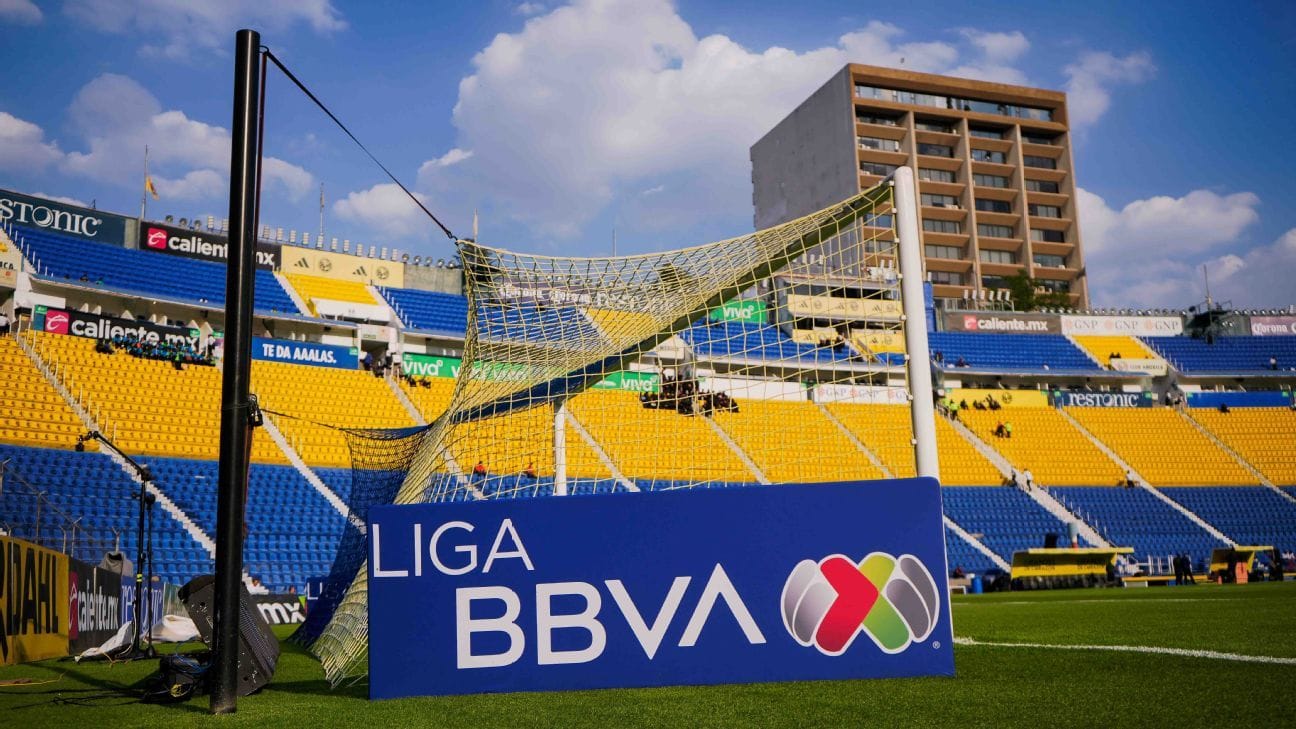
MEXICO CITY – A significant fixture in Mexican football, the Liga MX Clausura 2026 Jornada 4 match between Club América and Necaxa, originally slated for Saturday, January 31, has undergone a schedule change. This alteration was announced following logistical considerations arising from a planned concert by globally recognized artist Kanye West, set to take place at the historic Plaza México in Mexico City. The decision highlights the complex coordination required to manage multiple large-scale public events within one of the world’s most populous urban centers.
Local authorities, specifically the Alcaldía Benito Juárez, the administrative borough where these events are situated, confirmed the revised schedule. While the exact new kickoff time for the football match was not immediately disclosed, the announcement underscores a proactive approach to public safety and urban mobility, essential when hundreds of thousands converge for entertainment and sporting spectacles.
Urban Dynamics: Football Meets Global Entertainment
The rescheduling of a high-profile football match due to a celebrity concert is a clear indicator of the intricate logistical challenges facing megacities like Mexico City. Events of this magnitude – whether a pivotal football game or a concert by an artist with a massive international following like Kanye West – each attract tens of thousands of attendees. When these events are scheduled concurrently or in close proximity, managing the flow of people, vehicles, and ensuring overall public order becomes a monumental task.
Mexico City’s infrastructure, while extensive, is constantly pushed to its limits by the daily demands of its over 20 million residents in the metropolitan area. The Estadio Azul, a significant football venue in the city often associated with such Liga MX encounters, and the Plaza México, a sprawling arena traditionally known for bullfighting but increasingly utilized for major music concerts, are both key public assembly points. The proximity of these venues or the sheer scale of the events they host means that city planners and security forces must meticulously strategize to prevent gridlock, facilitate access for emergency services, and guarantee the safety of all attendees.
The Pulse of Mexican Football: Liga MX and its Structure
Liga MX stands as the pinnacle of professional football in Mexico, capturing the hearts and minds of millions across the nation. The league’s unique format, featuring two distinct tournaments each calendar year – the Apertura (opening) and Clausura (closing) – adds an extra layer of excitement and competitive intensity. Each tournament concludes with its own “Liguilla,” a playoff system that crowns a champion, distinct from the European league models that typically crown one annual champion based on a single league table.
The Clausura 2026 tournament, which commenced in January, sees teams vying for points over 17 regular-season matchdays, known as “Jornadas.” The match between Club América and Necaxa falls within Jornada 4, an early but crucial phase where clubs begin to establish their identity and gather momentum. Strong performances at this stage are vital for securing a coveted spot in the Liguilla, Mexico’s equivalent of the playoffs. This particular Saturday was also initially set to feature a “cuádruple cartelera,” meaning four high-stakes matches scheduled throughout the day, underlining the broad reach and impact of Liga MX scheduling.
Club América: A National Institution
Club América is not merely a football team; it is a national institution, embodying passion, pride, and, for some, a touch of controversy within Mexico’s sporting landscape. Founded in 1916, “Las Águilas” (The Eagles) or “El Ave” (The Bird) are the most decorated club in Mexican football history, boasting numerous domestic and international titles. Their success has cultivated a massive, fervent fanbase that extends far beyond Mexico City, reaching across all states of Mexico and into the Mexican diaspora, particularly in the United States.
The club’s iconic yellow and blue colors are synonymous with Mexican football. Matches involving América are always marquee events, whether they are playing at home in the colossal Estadio Azteca (their primary home ground, though other venues like Estadio Azul are also used for various matches) or on the road. The intensity of their rivalries, particularly with Guadalajara’s Chivas, creates an atmosphere unmatched in Mexican sport. This widespread appeal and the sheer volume of their supporters are key factors in understanding why any adjustment to their schedule has such broad repercussions.
Necaxa: The Rayos’ Challenge
Opposing América in this rescheduled fixture is Club Necaxa, affectionately known as “Los Rayos” (The Lightning Bolts). While not possessing the same global recognition as América, Necaxa holds a significant and respected place in Mexican football history. Originating in Mexico City before relocating to Aguascalientes, Necaxa was historically known as “Los Once Hermanos” (The Eleven Brothers) for their cohesive and often dominant play in the amateur and early professional eras.
Today, Necaxa consistently competes in Liga MX, known for their tactical discipline and their ability to challenge the league’s established giants. Matches against popular teams like América are particularly important for Necaxa, offering a platform to showcase their talent, vie for crucial points, and garner national attention. For football purists, these matchups represent the dynamic and unpredictable nature of the league, where upsets are always a possibility.
Mexico City: A Megacity’s Logistical Juggling Act
Mexico City’s capacity to host multiple major events simultaneously is a testament to its vibrant cultural life, yet it also presents significant logistical challenges. The concentration of iconic venues – from the historic Zócalo, which hosts free concerts for hundreds of thousands, to the Foro Sol and Palacio de los Deportes for major music acts, and the Estadio Azteca and Plaza México for sports and large gatherings – means that the city is in a perpetual state of dynamic event management.
Traffic congestion, a daily reality in Mexico City, is exacerbated on event days. Public transport systems, including the extensive Metro network and the Metrobús, become critical arteries for moving masses of people. The Alcaldía Benito Juárez and other municipal bodies play a pivotal role in coordinating security, public services, and infrastructure to ensure that these large-scale gatherings occur without major incident. The decision to reschedule the América-Necaxa game underscores a pragmatic approach to preventing potential logistical bottlenecks and ensuring optimal conditions for both attendees and residents.
The Cultural Resonance of International Acts
The presence of an international celebrity like Kanye West performing at the Plaza México speaks to Mexico City’s status as a global cultural hub. Such concerts draw not only local fans but also visitors from across Mexico and even other parts of Latin America, all eager to experience a live performance by an artist with immense global appeal. The cultural and economic ripple effects of such an event are considerable, from increased tourism and hospitality revenue to the broader cultural exchange it facilitates.
However, the allure of global entertainment must be balanced against the practicalities of urban living. The decision to adjust the football schedule demonstrates a municipal recognition of the far-reaching impact of such a concert, acknowledging its potential to disrupt daily life and requiring careful planning to ensure harmony between different forms of public engagement. It reflects a modern reality where cities must constantly adapt to the diverse demands of a globalized entertainment landscape.
The Fan’s Perspective: Access and Information
Following a significant schedule change, the immediate concern for thousands of football fans revolves around access and updated information. The query “Qué canal pasa América vs Necaxa hoy: dónde ver GRATIS y EN VIVO el partido de la Liga MX” (What channel is showing América vs Necaxa today: where to watch the game for FREE and LIVE?) reflects a universal fan desire for timely and convenient viewing options. In an era of diverse media consumption, fans expect clear communication on how to follow their team, whether through traditional television broadcasts or emerging digital platforms.
In Mexico, Liga MX matches are typically distributed across a variety of networks, including free-to-air channels, pay-TV sports packages, and an increasing number of streaming services. The emphasis on “GRATIS y EN VIVO” highlights the strong preference among a segment of the audience for accessible, real-time viewing experiences without subscription barriers, a trend that broadcasters and leagues continually navigate. Rapid dissemination of updated broadcast schedules becomes paramount for maintaining fan engagement and satisfaction.
Football’s Deep Roots in Mexican Society
Beyond the tactical play and the thrill of competition, football occupies a foundational place in Mexican society. It serves as a unifying force, often transcending socio-economic divides and acting as a common passion that binds communities. For many, following a club like América is a lifelong commitment, a source of identity and collective joy (or despair).
The ritual of weekend football games, often shared with family and friends, is deeply ingrained in the cultural fabric. Therefore, a schedule change, while seemingly a minor logistical detail, can disrupt cherished traditions and require fans to quickly re-plan their social engagements. This deep emotional investment in the sport underscores the importance of transparent communication from both the league and the clubs when such adjustments are necessary, ensuring that the passion of “El Ave’s” supporters remains undiminished.
In summary, the rescheduling of the América vs. Necaxa match in Mexico City due to the Kanye West concert illustrates the complex interplay between sports, entertainment, urban management, and cultural identity in a global megacity. It is a testament to the city’s dynamic nature and its constant balancing act in accommodating a world-class calendar of events while catering to the fervent passions of its populace.