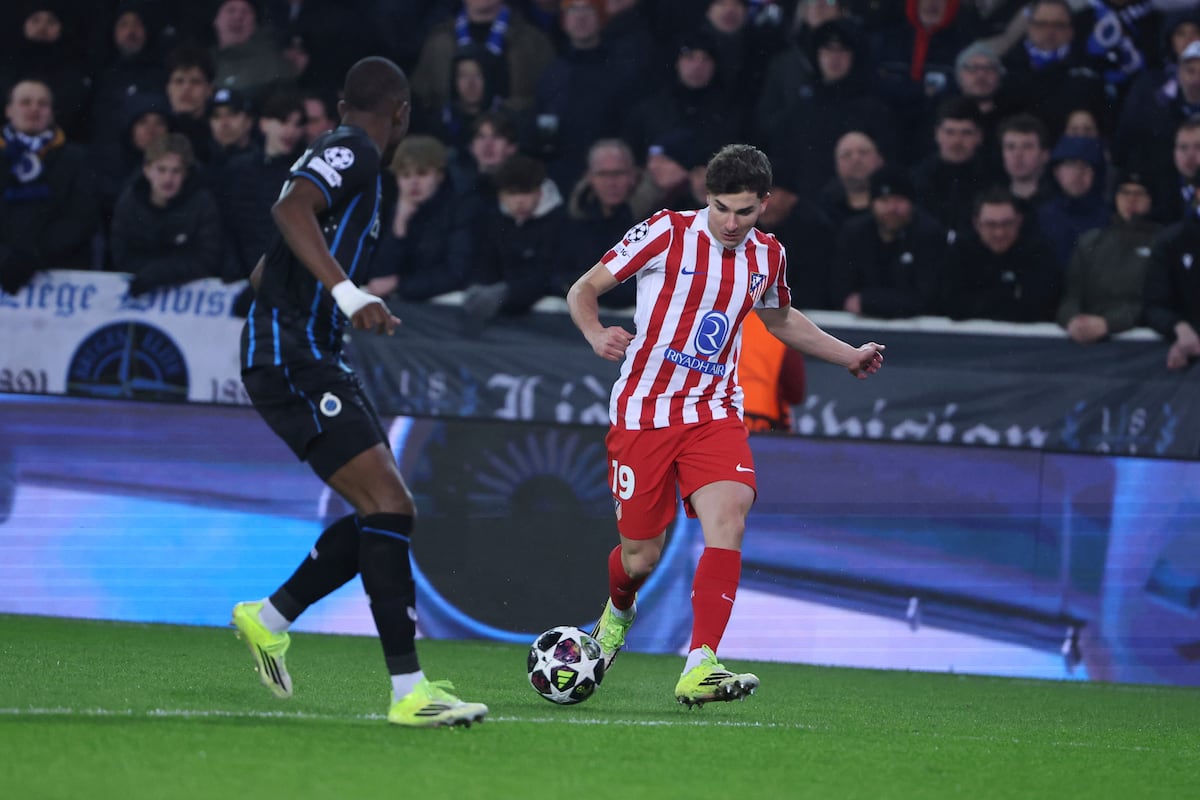
The UEFA Champions League play-off between Club Brugge and Atlético Madrid at the Jan Breydelstadion emerges as a definitive assessment of institutional resilience. While the Belgian champions enter the tie with significant scoring momentum, Diego Simeone’s side is navigating a period of profound competitive volatility. This fixture transcends a standard knockout match, representing a clash between Brugge’s transition-heavy efficiency and Atlético’s urgent search for a sustainable defensive identity amid fluctuating domestic and continental form.
Structural Instability and the Burden of Inconsistency
Atlético Madrid’s current campaign is defined by a lack of performance continuity that threatens their standing in the European hierarchy. The team’s ability to dominate Barcelona 4-0 in the Copa del Rey, contrasted with a 3-0 capitulation against Rayo Vallecano, suggests deep-seated psychological and structural vulnerabilities. This pendulum of results forced a 14th-place finish in the league phase, stripping the club of direct Round of 16 qualification and introducing detrimental fixture congestion into an already saturated schedule.
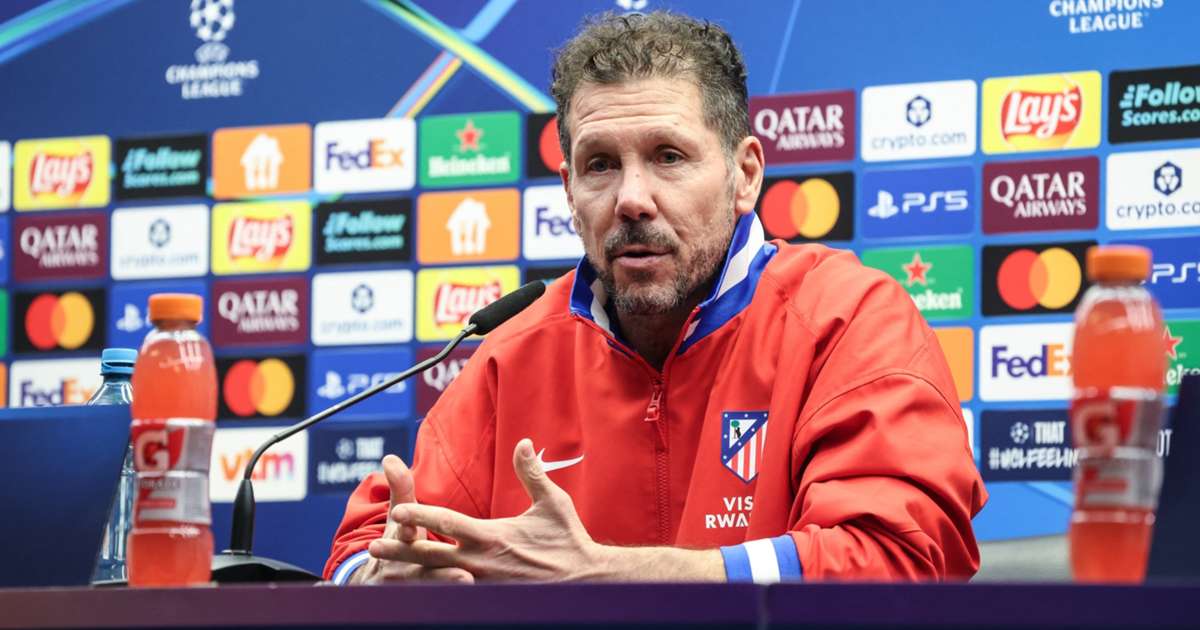
For a club with Atlético’s substantial wage bill and capital requirements, the play-off bracket is a high-risk environment. Simeone’s recent demands for collective accountability indicate an internal pivot away from relying on individual veteran brilliance toward a more unified, high-effort tactical execution. The lack of a reliable performance floor has rendered the squad sensitive to minor tactical disruptions, making the stability of their defensive core the primary variable for success in Belgium.
The Pubill-Hancko Defensive Pivot
The most critical tactical adjustment ahead of the first leg is the emergence of Marc Pubill and David Hancko as the preferred defensive partnership. This shift effectively sidelines José María Giménez and Robin Le Normand, the duo originally projected as the season’s cornerstone. Simeone’s decision to prioritize Pubill and Hancko reflects a need for increased mobility and proactive ball progression, addressing the defensive lapses that saw the team concede three goals in recent domestic play.
Integrating a new defensive pairing in a knockout context involves inherent risks regarding positional intuition and communication. However, the coaching staff appears convinced that the complementary profiles of Pubill and Hancko offer a better solution against Brugge’s verticality. Their ability to maintain structural integrity under the high-pressure pressing schemes favored by the Belgian side will likely dictate the tempo of the entire tie.
Brugge’s Offensive Momentum and Home Leverage
Club Brugge approaches this fixture from a position of tactical confidence, bolstered by clinical performances in their recent European outings. Victories over Marseille (3-0) and Kairat Almaty (4-1) showcase a team capable of exploiting defensive gaps with rapid transitions. Led by the creative influence of Hans Vanaken and the finishing of Tzolis, Brugge utilizes the Jan Breydelstadion to impose a high-intensity rhythm that often unsettles theoretically superior opponents.
Supported by the veteran presence of goalkeeper Simon Mignolet and a disciplined defensive line featuring Mechele and Ordoñez, Brugge has found a balance that Atlético currently lacks. Their performance against Barcelona earlier in the tournament serves as a case study in their ability to compete with elite squads. For Brugge, this play-off represents an opportunity to leverage Atlético’s transitional phase and secure a transformative advantage heading into the second leg in Madrid.
Historical Parity and Economic Implications
The historical record between these clubs—three wins each and two draws—underscores a surprising level of parity. Their most recent encounter, a scoreless draw in 2022, highlights the tactical stalemate that often defines this matchup. In the current format, the stakes are amplified by the financial rewards associated with the Round of 16. For Atlético, an early exit would necessitate a fiscal reassessment of their sporting project, while for Brugge, advancing would solidify their dominance in the Belgian market and enhance their international scouting leverage.
Tactical Outlook: Managing the Psychological Weight
The match dynamics will likely feature Atlético attempting to establish a mid-block to neutralize Brugge’s wide threats, while the home side will look to utilize Vanaken’s vision to bypass the Spanish midfield. The outcome rests on whether Atlético’s revamped defense can withstand the initial surge of the Brugge attack. If Simeone’s side can find the “winning rhythm” that has eluded them this season, their experience may prevail; however, Brugge’s current clinical edge makes them a formidable obstacle in this high-stakes European chess match.