
House Navigates Shutdown Deadline with Critical Funding Votes
The U.S. House of Representatives is poised to hold crucial votes on legislative measures aimed at preventing a partial government shutdown. These legislative actions are taking place under significant time pressure, as the deadline for funding expiration approaches. The outcome hinges on the ability of Speaker Johnson to secure sufficient votes within his own party, a task complicated by internal ideological divisions.
Intra-Party Dynamics and the ICE Funding Standoff
A central point of contention impacting the House’s ability to pass funding legislation revolves around proposed restrictions on the funding and operations of U.S. Immigration and Customs Enforcement (ICE). Specific policy demands from conservative factions within the Republican party regarding ICE have created a significant obstacle. These demands necessitate a delicate balancing act for Speaker Johnson, who can reportedly afford to lose the support of only one Republican member on a key procedural vote due to the slim majority.
The legislative strategy involves multiple votes, underscoring the fractured nature of consensus-building within the current House composition. The reliance on ’11th-hour help,’ as indicated, suggests a protracted negotiation process and a challenging path to legislative agreement. This indicates a significant reliance on the Speaker’s ability to broker deals and persuade wavering members, potentially involving concessions or strategic maneuvering to achieve the necessary vote counts.
The Structural Significance of House Voting Procedures
The procedural mechanics of the House of Representatives are critical in understanding the current legislative impasse. Key votes often require a majority of members present and voting, but the ability to bring legislation to the floor for a vote, known as ‘suspension of the rules’ or a ‘rule vote,’ can be particularly sensitive. When a legislative majority is razor-thin, as is the case, even minor defections can derail the process. The Speaker’s office must meticulously count votes and engage in extensive lobbying to ensure the passage of essential measures, especially those with significant political implications like government funding.
The legislative agenda, in this instance, is directly tied to the ability to pass appropriations bills that fund federal agencies. A failure to do so results in a partial government shutdown, where non-essential government functions cease due to a lack of appropriated funds. The clash over ICE restrictions highlights how specific policy issues can become flashpoints that threaten broader fiscal stability, demonstrating the interconnectedness of policy debates and budgetary processes within the federal government’s administrative structure.
The institutional challenge faced by Speaker Johnson reflects broader trends in congressional governance, where narrow majorities amplify the influence of individual members or small factions. This dynamic can lead to increased legislative gridlock and a heightened reliance on last-minute compromises or extraordinary measures to advance policy. The underlying issue of government funding is a recurring challenge, often punctuated by partisan disagreements over spending priorities and the scope of federal agency powers, such as those related to immigration enforcement.

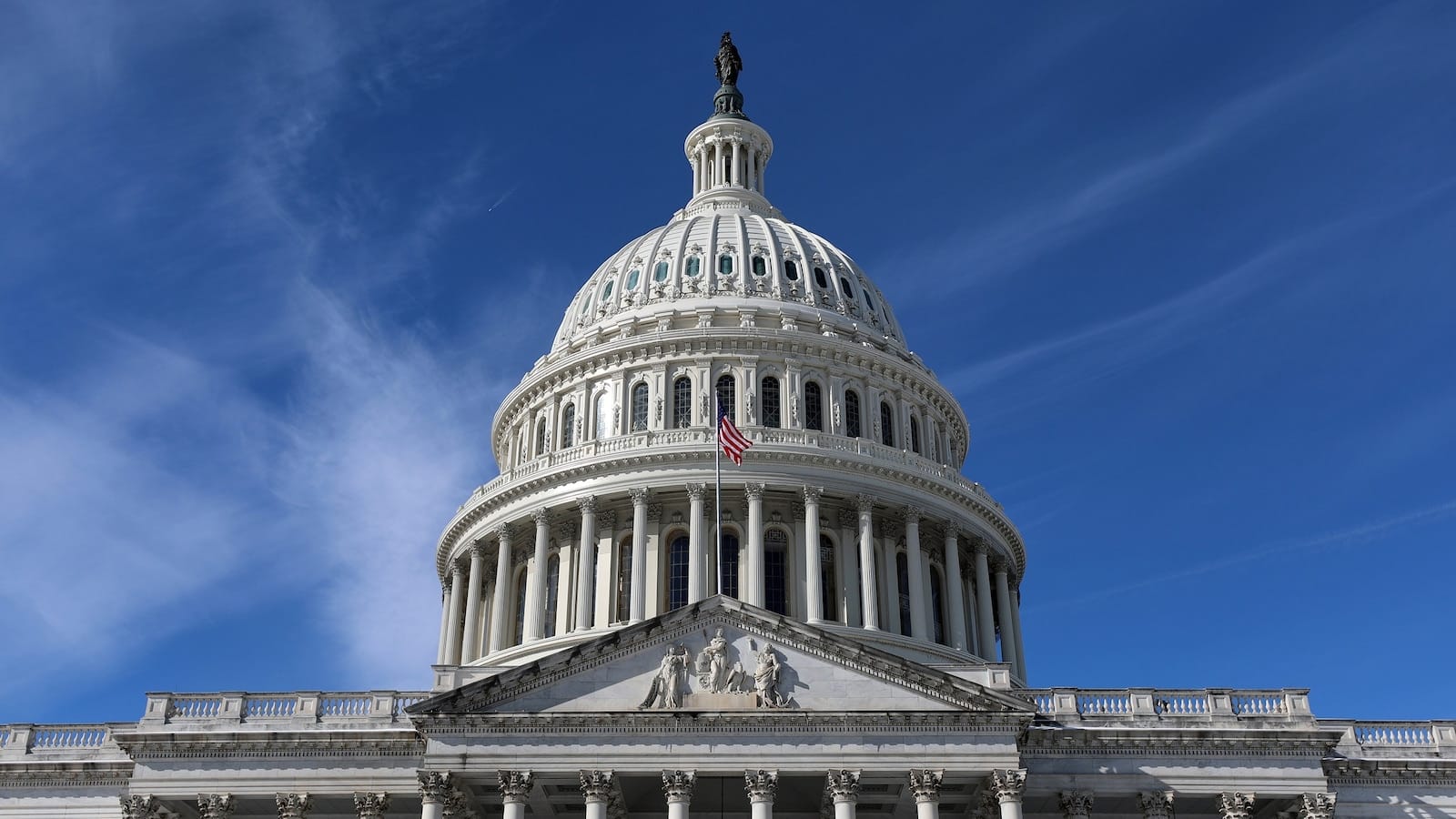
Photo by Olga_Fil on Pixabay.