
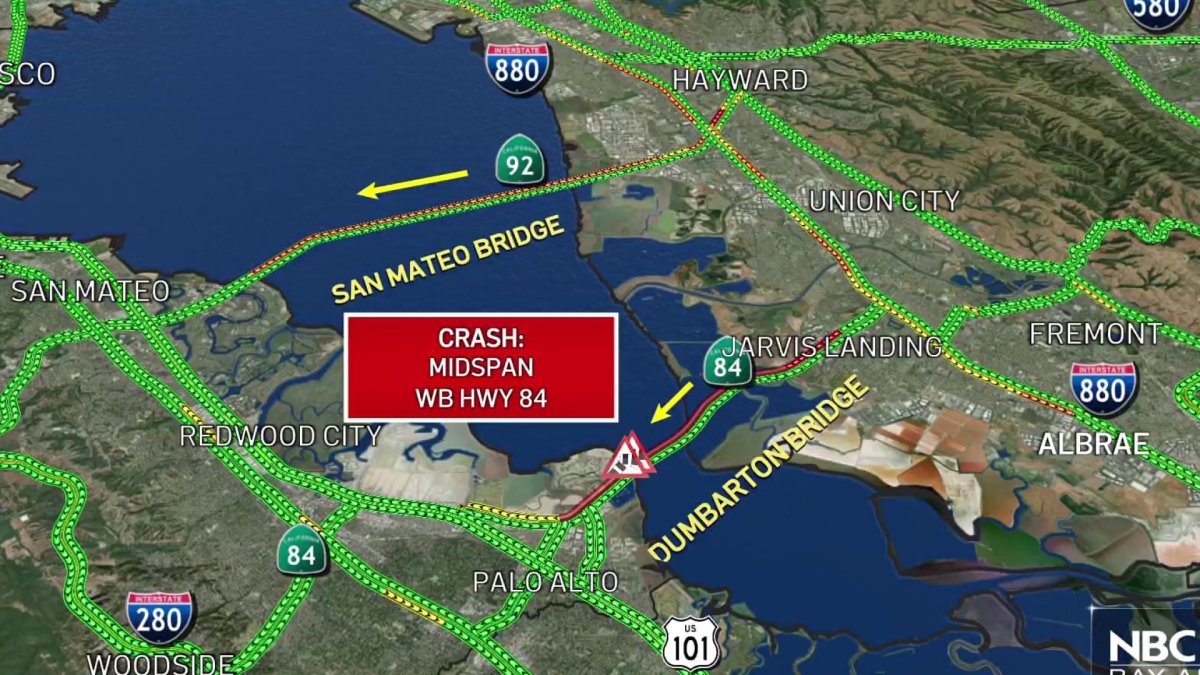
Dumbarton Bridge Westbound Lanes Reopened After Two-Vehicle Collision
All westbound lanes of State Route 84 on the Dumbarton Bridge were temporarily blocked due to a two-vehicle collision on the high-rise section. The incident caused substantial traffic delays for commuters on Tuesday morning.
Transportation officials advised drivers to seek alternative routes to mitigate the impact. This disruption highlights the critical role of the Dumbarton Bridge in regional transit and the significant cascading effects of localized incidents on broader traffic flow.
The roadway has since been reopened, with all westbound lanes now accessible. Information regarding injuries sustained in the crash was not immediately available.
Infrastructure Vulnerability and Regional Connectivity
The temporary closure of a key transportation corridor like the Dumbarton Bridge underscores the vulnerabilities within critical infrastructure. Such events, while often localized, have significant economic and operational implications for businesses reliant on timely logistics and for individuals facing disrupted commutes.
Reliance on a limited number of major transit routes, particularly for freight and commuter traffic, amplifies the impact of any disruption. This incident serves as a reminder for regional planning bodies to continually assess and reinforce the resilience of vital transportation links.
Operational and Economic Ramifications
The immediate consequence of the Dumbarton Bridge closure was significant disruption to regional traffic patterns, impacting commuters and commercial transportation. Businesses with just-in-time delivery schedules likely faced operational delays and increased logistical costs.
The advisory to use alternate routes would have rerouted traffic onto other roadways, potentially leading to congestion and extended travel times across a wider geographical area, straining local road networks.
Stakeholder Exposure and Response Mechanisms
Commuters and residents in the affected Bay Area were the most directly exposed stakeholders, facing immediate inconvenience. Commercial entities, including trucking companies and businesses with supply chain dependencies on the bridge, also experienced direct operational impacts.
Transportation authorities, such as the California Department of Transportation (Caltrans), are central stakeholders responsible for incident management and public communication. Their rapid response in clearing the roadway and reopening lanes is critical to mitigating further disruption.
Downstream Effects on Regional Connectivity
While the immediate closure was temporary, repeated or prolonged disruptions on the Dumbarton Bridge could have more significant downstream effects on regional connectivity and economic development. The bridge is a crucial link between the East Bay and the San Francisco Peninsula.
A pattern of unreliability could influence business location decisions and deter investment in areas perceived as having compromised transportation links. It also places additional strain on alternative routes, potentially accelerating wear and tear.

Photo by PIRO4D on Pixabay.