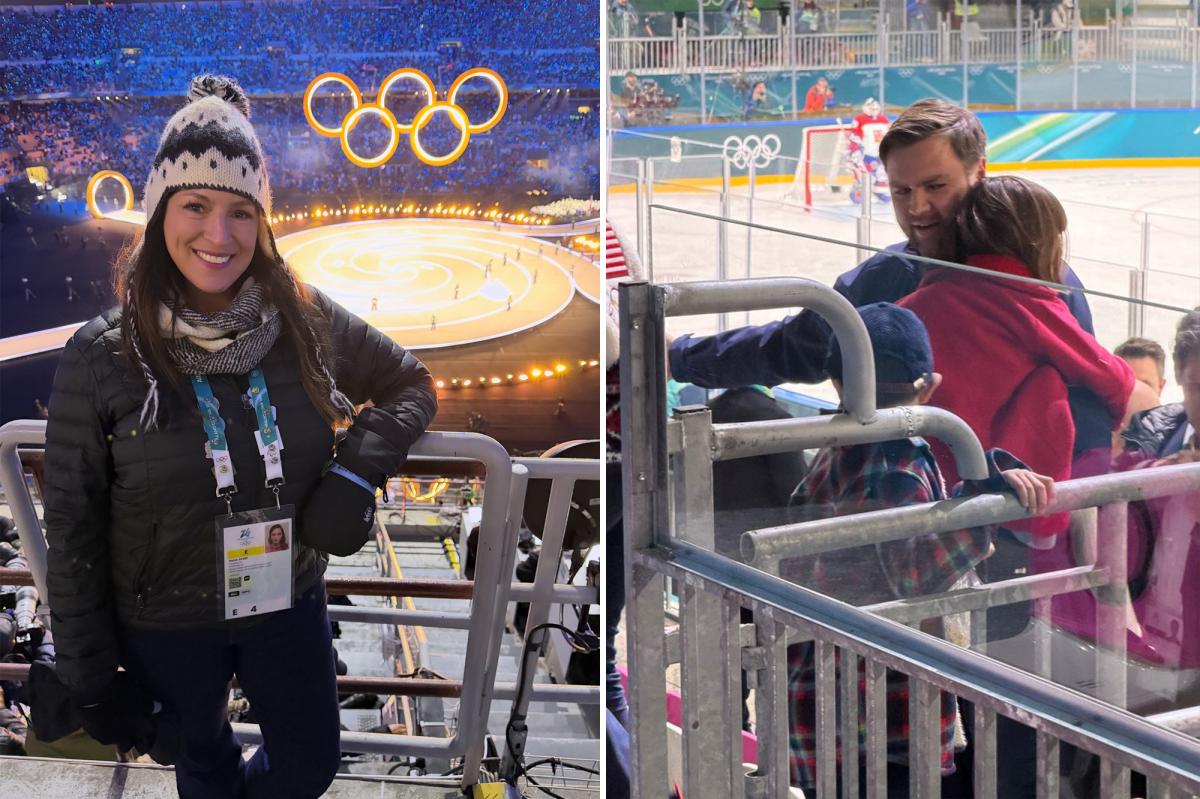
The 2026 Winter Olympics in Milano Cortina have emerged as a primary site for domestic American political friction, epitomized by sports commentator Sarah Spain’s public criticism of Vice President J.D. Vance. During a U.S. women’s hockey game on February 6, the presence of the Vice President and Secretary of State Marco Rubio catalyzed a debate regarding executive security perimeters and their impact on the spectator and media experience.
Operational Displacement and Security Protocols
Spain’s account, detailed on her independent podcast “Good Game,” identifies a significant conflict between the Secret Service’s security mandate and the functional requirements of media professionals. The arrival of the Vice Presidential detail mid-game resulted in the sudden occupation of a previously clear seating block by security personnel. Spain noted that these tactical measures physically obstructed her view of the competition, illustrating a recurring tension at high-profile international events: the prioritization of dignitary safety over the operational needs of the press.
For the Milano Cortina organizers, this incident highlights the logistical difficulty of hosting high-ranking officials in public venues. The imposition of a security ‘bubble’ within a shared arena environment inevitably creates friction, transforming a standard sporting event into a complex site of executive protection and public inconvenience.
The Psychological Dimensions of Partisan Animosity
Spain’s description of her reaction—citing physiological symptoms such as a racing heart and visceral discomfort—serves as a case study in the deep-seated psychological impact of U.S. political polarization. Her use of hyperbolic metaphors, such as the term “demon,” though clarified as non-literal, underscores how political figures have become symbols of intense personal and emotional distress for those across the partisan divide.
The critique extended beyond policy into the realm of aesthetic-based personal aversion, specifically targeting the Vice President’s physical appearance. This transition from ideological disagreement to comprehensive personal animosity suggests that the boundaries of civil political discourse are increasingly porous, particularly when traditional public spaces are politicized by the presence of high-profile leaders.
Media Autonomy and the Independent Platform Shift
The venue for these remarks reflects a broader transformation in sports media. By utilizing her independent platform, Spain bypassed the corporate neutrality and ‘brand-safety’ protocols typical of legacy networks like ESPN. This shift grants commentators the leverage to engage in unfiltered partisan rhetoric, yet it simultaneously removes the institutional buffer that traditionally protected media figures from direct public backlash.
This independence allows for a more direct, intimate connection with specific audience segments but also invites a high volume of digital vitriol. Spain reported significant hostile engagement following her comments, highlighting the professional and personal risks inherent in criticizing high-ranking officials in a hyper-connected, polarized digital landscape.
Institutional Implications for the Olympics
The friction between the Vice President’s office and media personalities like Spain complicates the administration’s stated preference for a ‘politics-free’ Olympic environment. While J.D. Vance has advocated for athletes to maintain a neutral focus on athletic competition, the symbolic and logistical nature of his own attendance inherently politicizes the venue.
This paradox presents a challenge for the International Olympic Committee (IOC) and local organizers. The presence of executive power necessitates extraordinary security measures that can alienate the media and fans, undermining the Olympic narrative of global unity. As the 2026 Games proceed, the Milan incident remains a stark example of how the logistics of power and the intensity of domestic politics continue to redefine the international sporting arena.