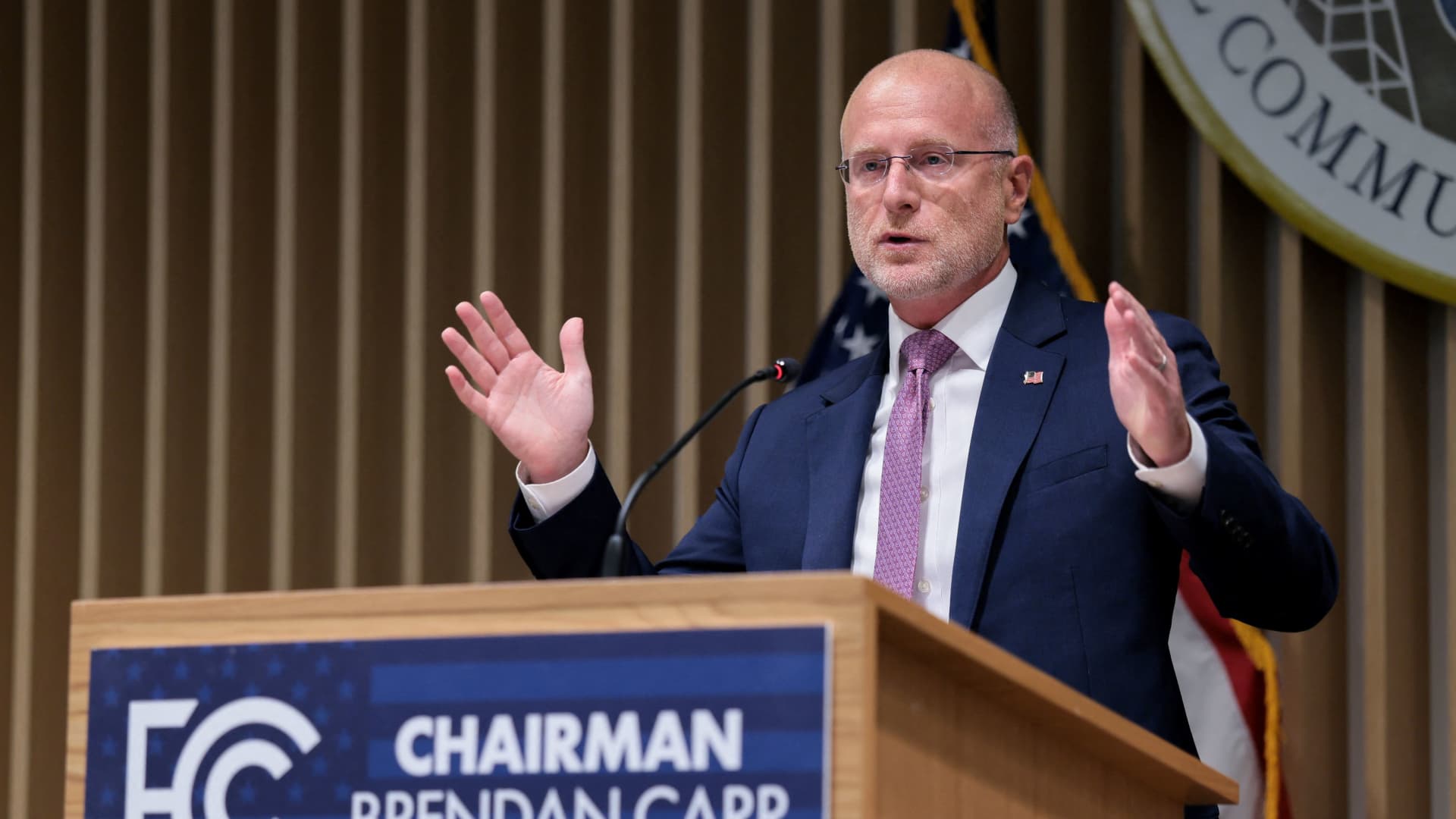
The Walt Disney Company’s subsidiary, ABC, has escalated its defense against federal regulatory pressure by filing a First Amendment lawsuit against the Federal Communications Commission (FCC) in a Washington, D.C. district court. The litigation seeks to enjoin the agency from what ABC characterizes as an unprecedented and politically motivated assault on its operational licenses. This legal maneuver serves as a preemptive strike against the FCC’s decision to initiate early reviews of the network’s broadcast authorizations—a process ABC argues is a direct retaliatory response to its editorial stance and news coverage.
Administrative Acceleration as Regulatory Weaponization
Central to ABC’s complaint is the assertion that the FCC has deviated from established administrative norms by accelerating license renewal timelines. Under typical regulatory cycles, these licenses are subject to periodic review based on standardized schedules; however, ABC contends the agency has arbitrarily moved these dates forward to exert immediate pressure. The lawsuit argues that this procedural deviation lacks a legitimate regulatory basis and instead functions as a punitive tool, signaling a shift from neutral oversight to discretionary enforcement.
The network explicitly links this regulatory pivot to public grievances voiced by the executive branch regarding ABC’s content, specifically mentioning political commentary on late-night programs and news broadcasts. By establishing a temporal proximity between executive criticism and the FCC’s procedural shifts, ABC aims to demonstrate a causal link that undermines the agency’s claims of objective administrative action. This strategy focuses on the ‘chilling effect’—the constitutional doctrine that government-imposed burdens, even if not direct censorship, can unconstitutionally stifle free expression by inducing self-censorship.
The Intersection of DEI Mandates and Licensing
The FCC has defended its early intervention by citing an investigation into whether ABC’s Diversity, Equity, and Inclusion (DEI) policies contravene federal anti-discrimination statutes. This pivot introduces a significant shift in broadcast law, where internal corporate governance is utilized as a lever in licensing proceedings. ABC maintains that the focus on DEI is a pretextual justification designed to mask the retaliatory nature of the investigation. The case thus forces a judicial determination on whether the FCC’s ‘public interest’ mandate can be expanded to include the granular scrutiny of internal organizational frameworks as a condition for airwave access.
Strategic Stability and Market Risk
From a capital markets perspective, the stability of broadcast licenses is foundational to the valuation of media assets. These licenses represent the legal entitlement to utilize public airwaves, forming the core of the network’s distribution and advertising revenue model. By litigating ‘under protest’ while simultaneously complying with immediate filing demands, ABC is attempting to mitigate operational risk and preserve its legal standing. For Disney, the stakes involve the integrity of its domestic reach; any perceived vulnerability in its broadcast licenses introduces volatility that can affect affiliate negotiations and long-term capital allocation.
Constitutional Boundaries and Precedent
This litigation represents a critical test of the FCC’s independence. ABC argues that the agency’s actions are an unconstitutional use of government power to punish speech critical of the administration. If the court finds that the early review was indeed retaliatory, it will establish a major precedent limiting the executive branch’s ability to use administrative agencies as instruments of political retribution. Conversely, a ruling for the FCC could grant regulators broad authority to use internal corporate policies as a basis for challenging the standing of media organizations, fundamentally altering the relationship between the state and the press.