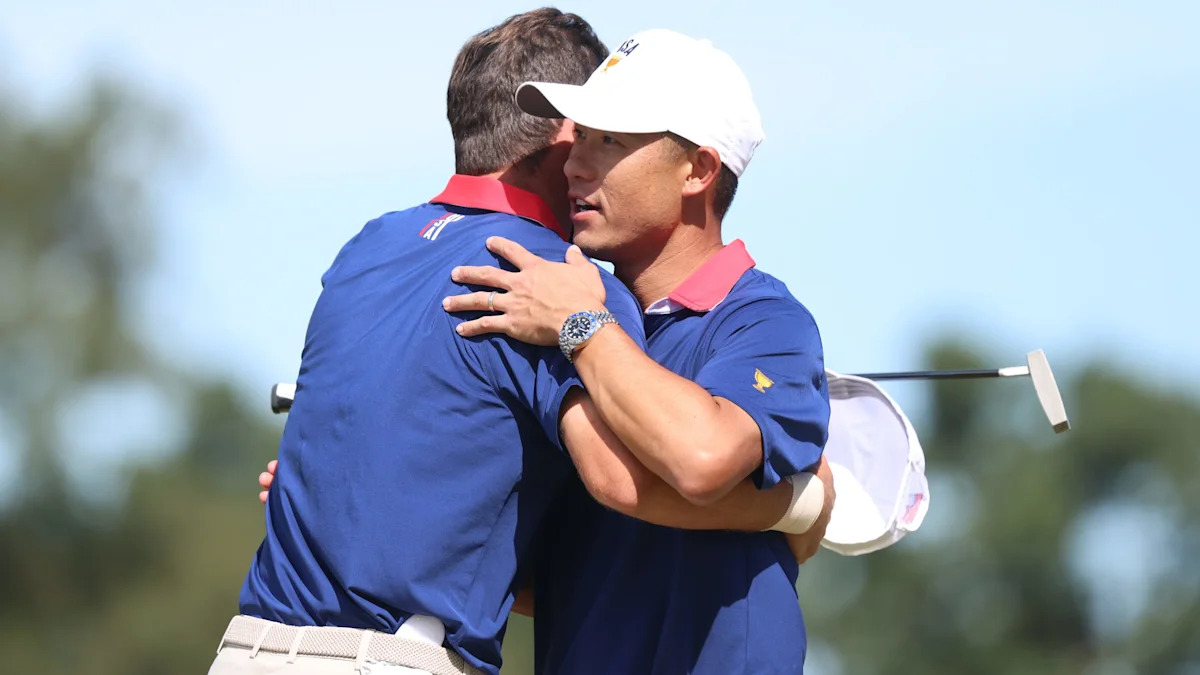
The competitive architecture of team golf hinges on microscopic tactical decisions, roster deployment, and the psychological burden carried by leadership. Entering the final session of the 2026 Presidents Cup at Medinah, the United States faces an unfamiliar structural crisis, trailing Geoff Ogilvy’s International squad by three points. With the score standing at 10.5 to 7.5 in the race to the decisive 15.5-point threshold, the American side confronts the tangible possibility of an unprecedented defeat on home soil.
The current deficit exposes structural vulnerabilities in the American preparation and execution models that have historically secured domestic dominance. Despite entering the week with thirty-two years of historical advantage and ten consecutive tournament titles, the operational execution of the U.S. side has faltered during critical pairing windows. The resulting pressure now converges entirely on twelve Sunday singles matches, leaving zero margin for administrative or tactical error.
Captaincy Accountability and Strategic Disruption
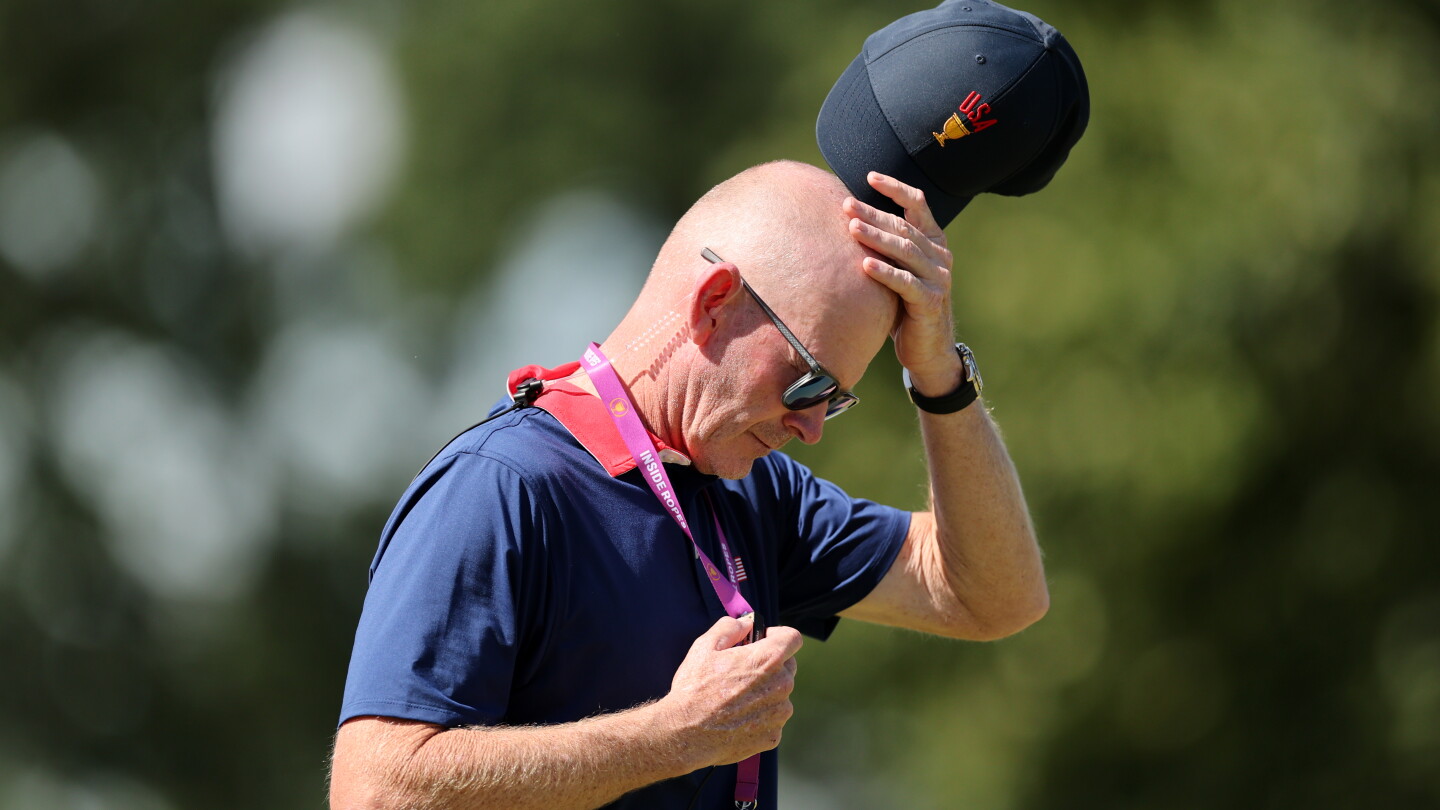
In high-stakes match play competitions, the captaincy serves as both the operational command center and the focal point of institutional liability. U.S. captain Brandt Snedeker openly acknowledged this structural exposure following Saturday’s split sessions, publicly absorbing blame for the team’s precarious standing. In an interview with NBC’s Cara Banks, Snedeker stated that his roster had continued fighting despite what he characterized as his own operational mistakes throughout the week.
Snedeker’s public posture represents a departure from traditional defensive leadership messaging during live international tournaments. Addressing reporters in the Medinah interview room, Snedeker maintained that team performance inevitably reflects the strategic decisions and tone established by leadership. By preemptively assuming responsibility before the singles matches have concluded, Snedeker underscored the acute operational strains dictating the American locker room.
This public admission highlights the complex incentives governing captaincy evaluations in modern golf championships. While taking accountability shields players from acute media scrutiny, it also crystallizes existing criticisms regarding roster management and tactical pairing selections. When strategic leadership openly questions its own efficacy before the competition concludes, the institutional confidence of the collective roster faces immediate pressure.
The Anatomy of the Deficit Across Four Sessions
The statistical trajectory that delivered an International advantage into Sunday was forged primarily during an unprecedented opening session. Friday’s alternate-shot foursomes witnessed a complete 5-0 sweep by Ogilvy’s International roster, immediately creating a commanding four-point lead. That systemic collapse marked the catalyst for the current deficit, requiring the American roster to pursue high-risk comeback strategies across every subsequent match.
Saturday morning provided a temporary operational stabilization for the host nation through four-ball play. The American side mounted an aggressive push, painting the Medinah leaderboards red and securing a 2-1-1 session result to reclaim critical ground. However, the modest single-point net gain demonstrated the structural mathematical difficulty of overcoming a five-match sweep within compressed session formats.
The afternoon foursomes session further cemented the tactical stalemate, concluding in an evenly split 2-2 result. While American pairings demonstrated early command across several matches, the International contingent engineered late recoveries to preserve their overall advantage. By halting the American momentum in the afternoon, the International squad secured a lead entering the final singles matches on American soil for the first time in the competition’s history.
Personnel Decisions and Roster Capital Management
The administrative choices governing player usage have emerged as the central narrative surrounding Snedeker’s tactical framework. The most glaring operational decision arrived during Saturday afternoon foursomes, when world No. 1 Scottie Scheffler was held out of the lineup. Withholding the sport’s highest-ranked competitor during a pivotal alternate-shot session represented a high-risk allocation of competitive capital.
In team match play, benching an elite performer alters both strategic depth and the psychological balance between competing squads. For the International side, the absence of the world’s premier ball-striker removed a formidable obstacle during a session where they needed only to maintain equilibrium. For the American roster, resting premier assets while facing a multi-point deficit compressed their potential upside during crucial momentum shifts.
The split 2-2 outcome in Scheffler’s absence inevitably intensified strategic debates regarding roster optimization and rest cycles. While contemporary analytical models emphasize load management and player comfort, alternate-shot formats historically favor elite statistical drivers and iron players. Choosing preservation over immediate competitive deployment represents the precise tactical calculation that Snedeker later categorized among his self-diagnosed missteps.
Historical Continuity and the International Breakthrough
To fully contextualize the stakes at Medinah, the competitive history between these two institutions must be evaluated. The International team has secured victory only once across the thirty-two-year history of the Presidents Cup, with that solitary triumph occurring in 1998. Since that era, American squads have compiled ten consecutive victories, establishing an aura of near-total systemic superiority in biennial match play.
A defeat at Medinah would shatter that longstanding dominance and represent the first home loss ever sustained by the United States in the event. The institutional consequences of relinquishing that streak are magnified by the memory of the 2025 Ryder Cup defeat, an outcome that previously catalyzed intense organizational review. Falling on domestic soil to an International roster that has experienced decades of competitive frustration would trigger profound structural fallout across the American golf governance apparatus.
Conversely, Geoff Ogilvy’s side stands on the precipice of a transformative institutional victory that validates years of competitive reorganization. By building resilience in alternate-shot play and neutralizing home-field environmental factors, the International team has rewritten the tactical formula for competing in the United States. Maintaining their three-point lead through Sunday singles would represent the most significant competitive pivot in the modern history of global team golf.
The Tactical Constraints of Sunday Singles
The transition from team formats to Sunday singles fundamentally alters the competitive and analytical dynamics of the Presidents Cup. With twelve individual matches remaining, twelve full points sit within reach, offering sufficient mathematical latitude for a total leaderboard reversal. In the chase to reach 15.5 points, the International squad requires only 5.0 points from twelve matches, while the American team must secure 8.0 points to retain the trophy.
This scoring disparity dictates divergent strategic postures for both captains when structuring the final lineup order. Ogilvy possesses the structural luxury of defensive deployment, where steady halves and isolated upsets can steadily accumulate the requisite points. Snedeker, conversely, must front-load competitive assets to engineer early psychological disruption, simultaneously risking late-session vulnerability if matches extend into the final pairings.
Furthermore, singles play removes the communicative and tactical cushions provided by partner formats. In four-ball and foursomes, player execution flaws can be absorbed or compensated for by a cohesive partner dynamic. In individual play, absolute scoring efficiency, mental resilience, and real-time leaderboard management become solitary burdens borne entirely by the individual competitors.
Media Amplification, Prestige, and VIP Exposure
Beyond the architectural nuances of match play, the 2026 Presidents Cup operates within an intensified commercial and political media ecosystem. Broadcast partners such as NBC face heightened audience engagement, driven by the volatile leaderboard and unprecedented narrative tension. The prospect of an American collapse on domestic soil transforms standard sports coverage into an urgent analytical examination of organizational failure.
The arrival of President Donald Trump at Medinah introduces an additional layer of institutional spectacle and reputational exposure to the final round. High-profile political attendance magnifies media scrutiny, placing the competitive execution of the American lineup under a global cultural spotlight. When high-ranking domestic leadership attends a marquee international event, sporting success or failure becomes intertwined with national prestige narratives.
For the event organizers and corporate partners, this heightened scrutiny presents dual commercial realities. While viewing figures and digital engagement inevitably surge when domestic dominance is threatened, an American defeat disrupts established promotional narratives. The commercial ecosystem surrounding American team golf has long relied on domestic victory parades; an International upset at Medinah fundamentally alters that financial and brand dynamic.
Systemic Implications for American Golf Governance
Regardless of Sunday’s ultimate numerical outcome, the operational fissures exposed at Medinah will prompt sweeping procedural evaluations within the American team hierarchy. The reliance on algorithmic pairing models, the weight assigned to world ranking metrics, and the discretion granted to team captains will undergo intense internal review. If an American squad possessing superior collective world rankings can trail an International roster on home soil, structural flaws exist within preparation protocols.
The comparison to previous international competitions, particularly the institutional disappointment of the 2025 Ryder Cup, intensifies the imperative for systemic reform. Persistent underperformance in alternate-shot formats suggests a failure to identify complementary statistical profiles and interpersonal dynamics during team selection. Institutional stakeholders cannot dismiss consecutive underperformances as statistical anomalies when tactical miscalculations are openly conceded by leadership.
The American team system must confront whether its competitive culture provides sufficient resilience against unified, highly motivated opposition. The International team, devoid of a singular national identity, has cultivated an organizational culture grounded in strategic discipline, cohesive partnership dynamics, and methodical execution. If Snedeker’s squad fails to execute a historic singles turnaround, the institutional blueprint governing American team golf will face an inescapable and comprehensive restructuring.