
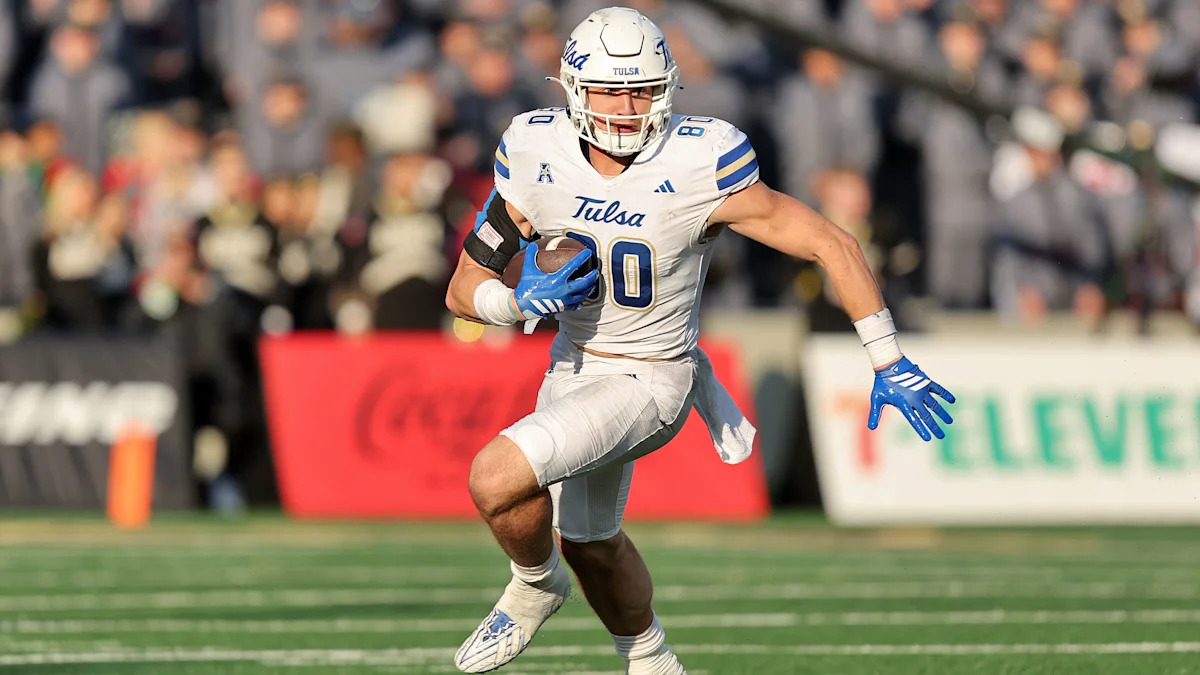
The 2026 non-conference finale pitting the University of Arkansas against the University of Tulsa presents a significant strategic inflection point for both programs amidst institutional transitions. For Arkansas, this matchup serves as the definitive capstone to their early-season gauntlet, following a demanding schedule against nationally ranked opponents that has rigorously tested roster depth and tactical execution. The decision to schedule this game as the inaugural night contest at Donald W. Reynolds Razorback Stadium signals a deliberate strategy by the athletic department to amplify home-field advantage through atmospheric intensity and prime-time visibility.
The historical context of this series is profound. Arkansas enters the contest defending a 19-game winning streak against Tulsa, a dominant run extending back to 1977. This near half-century of dominance establishes a unique psychological and competitive dynamic: Arkansas must manage the immense pressure of preserving historical precedent, while Tulsa is galvanized by the high-variance opportunity for a program-defining upset. Such an extended streak significantly influences institutional confidence and donor relations, making its preservation a critical, albeit unspoken, objective for the Arkansas administration.
From a media distribution standpoint, the game’s placement on SEC Network+ and ESPN Unlimited underscores the accelerating trend toward digital-first broadcasting for premium regional matchups. This approach allows the SEC and its broadcast partners to cultivate their streaming ecosystems, requiring fan engagement with the ESPN Unlimited interface. This digital strategy facilitates granular collection of viewer data and provides dedicated channels for the SEC’s secondary inventory, avoiding disruption to primary network programming.
The Silverfield Era: Arkansas’s Tactical Reset
The 2026 season represents a pivotal chapter for Ryan Silverfield’s tenure at Arkansas. Following an opening 31-14 victory over North A, Silverfield’s leadership is under intense scrutiny as he aims to stabilize team performance after consecutive matchups against elite, ranked competition. This game against Tulsa transcends a mere non-conference obligation; it’s a strategic opportunity to refine offensive and defensive rotations before the internal pressures of the SEC conference schedule intensify.
Player performance is a central concern for the Razorback coaching staff. The development of wide receiver Chris Marshall, whose recent output against the Utah Utes demonstrated elite athleticism, is particularly crucial. Marshall’s ability to generate yards after the catch, as evidenced by his engagement with Utah safety Nate Tilmon, provides Arkansas with a potent vertical threat capable of stretching Tulsa’s defensive structure. Integrating such playmakers effectively into Silverfield’s system is paramount for sustaining the offensive efficiency required for SEC contention.
The decision to host this game as a 7 p.m. kickoff in Fayetteville reflects an operational strategy to optimize the game-day experience for both the team and the fanbase. Night games at Donald W. Reynolds Razorback Stadium are historically correlated with amplified crowd intensity, creating a force multiplier for the home defense. For Silverfield, leveraging this environment is a key component in ensuring the team departs the non-conference slate with positive momentum and a healthy roster.
Tulsa’s Ascent Under Tre Lamb
Under head coach Tre Lamb, the Tulsa Golden Hurricane have undergone a rapid operational transformation, entering this contest undefeated at 3-0. This strong start includes a significant victory over Oklahoma State, a result that has likely recalibrated the program’s internal expectations and external perception. Lamb’s early success in securing a win against a regional Power Four opponent suggests a high degree of tactical preparation and effective talent acquisition.
The 2026 Tulsa squad’s statistical profile is highlighted by a commanding 42-0 shutout of East Texas A&M, the program’s first defensive clean sheet since 2002. This shutout is a critical performance indicator, signifying Lamb’s successful implementation of a defensive structure capable of complete game neutralization. While the level of competition varied, the execution required to maintain a shutout demonstrates a disciplined and well-conditioned unit that will now face a significant test against Arkansas’s superior size and speed.
For Tulsa, the trip to Fayetteville serves as the ultimate litmus test before commencing American Athletic Conference (AAC) play. A competitive showing against an SEC opponent would validate Lamb’s rebuilding efforts and provide significant recruiting leverage in the Oklahoma and Arkansas corridors. Tulsa’s strategic objective is to prove that their early-season success is sustainable against the physical demands of a high-resource SEC program.
Media Infrastructure and Digital Fan Engagement
The broadcast team of Richard Cross and Charlie Strong brings a distinct analytical depth to the SEC Network+ coverage. Strong’s background as a former head coach offers unique insights into the strategic decisions of Silverfield and Lamb, positioning the game as a tactical battle rather than a routine contest. Strong’s expertise in deconstructing defensive schemes and coaching philosophies provides a layer of professional-grade analysis for a discerning audience.
The Razorback app’s role in the 2026 season exemplifies the shift toward proprietary digital ecosystems for fan engagement and audio distribution. By offering exclusive free radio broadcasts and pre/postgame shows via the app, Arkansas centralizes its digital presence, reducing reliance on traditional terrestrial radio affiliates. This strategy allows the university to control its brand messaging and capture valuable user engagement data for future marketing initiatives.
The integration of the “headphones icon” and “live event” features within the app streamlines the user experience, ensuring global access to high-quality audio content for Arkansas’s widespread and loyal alumni network. This digital infrastructure is now as integral to the modern college football business model as on-field performance.
Historical Continuity and Competitive Implications
The 19-game winning streak held by Arkansas over Tulsa is a rare instance of sustained regional dominance, profoundly shaping the strategic approach of both coaching staffs. For Arkansas, the streak represents a legacy asset crucial for maintaining program standing. For Tulsa, it is a historical barrier whose breaching would confer immediate prestige and national relevance upon the Tre Lamb era.
The streak’s 1977 origin places the current matchup within a deep historical context, spanning multiple generations. While this provides a rich narrative for media and fans, the players’ focus remains on the immediate tactical demands of the 2026 season. The significant resource disparity between the SEC and the AAC has historically sustained this streak, though recent college football volatility suggests such gaps can be closed through superior coaching and situational execution.
As both teams prepare for their respective conference schedules, this game serves as a final mid-season evaluation data point. Arkansas requires a decisive victory to reaffirm its trajectory under Silverfield, while Tulsa aims to demonstrate that its 3-0 start signifies a genuine program elevation, not merely favorable scheduling. The strategic decisions made in the game’s closing moments will likely have lasting repercussions throughout the remainder of the 2026 campaign for both institutions.
The logistical coordination of a 7 p.m. kickoff also impacts the recovery and preparation cycle for the subsequent week. Night games necessitate adjusted physiological approaches for athletes and modified operational schedules for support staff, including travel and post-game recovery protocols. For Arkansas, navigating these logistical details under the Silverfield administration will be critical for late-season durability as they enter the core of their SEC schedule.
Ultimately, the Tulsa-Arkansas game encapsulates the modern dynamics of college football: a fusion of historical tradition, digital media evolution, and high-stakes coaching transitions. Regardless of whether the 19-game streak endures or a new era dawns for Tulsa, the institutional and strategic consequences will resonate long after the final whistle. The matchup underscores the enduring relevance of regional rivalries within an increasingly nationalized collegiate sports landscape.
Photo by KeithJJ on Pixabay.