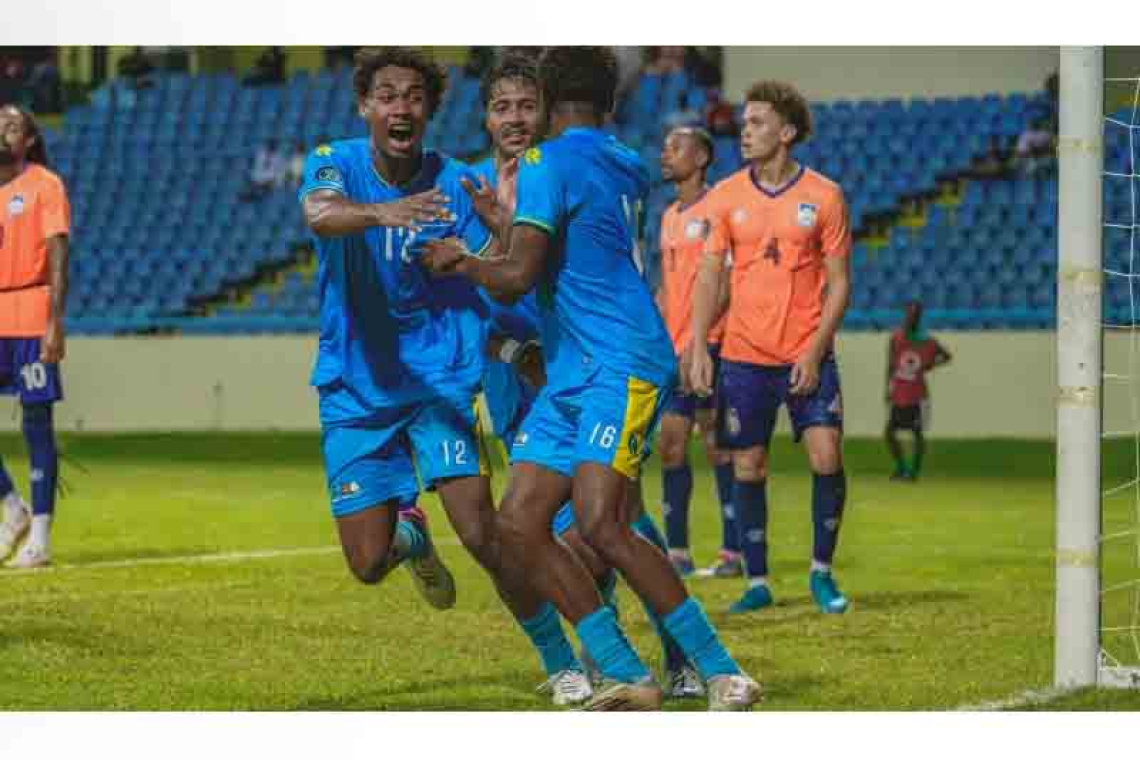
Haiti and Curaçao Advance to Nations League Quarterfinals
Haiti and Curaçao have secured berths in the 2026/2027 Concacaf Nations League A Quarterfinals. This achievement underscores the increasing competitive parity within Concacaf and the growing strategic significance of the Nations League as a primary pathway to major international tournaments.
Their progression directly influences regional seeding and tactical approaches for subsequent competitions, including the Gold Cup. Haiti and Curaçao’s advancement signals a palpable challenge to established confederation powerhouses, compelling adjustments in preparation and strategic planning across the board.
League A Group Stage Analysis and Implications
Crucial results in League A’s group stage determined advancement and qualification opportunities. Curaçao’s pivotal 1-1 draw against Trinidad & Tobago at Hasely Crawford Stadium secured their quarterfinal passage. While Trinidad & Tobago took the lead through Luke Phillip in the 39th minute, Jordi Paulina’s 61st-minute equalizer for Curaçao proved decisive.
This draw not only propels Curaçao into the Nations League A Quarterfinals but also enhances their standing for future continental competitions. Trinidad & Tobago now enters the League A+C Play-In, a secondary route to maintain or improve their continental ranking, illustrating the tiered consequences of the league structure.
In another Group A fixture, Costa Rica defeated Haiti 2-0 at Estadio Ricardo Saprissa Aymá. Carlos Mora’s early goal set the tone for Costa Rica’s win, their second in the group. While this victory solidifies Costa Rica’s position, their specific quarterfinal status depends on other group outcomes.
The Haiti-Costa Rica match result, while a loss for Haiti, must be viewed within their overall group performance to fully comprehend their qualification trajectory. The dual function of the Nations League—as both a direct competition and a Gold Cup qualifier—creates complex strategic considerations for national federations.
Gold Cup Preliminary Qualification Pathways
The League A Group Stage also finalized qualification for the Gold Cup Prelims, with the Dominican Republic and Costa Rica earning spots. This dual qualification reinforces the Nations League’s central role in organizing Concacaf’s international calendar, consolidating competitive and developmental objectives.
The Dominican Republic and Costa Rica’s qualification for the Gold Cup Prelims adds a high-stakes tournament to their schedules, potentially impacting squad selection and resource allocation. It also highlights varied success within the same league tier, demonstrating the cascading effects of Nations League performance across confederation events.
League C Action and Emerging Nations
League C action saw significant wins for the U.S. Virgin Islands (3-2 vs. Bahamas), Turks and Caicos Islands (3-0 vs. British Virgin Islands), and Aruba, underscoring development in lower tiers. These results are vital for teams aiming to ascend the league structure and gain continental exposure.
The U.S. Virgin Islands’ victory was powered by Naqwan Henry’s brace and a contribution from Omar Chemaly, overcoming goals from the Bahamas’ William Bayles and Peter Julmis. Turks and Caicos Islands’ win, featuring a goal from Dominic Hutchinson, demonstrates their capacity to secure substantial results and build momentum.
Aruba secured a crucial, albeit late-decided, victory in Group B. Such dramatic wins often have a disproportionate psychological impact, potentially galvanizing future performances and influencing their standing in subsequent cycles.
Strategic Imperatives for National Federations
The Concacaf Nations League serves as a critical platform for federations to assess technical capabilities, player development pipelines, and strategic planning. The success of Haiti and Curaçao points to effective long-term investment in football infrastructure and talent identification.
For nations not advancing to the quarterfinals, the focus shifts to the Gold Cup Prelims or League A+C Play-In. These secondary competitions are vital for maintaining competitive rhythm, providing opportunities for emerging talent, and securing higher seeding or league status for the next cycle. Consistent performance directly influences funding, sponsorship, and public support.
The league’s tiered structure, with direct qualification and play-in opportunities, fosters a dynamic competitive environment. Federations must strategically balance immediate results with long-term development, aligning player welfare, coaching standards, and youth academies with international competition demands.
Evolving Competitive Landscape and Data Analytics
The 2026/2027 Nations League performances indicate a trend of increasing parity across Concacaf. While traditional powers remain strong, emerging nations are consistently challenging, necessitating continuous re-evaluation of tactical approaches and recruitment strategies.
Strategic decisions in coaching, player eligibility, and youth development are directly reflected in on-field results. The Nations League provides a consistent, data-rich environment to test and refine these strategies, offering insights into developmental model effectiveness. Performance data analytics is increasingly crucial for evaluating team performance, opposition tendencies, and optimizing tactics.
The league’s structure, integrating Gold Cup qualification, amplifies stakes, making each result consequential for continental presence. This complexity demands sophisticated tournament management and strategic planning from confederation officials and federations alike. Leveraging performance data is key to gaining competitive advantages, analyzing player statistics, formations, and even psychological impacts.
Global Football Integration and Future Outlook
The Concacaf Nations League is intrinsically linked to the global football ecosystem, influencing qualification for tournaments like the Gold Cup, which can lead to the FIFA Confederations Cup or World Cup. Nations performing well enhance their global standing, potentially attracting greater investment and influence within FIFA.
The competitive dynamics within Concacaf are a microcosm of global trends: the rise of emerging nations, the strategic importance of continental competitions, and the drive for inclusivity. The advancement of Haiti and Curaçao provides a strong foundation for future continental and intercontinental competitions, including World Cup qualifiers.
For Trinidad & Tobago, the League A+C Play-In is a critical juncture. Success is essential for maintaining League A status and continuing their pursuit of major tournament qualification. The strategic imperative is to regroup, analyze performance, and execute a winning strategy. The ongoing narrative highlights Concacaf’s commitment to a more competitive and inclusive environment, with national federation decisions shaping the region’s football future.
Player Development, Exposure, and Financial Impact
The Nations League offers an invaluable platform for player development and exposure. Successful teams like Haiti and Curaçao increase the visibility of their players to regional and international scouts, leading to potential transfer opportunities and career enhancement.
This exposure strengthens national teams and impacts the economic and sporting ecosystem of member federations. For League C teams, consistent participation and positive results are vital for team cohesion and developmental opportunities, building foundations for future advancement. The league’s structure has significant financial implications, with advancement directly translating to increased revenue, critical for reinvestment in grassroots development, coaching, and infrastructure.
Competitive success influences a nation’s ability to attract and retain talent, creating a feedback loop where sporting achievement drives financial viability, supporting further development. Data analytics plays a crucial role, providing insights for evaluating performance, identifying opposition strengths/weaknesses, and optimizing tactics. Federations effectively leveraging data gain a competitive edge.
Media Exposure, Fan Engagement, and Infrastructure
The Nations League drives significant media attention and fan engagement. Narratives of national teams competing for continental glory capture supporters’ imaginations. The success of Haiti and Curaçao generates media interest, providing exposure that can boost attendance and viewership.
For emerging teams, even smaller victories foster national pride and encourage grassroots participation. The league acts as both a high-level sporting competition and a tool for promoting football’s growth and cultural significance. Financial uplift from success is critical for reinvestment in grassroots development and infrastructure. Federations demonstrating consistent progress attract and retain talent, fostering a virtuous cycle of sporting and financial growth.