Early counting trends for the 2026 West Bengal Assembly elections suggest a fundamental reconfiguration of the state’s political architecture. Initial leads indicate the Bharatiya Janata Party (BJP) has breached the majority threshold, signaling a potential conclusion to the Trinamool Congress’s (TMC) decade-long hegemony. This shift is punctuated by strategic developments in Bhabanipur, where Chief Minister Mamata Banerjee is reportedly trailing—a trend carrying significant symbolic weight regarding the erosion of traditional incumbency bastions.
Institutional Risk Mitigation and Oversight
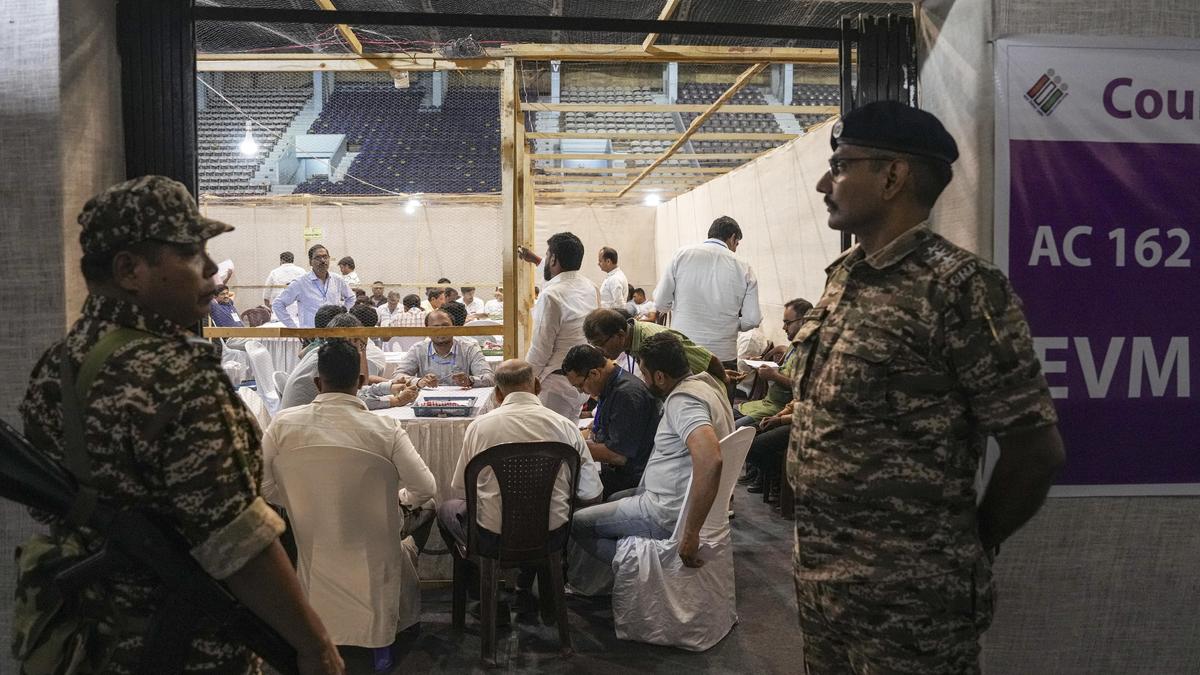
The Election Commission of India (ECI) has deployed an unprecedented oversight framework to safeguard the process’s integrity. The mobilization of 165 additional counting observers and 77 dedicated police observers on May 2, 2026, serves as a systemic response to the region’s history of electoral volatility. This layered security apparatus aims to insulate the transition from procedural disputes, ensuring that the final verdict is shielded from allegations of administrative partiality or post-poll instability.
Total Mobilization: The 92.8% Turnout Factor
The 2026 cycle is defined by historic voter engagement, with the first phase recording a 92.8% turnout. Such hyper-mobilization typically denotes a deeply polarized electorate where neutral segments have been absorbed by the primary ideological poles. Strategically, this high-volume participation necessitated the ECI’s expanded presence to manage processing speed and data accuracy. The resulting mandate, while robust in scale, emerges from narrow margins that suggest a highly contentious future legislative environment.
The Marginalization of the Third Front
For the CPI(M) and Congress, these results represent an existential threshold. Early data suggests a continued struggle to break the bipolar dominance established in 2021. The failure to secure significant seat shares risks accelerating their transition into the political wilderness, effectively removing the ‘spoiler’ effect that historically complicated the binary math between the BJP and TMC. Their potential absence from the assembly would centralize power further, leaving little room for a moderate third-front alternative.
Macroeconomic and Federal Implications
A transition to a BJP-led administration would likely catalyze a move toward fiscal convergence between the state and the central government. Investors are monitoring leads as indicators of a shift toward unified infrastructure projects and industrial policy alignment. This potential ‘double-engine’ governance model could unlock stalled capital projects but will require an intensive administrative overhaul to reorganize a state bureaucracy long-tailored to the previous regime’s policy objectives.
Narrative Control and Final Verification
As the count progresses, the battle for narrative control intensifies. The BJP frames the leads as a ‘historic breakthrough,’ while the TMC maintains that preliminary numbers are subject to late-stage recovery. The ECI’s commitment to real-time, verified data serves as the sole stabilizing force in this environment. Regardless of the final tally, the 2026 election stands as a pivotal moment in West Bengal’s history, defined by unprecedented civic participation and a systemic challenge to the established political order.