
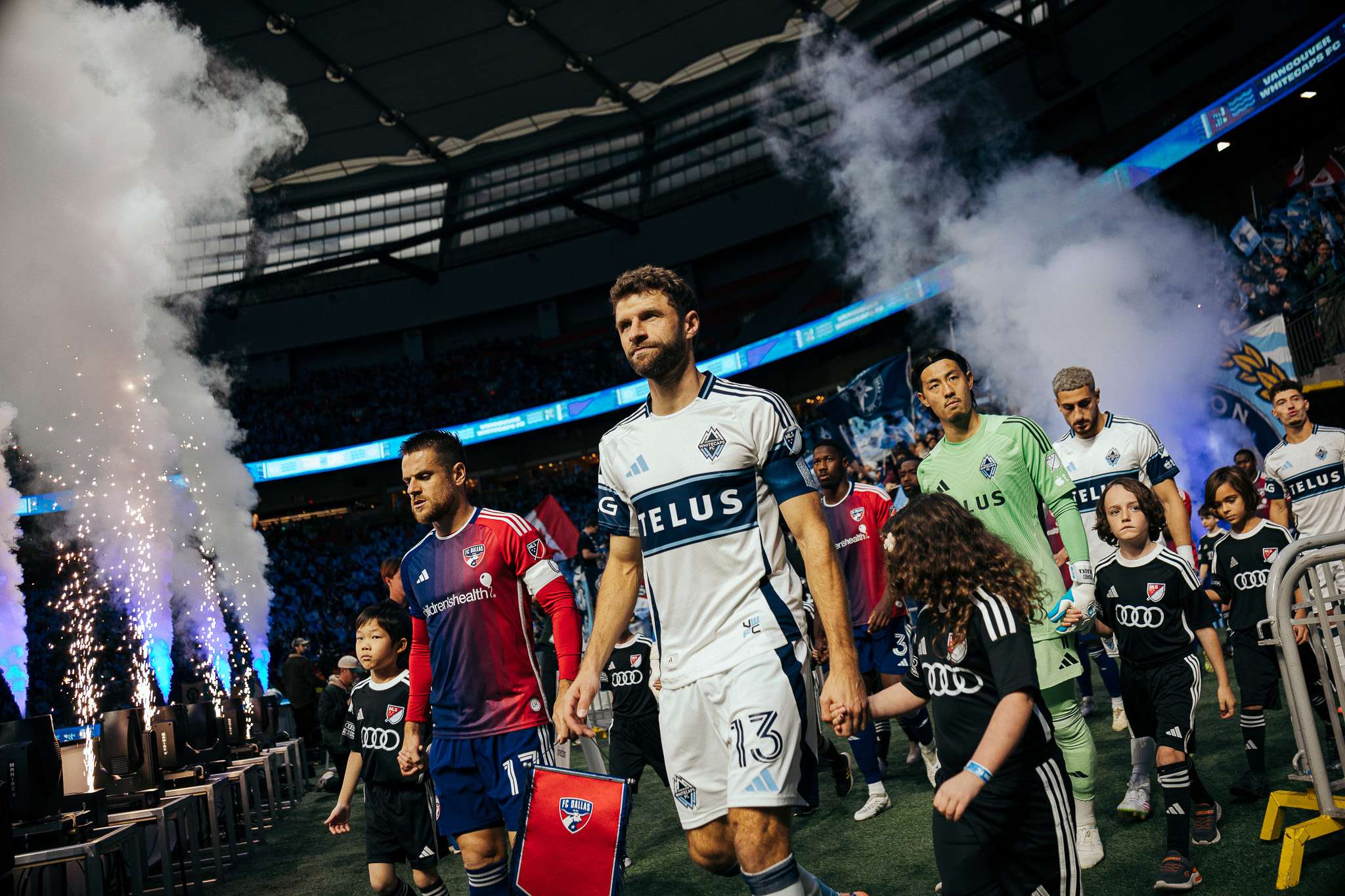
The Vancouver Whitecaps are navigating a high-stakes intersection of operational necessity and competitive endurance. As the 2026 season intensifies, the club faces a structural litmus test: balancing a forced venue relocation for the TELUS Canadian Championship with a grueling road swing through Texas. This period exposes the friction between modern MLS infrastructure requirements and the tactical demands of a congested mid-season calendar.
Strategic Scarcity: The Swangard Relocation Model
The transition to Swangard Stadium for the July 8 quarterfinal against Cavalry FC is a calculated response to the unavailability of BC Place. While CEO Axel Schuster frames the move as a return to the club’s historical roots, the operational reality is one of controlled contraction. By shifting to a 5,000-capacity venue, the Whitecaps have pivoted to a scarcity-based ticketing model, prioritizing season ticket members to reinforce the value proposition of long-term loyalty.
This relocation requires a total recalibration of match-day logistics. Moving from a Tier-1 stadium to a semi-pro environment necessitates rapid adjustments in broadcast infrastructure, security protocols, and player recovery facilities. The institutional challenge lies in maintaining professional standards while leveraging the intimate atmosphere to offset the loss of standard home-field advantages.
The Texas Trap: Deconstructing the Dallas Profile
The ‘Texas Trap’ represents a convergence of physiological and statistical hurdles. Vancouver’s back-to-back fixtures against FC Dallas and Houston Dynamo test squad depth under extreme thermal conditions. Despite their mid-table standing, FC Dallas operates as a high-efficiency unit that frequently outperforms its point total in predictive modeling.
Opta data highlights a team with significant defensive discipline, ranking third in the league for open-play expected goals against (xGA). Under Eric Quill, Dallas employs a resilient low-to-mid block that punishes over-extension. Offensively, they rank sixth in open-play expected goals (xG) created, signaling a balanced tactical profile. The Whitecaps’ defensive line, likely fatigued by travel, must account for transition threats like Samuel Sarver, whose verticality was decisive in Dallas’s recent 3-1 victory over Real Salt Lake.
Psychological Variables and International Pressures
The competitive environment is further strained by the looming 2026 World Cup roster announcements. As noted by Sebastian Berhalter, players are operating under a dual burden: fulfilling club tactical obligations while managing the psychological pressure of international selection. High-performance management during this window is critical, as individual ambitions can either act as a performance catalyst or a source of tactical distraction.
Institutional Stakes: The Title Defense
As defending TELUS Canadian Championship titleholders, the Whitecaps view the domestic cup not merely as silverware, but as a critical pathway to continental play. The matchup against Cavalry FC at Swangard offers the CPL side a perceived psychological equalizer. To mitigate the risk of an upset, Vancouver must execute with clinical efficiency, ensuring that the strategic focus on MLS standings does not compromise their domestic dominance.
Conclusion: Navigating the Mid-Season Nexus
The Whitecaps’ success in the second half of 2026 hinges on their ability to navigate this nexus of logistical pivots and tactical traps. Whether through sophisticated data-driven match preparation or the strategic management of player psychology, the club must maintain competitive integrity. The coming weeks will provide a definitive assessment of Vancouver’s institutional resilience and its ability to turn operational constraints into a competitive advantage.

Photo by tdfugere on Pixabay.