Fiscal Architecture of the 2026 Non-Conference Slate
The University of Tennessee’s 2026 season opener against Furman University serves as a case study in the evolving economics of collegiate athletics scheduling. Centered on a $500,000 guarantee—a figure established in a 2016 agreement—this matchup underscores the fixed-cost nature of Football Championship Subdivision (FCS) scheduling. While the $500,000 payout provides essential liquidity for Furman’s operational budget, it represents a conservative baseline compared to the $1.05 million premium Tennessee is paying Kennesaw State for their September 19 engagement. This disparity highlights the rising market valuation for Football Bowl Subdivision (FBS) opponents, driven by higher scholarship requirements and operational overhead.
Institutional Governance and Contractual Continuity
The 2026 matchup represents a decade-long administrative arc, surviving leadership transitions from former Athletic Director Dave Hart to current AD Danny White. The agreement’s resilience through a global pandemic—resulting in its rescheduling from 2020 to 2026—demonstrates the stability of institutional contracts as fixed assets. By honoring the original 2016 terms, both Tennessee and Furman mitigated the risk of litigation and preserved the financial synergy inherent in these ‘buy games,’ where the Power Four host pays a premium to secure home-field advantage and guaranteed gate receipts.
Operational Milestones and Commercial Integration
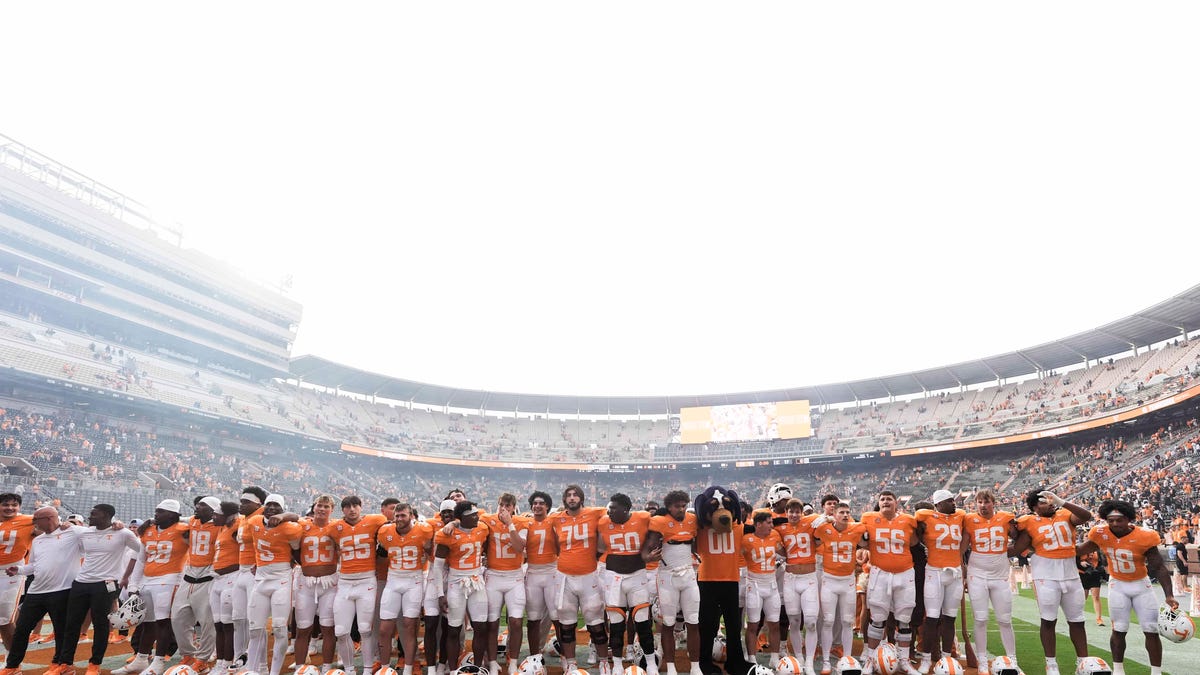
Neyland Stadium’s 2026 operations are framed by the ‘Neyland Stadium, preserved by Pilot’ partnership, a strategic naming rights and infrastructure initiative. This commercial framework supports a sustained period of high-volume demand, with the Furman game expected to extend Tennessee’s sellout streak beyond 28 games. This level of capacity utilization allows the athletic department to offset the $1.5 million aggregate payout for the Furman and Kennesaw State matchups through high-margin revenue streams including premium seating, concessions, and localized hospitality impacts. Administrative focus remains on optimizing logistical throughput for over 100,000 attendees, ensuring safety and fan experience during the 3:30 p.m. kickoff window.
Media Distribution and Digital Strategy
The digital-first broadcast strategy via ESPN+ and SEC Network+ reflects the SEC’s methodology for secondary inventory management. By prioritizing streaming platforms for non-conference games, the conference drives subscription growth for its media partners while maintaining linear television windows for high-stakes conference matchups. For Furman, the broadcast provides intangible recruiting exposure that complements the direct financial payout. For Tennessee, these platforms ensure global reach for its brand, supporting a recruitment and retention strategy that targets a technologically savvy demographic.
Historical Context and Competitive Development
Marking the 130th season of Tennessee football, the 2026 opener is only the third meeting between the two programs since the 1941-1942 era. Beyond the historical narrative, the game serves as a critical developmental window. For the No. 20/18 ranked Volunteers, these matchups allow the coaching staff to evaluate roster depth and personnel under live conditions before entering the rigorous SEC schedule. Conversely, for Furman, the game represents a high-profile platform to enhance the program’s national profile within the Southern Conference (SoCon), leveraging the $500,000 payout to fund broader athletic initiatives.